When are the US monthly retail sales figures and how could they affect EUR/USD?

US monthly retail sales overview
Thursday's US economic docket highlights the delayed release of monthly retail sales figures for the month of December, scheduled at 13:30 GMT. Consensus estimates point to a stable headline growth of 0.2% m/m in December and a slight moderation in core reading (excluding automobiles), projected to have grown by 0.1% on a monthly basis. Meanwhile, the growth for the closely watched Retail Sales Control Group is also seen decelerating to 0.4% m/m as compared to a solid 0.9% rise recorded in November.
Deviation impact on EUR/USD
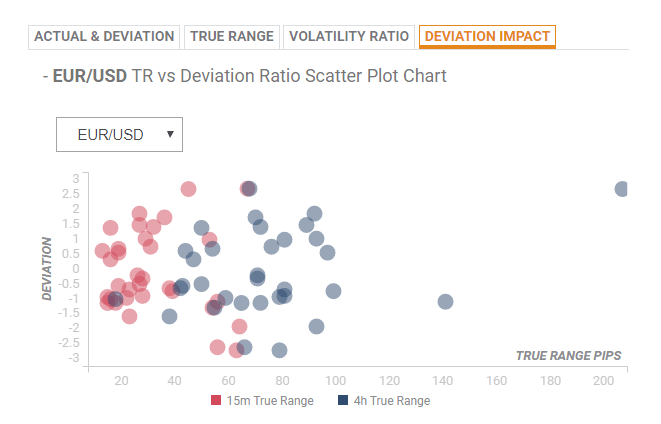
Readers can find FX Street's proprietary deviation impact map of the event below. As observed, the reaction in case of a relative deviation of -1.0369 or less, the pair may go up reaching a range of 40-pips in the first 15-minutes and 73-pips in the following 4-hours.
How could it affect EUR/USD?
Yohay Elam, FXStreet's own Analyst offers important technical levels for trading the major: “The Technical Confluences Indicator shows that the pair is capped at around 1.1288. From there, euro/dollar has room to run all the way to around 1.1370 which is the convergence of the SMA 10-1d, the Pivot Point one-day 1d-R2, the Fibonacci 23.6% one-week, and the Fibonacci 23.6% one-month.”
“Looking down, 1.1265 provides some support with the previous 4h low, the BB 1d-Lower, and the previous day's low. The more significant downside target is at 1.1215 which is the 2018 trough and the Pivot Point one-day Support 2,” he added further.
Key Notes
• US Retail Sales Preview: Holidays are unpredictable
• US: Core retail sales to rise 0.3% m/m in December – Morgan Stanley
• EUR/USD Forecast: A bit broken-hearted on Valentine's Day, bears are in control
About US retail sales
The Retail Sales released by the US Census Bureau measures the total receipts of retail stores. Monthly per cent changes reflect the rate of changes in such sales. Changes in Retail Sales are widely followed as an indicator of consumer spending. Generally speaking, a high reading is seen as positive (or bullish) for the USD, while a low reading is seen as negative (or bearish).
Author

Haresh Menghani
FXStreet
Haresh Menghani is a detail-oriented professional with 10+ years of extensive experience in analysing the global financial markets.