Viatris stock tests multi-year ceiling after impressive rally

Viatris Inc. (VTRS), the global pharmaceutical company formed through the merger of Mylan and Upjohn, just bumped its head on a price ceiling that's been in place for half a decade. After a powerful rally that lifted shares from around $10 in late 2024 to a recent peak near $13.55, the stock has encountered significant resistance—and the rejection is telling a story worth examining.
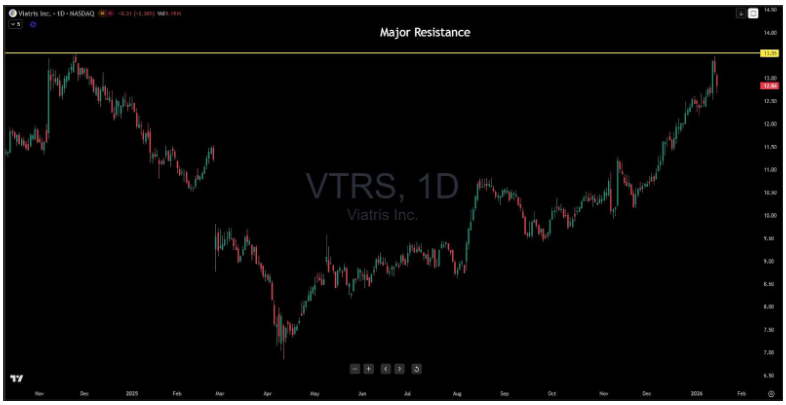
Let's zoom out for perspective. That $13.55 level isn't just another price point on the chart. It's a multi-year resistance zone that held firm throughout 2020, 2021, and into 2022. For years, VTRS traded in the doldrums below this threshold, consolidating in a frustrating range that tested investor patience. The recent surge represents the first meaningful attempt in years to reclaim territory above this technical barrier.
What strikes me about this setup is the clean rejection we're seeing. Price tagged $13.55, got turned away, and is currently trading at $12.84—down 2.36% and showing clear signs of exhaustion at resistance. This isn't surprising given the weight of overhead supply sitting at this level. Traders who bought years ago near these highs are likely using this rally as an exit opportunity, creating natural selling pressure.
The question facing traders is whether this pullback represents a healthy consolidation before another push higher, or if we're witnessing the early stages of a deeper retracement. Bulls need to see price hold support in the $12.20-$12.40 zone, which would set up a potential second assault on $13.55. If that support fails, we could see a retest of the $11 area where the recent rally gained momentum.
For those considering positions, patience might be the wisest approach. Let VTRS demonstrate its path forward—either by building a base for another breakout attempt, or by breaking down and revealing that the rally was premature. The pharmaceutical sector can be a grind, and this chart is reminding us that multi-year resistance levels don't surrender without a fight.
A confirmed break above $13.55 with volume would change everything, potentially opening a path toward the $15-$16 range. Until then, respect the resistance that's held for years.
Author

Benjamin Pool
Verified Investing
A seasoned financial expert with a passion for empowering individuals to mastering smart money management.

















