|

USD/JPY holds near 113.60 on steady hand at BoJ

  • USD/JPY holds steady around the BoJ that left policy on hold.
  • Omicron variant has been sighted as a risk to upside inflation pressures. 

USD/JPY is a touch softer on the Bank of Japan announcements, although sticking to near flat for the day around 113.60. The BoJ has kept the policy balance rate unchanged at -0.1%, as expected and left the 10-year yield target unchanged at 0.0%, as expected as well. Covid loans will be extended to September. 

The uncertainty is high on the impact of Covid-19, the central bank says, and there is a need to watch risks around bottlenecks. The BoJ says also that inflation expectations have picked up. meanwhile, these comments were expected in the markets and there is little price action occurring around them, in what is a relatively subdued Asian session, so far. 

The US dollar is stuck in a range of between 95.997 and 96.051 as measured against a basket of currencies, including the yen, by the DXY index. The greenback was sold-off the prior day on what has been put down to as a sell the fact state of play in what might be regarded as irregular markets conditions considering the end o of year squaring of positions.

However, the echoes of Federal Reserve chairman, Jerome Powell, continue to support the greenback in familiar territory with markets expecting a faster pace to lift-off. As such, the yield spread between the JGB's and US T-bill yields is keeping the prospects of a firm USD/JPY rate alive. 

USD/JPY technical analysis

However, from a daily perspective, the price could be in the process of forming a bearish head and shoulders:
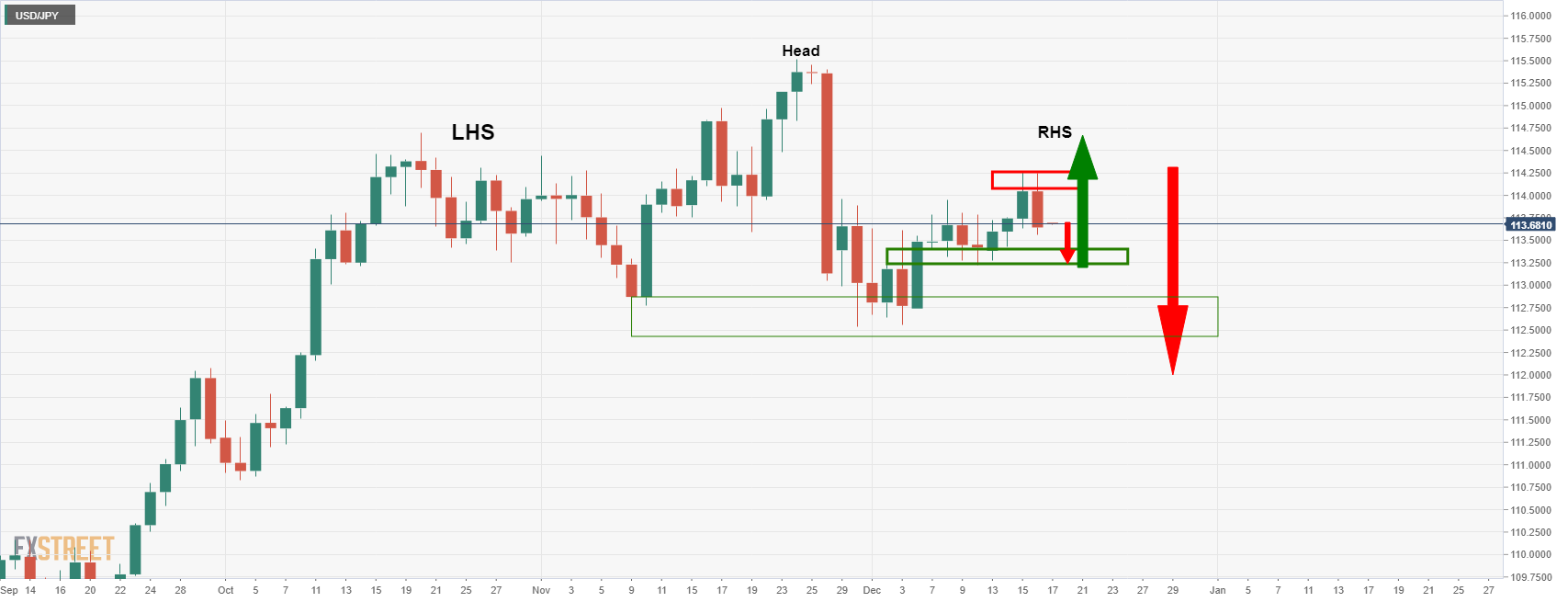
In order to mitigate such an outcome, the bulls will need to get back above 114.50 and hold the 113.30s.

Author

Ross J Burland

Ross J Burland, born in England, UK, is a sportsman at heart. He played Rugby and Judo for his county, Kent and the South East of England Rugby team.


More from Ross J Burland
Share:

Editor's Picks

AUD/USD flirts with 0.7000, lowest since early August amid bullish USD

AUD/USD hits a fresh low since early August during the Asian session on Friday and looks vulnerable near 0.7000 after breaking below the 200-day SMA overnight. Against the backdrop of the hawkish Fed, a two-day rally in oil prices revives inflation fears and continues to push US bond yields to multi-year highs. Adding to this, geopolitical risks lift the US Dollar to a two-month high, overshadowing RBA rate hike bets and weighing on the pair.

USD/JPY pulls back from three-week high after failing near 159.00

USD/JPY edges lower during the Asian session on Friday, stalling its recent strong move to a three-week high of 159.00 as Japanese Yen bears turn cautious amid intervention fears. Meanwhile, the US Dollar retains a strong bullish undertone as the Fed's hawkish outlook and oil-driven inflation fears continue to push US bond yields to multi-year peaks. Furthermore, the BoJ's dovish rate hike last week might cap JPY and support spot prices.

Gold treads water below $4,300

Gold grabs some buying attention and advances marginally at the end of the week, partially retracing the weekly decline, although it is still navigating below the key $4,300 mark per troy ounce. The fresh selling bias on the Greenback and the modest decline in US Treasury yields appear to support the humble advance in the precious metal.

Crypto Today: Bitcoin and Ethereum edge lower, XRP extends recovery as macro headwinds weigh

The broader cryptocurrency market is consolidating on Friday, with Bitcoin paring losses slightly above $84,000. Ethereum declines in tandem with BTC. Ripple (XRP), meanwhile, paints a different picture.


Fed vs BoJ: Both hiked. The market only believes one of them – and the chart shows which
The Federal Reserve (Fed) and the Bank of Japan (BoJ) have just done something remarkably similar. Both central banks raised interest rates by 25 basis points (bps) last week, both are confronting inflation risks, and both signal that future decisions will depend on incoming economic data.
Fed vs BoJ: Both hiked. The market only believes one of them – and the chart shows which

The Fed and the BoJ have just done something remarkably similar. Both central banks raised interest rates by 25 bps last week, both are confronting inflation risks, and both signal that future decisions will depend on incoming economic data.













