USD/JPY gains as US yields rise, ahead of Fed’s decision
- USD/JPY up 0.20%, driven by higher US Treasury yields and strong US economic indicators.
- US JOLTs data indicates more job openings, reflecting a solid labor market; Consumer Confidence slightly underperforms.
- Anticipation of Fed's decision grows, with rate and balance sheet policies in spotlight, amidst Japan's easing labor market data.

The USD/JPY remains positive in the day, trimming some of its Monday’s losses, sponsored by an uptick in US Treasury yields, which underpinned the Greenback (USD). Data from the United States (US) was solid, though it isn’t expected to move the needle amongst US Federal Reserve’s officials on tomorrow’s decision. At the time of writing, the major exchanges hands at 147.80, up 0.20%.
Strong US JOLTS report and Consumer Confidence, boosts US Dollar
The US Department of Labor revealed the latest Job Opening and Labor Turnover Survey (JOLTs), which showed that job openings are rising, underscoring a strong labor market that powers economic growth. Openings rose 9.02 million, exceeding forecasts of 8.75 million and November’s 8.925 million. The data highlighted the largest increase came in education and health services.
At the same time, the Conference Board (CB) revealed its latest Consumer Confidence pollo, which came at 114.8 in January, from 108 in December, slightly below the consensus of 115.0. Dana Peterson, Chief Economist at the Conference Board, said, “January's increase in consumer confidence likely reflected slower inflation, anticipation of lower interest rates ahead, and generally favorable employment conditions as companies continue to hoard labor.”
Given the data released, the scenario for the US economy for a soft landing has increased, as the economy remains resilient while inflation continues to trend down.
That said, traders’ attention turns to Wednesday's Fed’s monetary policy decision. Most analysts estimate the US central bank would keep rates at 5.25%-5.50% and will eye if policymakers discuss halting the balance sheet reduction. Besides that, market players will be eyeing Chair Jerome Powell's press conference.
In Japan, the unemployment rate fell to 2.4% in December from 2.5%, showing the labor market is cooling, which could prevent the Bank of Japan (BoJ) from ending its negative interest rate cycle. That following last week, Japan’s inflation report dropped below the 2% goal set by the BoJ, and rose by 1.6% YoY, down from 1.9%.
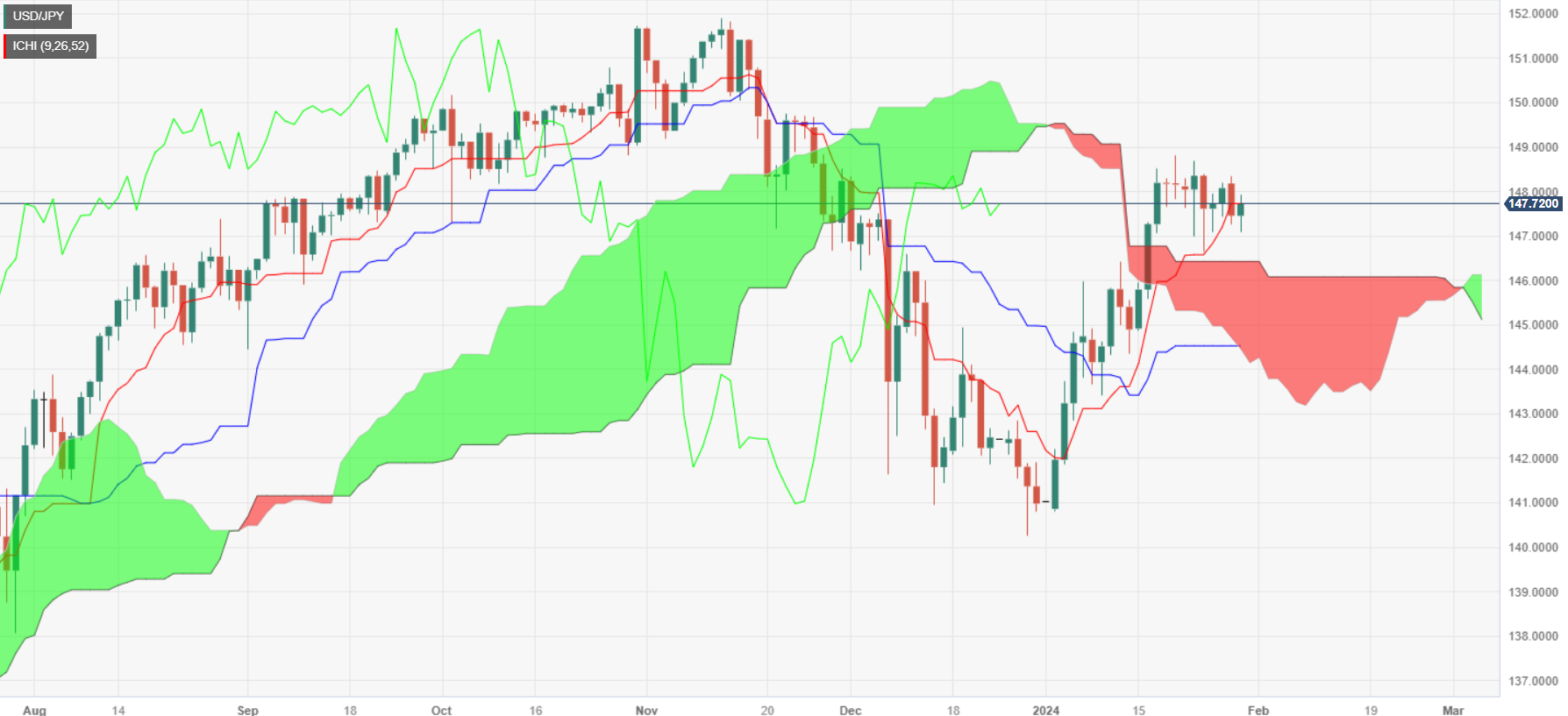
USD/JPY Price Analysis: Technical outlook
the USD/JPY is trading sideways, as the daily chart depicts. Buyers are at the brisk of losing control if the major slips below the Tenkan-Sen level at 147.73. Further downside is seen at the 147.00 figure, ahead of the January 24 cycle low of 146.65. If the pair reclaims 148.00, that could pave the way to challenge the January 19 high at 148.80, ahead of 149.00.
Author

Christian Borjon Valencia
FXStreet
Markets analyst, news editor, and trading instructor with over 14 years of experience across FX, commodities, US equity indices, and global macro markets.

















