USD/JPY catapults higher following the release of US Nonfarm Payrolls
- USD/JPY shoots over half a percent higher following higher-than-expected US payrolls data for May.
- The data also showed a greater-than-experienced increase in wages although unemployment unexpectedly rose.
- The data contrasts with Japanese real wages which fell for the 25th straight month in April.


USD/JPY spikes higher by over half a percent in the minutes following the release of US Nonfarm Payrolls (NFP) data, on Friday. USD/JPY trades in the upper 156s after the US Dollar (USD) strengthens as a result of the better-than-expected results.
US Nonfarm Payrolls showed the number of employed people in the US rose by 272K in May when 185K had been expected, according to data from the US Bureau of Statistics (BLS). The result was higher than the April figure which was revised down to 165K.
USD/JPY Daily Chart
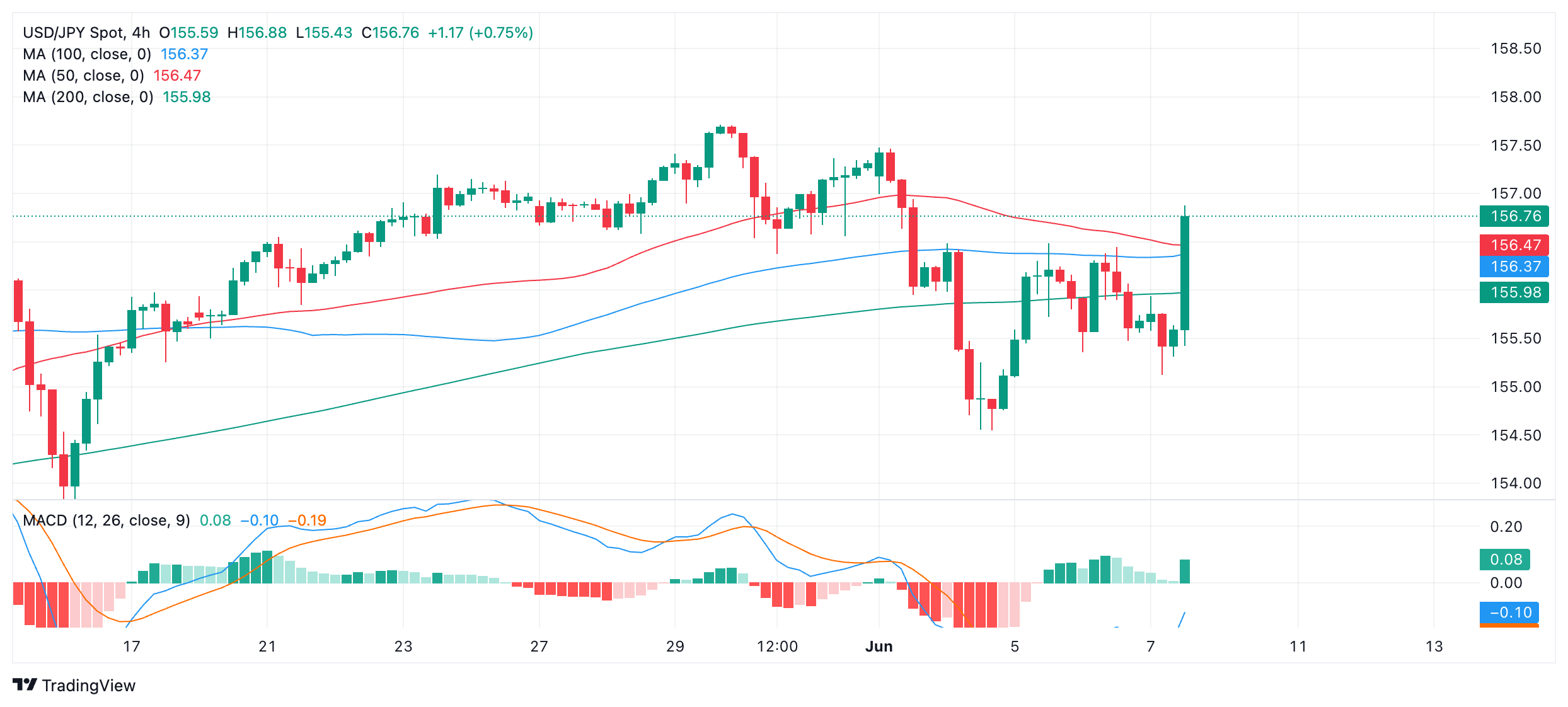
The BLS report showed a rise in Average Hourly Earnings of 4.1% YoY, beating estimates of 3.9% and higher than the revised-up 4.0% in April.
The report showed the Unemployment Rate rose to 4.0%, however, when 3.9% had been forecast from 3.9% previously.
The data overall suggests the US labor market is in better shape than had previously been thought, especially given the lower-than-expected JOLTS Job Openings and ADP payrolls data earlier in the week. The higher-than-expected wage inflation indicates the possibility headline and core inflation might rise as workers spend their increased wages. Higher general inflation could deter the US Federal Reserve (Fed) from lowering interest rates. Prior to the NFP release, the probability of the Fed cutting interest rates in September was roughly 67% – after the NFPs it had fallen to 53%.
Maintaining high interest rates is positive for USD/JPY as it strengthens the US Dollar. A higher interest rate attracts greater inflows of foreign capital, increasing demand for the currency.
USD/JPY further propelled by contrast with Japanese wage data
USD/JPY’s strong move up following the NFP data may be exaggerated because it follows two negative minor US employment reports earlier in the week (JOLTS and ADP) and because of the contrast with similar data from Japan.
Real wages in Japan declined for the 25th straight month in April, as domestic inflation continued to outpace wage growth. The data makes it harder for the Bank of Japan (BoJ) to normalize its monetary policy. The BoJ is the only major central bank still undertaking quantitative easing (QE) and has had to keep interest rates in an ultra-low 0.0% - 0.1% range. This has led to a stark devaluation in the Yen to levels which raise concern among policymakers as they are hampering business activity.
That said, USD/JPY lost ground earlier in the week amid rumors the BoJ was planning to reduce the bond purchases it makes as part of its QE programme. If the BoJ cuts bond purchases it would put upward pressure on Japanese bond yields which are highly correlated to the JPY. It remains to be seen, however, whether the rumors materialize.
USD/JPY upside may be capped by direct intervention from the Japanese authorities to buy the Yen in the FX markets. On Tuesday, Deputy Governor of the BoJ Ryozo Himino repeated concerns about how a weak JPY was negatively impacting the economy and the BoJ needed to be “very vigilant” regarding its effects. His comments suggested the BoJ might be preparing for another direct intervention in Forex markets to prop up JPY (negative for USD/JPY).
According to Himino the weak Yen pushes up inflation, but in a negative way. Although it increases the price of imported goods, continued stagnant wages mean consumers are increasingly being priced out of the market. Himino said he would prefer inflation to come from higher wages, not a weak currency, as this would lead to a more dynamic economy.
Author
Joaquin Monfort
FXStreet
Joaquin Monfort is a financial writer and analyst with over 10 years experience writing about financial markets and alt data. He holds a degree in Anthropology from London University and a Diploma in Technical analysis.