US President Trump: The meeting with Xi was amazing
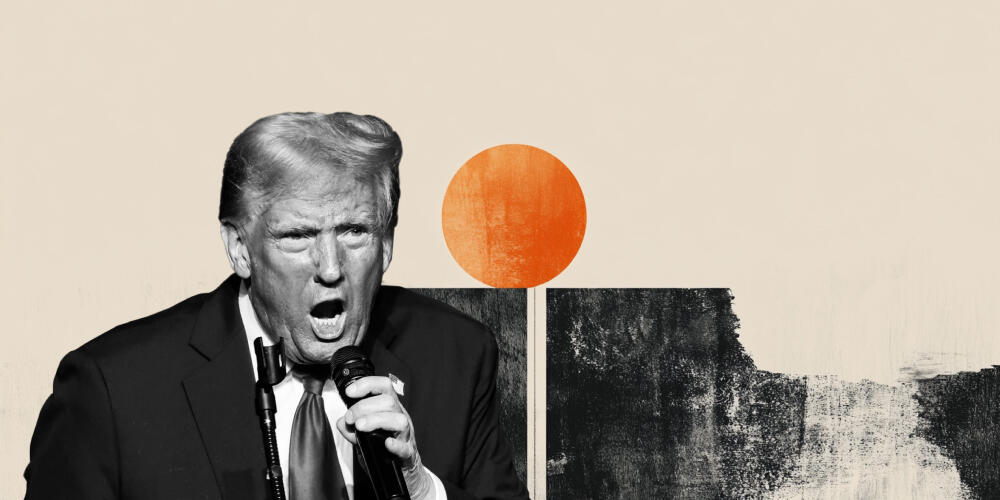
Following his highly anticipated meeting with China’s President Xi Jinping in South Korea on Thursday, US President Donald Trump said: “The meeting with Xi was amazing.”
Additional comments
On a scale of 1 to 10, the meeting with Xi was a 12.
A lot of decisions were made.
Will be providing conclusions on very important things.
Purchases of soybeans will begin immediately.
Agreed for China to work very hard in stopping fentanyl problem.
Also agreed to reduce (fentanyl tariffs).
But I wouldn't say everything was discussed.
We did discuss chips, they will be talking to Nvidia and others about taking chips.
But not talking about Nvidia's Blackwell chips.
All the rare earth issue has been settled, no more roadblocks on rare earths.
No more roadblocks on rare earths.
It's a one-year agreement that will be extended.
Tariffs on China will be 47% down from 57%.
I'll be going to China in April.
Xi will be coming to the US sometime after that.
Going to work together with Xi on Ukraine to get something done.
Taiwan never came up in talks with XI.
With others testing nuclear arms, it's appropriate we do also.
Separately, a US official said that “China will keep exports of rare earths flowing.”
Market reaction
The US Dollar Index (DXY) remains unimpressed by a lack of deal reach between both sides, dropping back below 99.00. Meanwhile, AUD/USD consolidates gains below 0.6600, at the time of writing.
US-China Trade War FAQs
Generally speaking, a trade war is an economic conflict between two or more countries due to extreme protectionism on one end. It implies the creation of trade barriers, such as tariffs, which result in counter-barriers, escalating import costs, and hence the cost of living.
An economic conflict between the United States (US) and China began early in 2018, when President Donald Trump set trade barriers on China, claiming unfair commercial practices and intellectual property theft from the Asian giant. China took retaliatory action, imposing tariffs on multiple US goods, such as automobiles and soybeans. Tensions escalated until the two countries signed the US-China Phase One trade deal in January 2020. The agreement required structural reforms and other changes to China’s economic and trade regime and pretended to restore stability and trust between the two nations. However, the Coronavirus pandemic took the focus out of the conflict. Yet, it is worth mentioning that President Joe Biden, who took office after Trump, kept tariffs in place and even added some additional levies.
The return of Donald Trump to the White House as the 47th US President has sparked a fresh wave of tensions between the two countries. During the 2024 election campaign, Trump pledged to impose 60% tariffs on China once he returned to office, which he did on January 20, 2025. With Trump back, the US-China trade war is meant to resume where it was left, with tit-for-tat policies affecting the global economic landscape amid disruptions in global supply chains, resulting in a reduction in spending, particularly investment, and directly feeding into the Consumer Price Index inflation.
Author

Dhwani Mehta
FXStreet
Residing in Mumbai (India), Dhwani is a Senior Analyst and Manager of the Asian session at FXStreet. She has over 10 years of experience in analyzing and covering the global financial markets, with specialization in Forex and commodities markets.

















