|

US Pres. Trump: Interest rates should be lowered
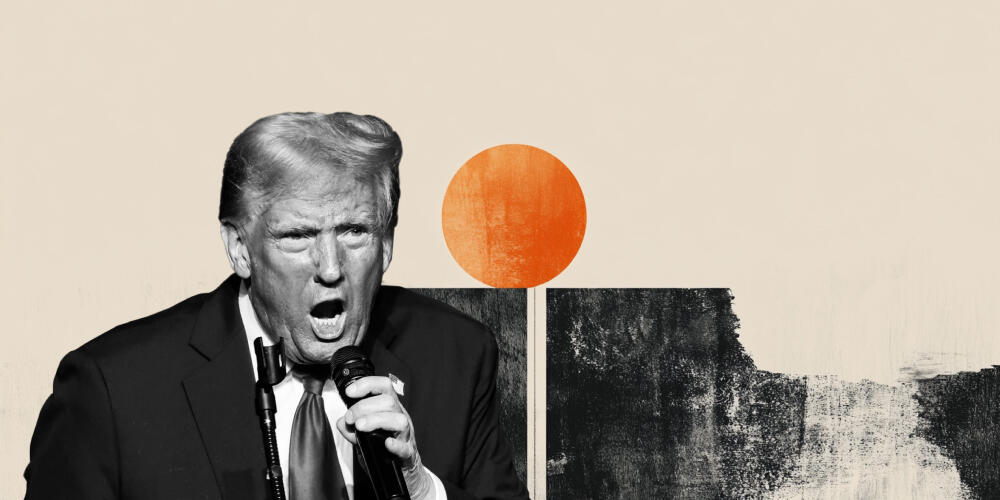
US President Donald Trump said on Wednesday that interest rates should be lowered, adding that they would "go hand in hand" with upcoming tariffs.

While speaking to reporters at an event to welcome home a hostage released by Russian President Vladimir Putin late Tuesday, Trump responded "we'll see," when asked whether reciprocal tariffs will be announced on Wednesday.

Market reaction

These comments failed to trigger a noticeable market reaction. At the time of press, the US Dollar Index was up 0.05% on the day at 107.98.

Tariffs FAQs

Tariffs are customs duties levied on certain merchandise imports or a category of products. Tariffs are designed to help local producers and manufacturers be more competitive in the market by providing a price advantage over similar goods that can be imported. Tariffs are widely used as tools of protectionism, along with trade barriers and import quotas.

Although tariffs and taxes both generate government revenue to fund public goods and services, they have several distinctions. Tariffs are prepaid at the port of entry, while taxes are paid at the time of purchase. Taxes are imposed on individual taxpayers and businesses, while tariffs are paid by importers.

There are two schools of thought among economists regarding the usage of tariffs. While some argue that tariffs are necessary to protect domestic industries and address trade imbalances, others see them as a harmful tool that could potentially drive prices higher over the long term and lead to a damaging trade war by encouraging tit-for-tat tariffs.

During the run-up to the presidential election in November 2024, Donald Trump made it clear that he intends to use tariffs to support the US economy and American producers. In 2024, Mexico, China and Canada accounted for 42% of total US imports. In this period, Mexico stood out as the top exporter with $466.6 billion, according to the US Census Bureau. Hence, Trump wants to focus on these three nations when imposing tariffs. He also plans to use the revenue generated through tariffs to lower personal income taxes.

Author

Eren Sengezer

As an economist at heart, Eren Sengezer specializes in the assessment of the short-term and long-term impacts of macroeconomic data, central bank policies and political developments on financial assets.


More from Eren Sengezer
Share:

Editor's Picks

GBP/USD holds above 1.3350 with the 200-day SMA capping gains

The British Pound appreciates against the US Dollar on Tuesday to trim previous losses and return to the 1.3375 area, aiming to retest resistance at the key 200-day Simple Moving Average. This is a popular indicator, which lies a few pips below 1.3400 and has been capping Pound’s recovery over the last two weeks.

EUR/USD consolidates gains above 1.1400

Following an earlier move to multi-day peaks past 1.1460, EUR/USD has now slipped back toward the low 1.1400s as the NA session draws to a close on Tuesday. Declining bets for potential Fed tightening later in the year coupled with poor US CPI data hurt the US Dollar, lending fresh legs to the pair and the broader risk-linked universe. Moving forward, the release of US PPI and Chair Warsh’s second testumony should keep investors entertained on Wednesday.

Gold battles to recover the $4,100 mark

Gold reverses the recent weakness and reclaims the area beyond the key $4,000 mark per troy ounce on Tuesday. The precious metal’s recovery picks up pace and approaches the $4,100 region following the Greenback’s decline and comments from the Fed’s Warsh.

Bitcoin, crypto market post gains following weaker US inflation reading
The crypto market posted gains on Tuesday following the release of the US Consumer Price Index (CPI) report for June, which showed that inflation cooled below market expectations. According to the US Bureau of Labor Statistics, annual inflation slowed to 3.5% in June from 4.2% in May, marking its first decline in five months and coming in below the consensus forecast of 3.8%.
Fed Chair Warsh reaffirms they will deliver price stability

While testifying on the Semiannual Monetary Policy Report before the US House Financial Services Committee, Fed Chairman Kevin Warsh reiterated that the Fed is making a commitment on price stability and the goal of 2% inflation.

Five sessions, one round trip: Why the whipsaw is exactly what Warsh ordered

Markets opened July with a December hike as the base case and spent five trading sessions unlearning and relearning it. A 57K payrolls print bled the tightening bets out of the strip; a re-shut Strait of Hormuz is pushing them back in. Wednesday's minutes from the June FOMC meeting landed mid-round-trip, describing a world that had already stopped existing.