Ukraine crisis and meager peace-talk progress keep markets on tenterhooks
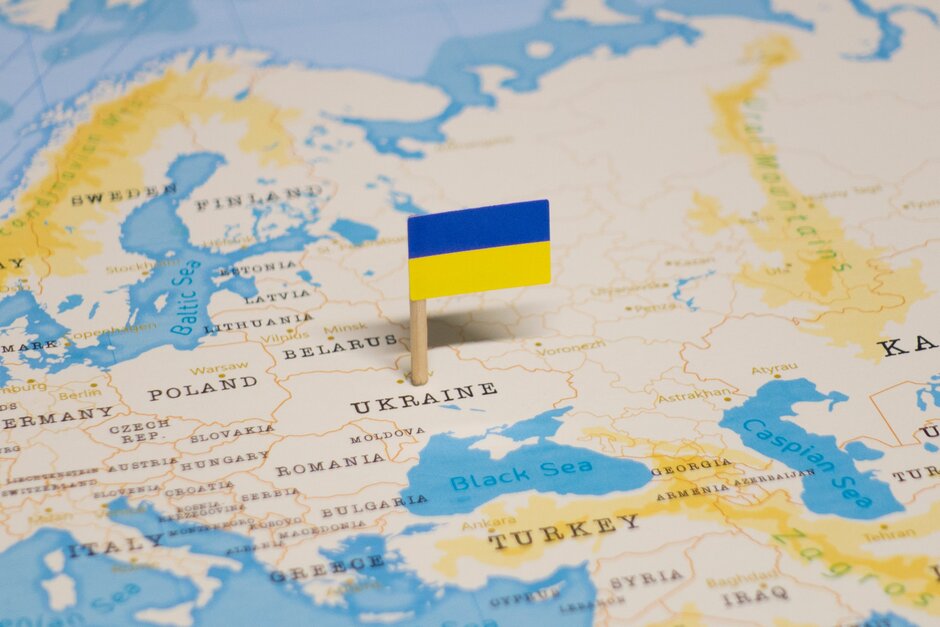

Russia’s invasion of Ukraine has entered the fourth week, as increasingly harsh rhetoric from Western powers towards Russian President Vladimir Putin has done nothing to halt attacks in several cities. However, there are some logistical problems that continue to beset Russia's faltering invasion of Ukraine, the UK's Ministry of Defence stated in an intelligence update on Thursday.
Additionally, there has been some cautiously positive optimism over peace talks, although they said their positions remained far apart. The Financial Times published a ‘15-point plan’ on Wednesday that was allegedly close to being agreed upon that included Ukraine being a neutral state like Switzerland or Austria and having security guarantees from the US, UK, and Turkey.
However, as analysts at Rabobank said, ''this was then almost immediately rejected by Ukraine. Indeed, a spokesperson said that plan reflected only the Russian position.'' Moreover, the analysts highlighted troubling tones and rhetoric from Russia's president, Vladimir Putin, who gave a national speech.
''He claimed Russia was ‘being cancelled’ and spoke of “fifth columns” and “national traitors” who “cannot do without oysters, foie gras, and gender freedoms,” who “by their very nature are located exactly there, not here, not with our people, not with Russia. This is, in their opinion, a sign of belonging to a higher caste, a higher race. Such people are ready to sell their own mother… The collective West is trying to split our society, speculating on the combat losses, on the socio-economic sanctions… and there is only one goal… the destruction of Russia. But I am convinced that… the Russian people will be able to distinguish true patriots from scum and traitors and simply spit them out like a midge that accidentally flew into their mouths. Spit them out on the pavement. I am convinced that such a natural and necessary self-purification of society will only strengthen our country, our solidarity, cohesion, and readiness to respond to any challenges.”''
''Does this sound like a man looking to deescalate, or one who is going to double down to get better terms?,'' Rabobank questioned, pointing to darker days to come for both the ruble, financial markets and world peace in general.
Meanwhile, Turkey has now positioned itself as the go-between with Russia and Ukraine. On Thursday afternoon, President Vladimir Putin rang the Turkish President, Recep Tayyip Erdogan and put down all of the demands Russia wants for a peace deal with Ukraine.
BBC lays out the peace talk progress
Afer an interview with Turkish representatives familiar with the negotiations, the BBC states that the Russian demands fall into two categories.
''The first four demands are not too difficult for Ukraine to meet,'' the BBC wrote.
''Chief among them is an acceptance by Ukraine that it should be neutral and should not apply to join Nato. Ukraine's President Volodymyr Zelensky has already conceded this. There are other demands in this category that mostly seem to be face-saving elements for the Russian side. Ukraine would have to undergo a disarmament process to ensure it wasn't a threat to Russia. There would have to be protection for the Russian language in Ukraine. And there is something called de-Nazification.
This is deeply offensive to Mr Zelensky, who is himself Jewish and some of whose relatives died in the Holocaust, but the Turkish side believes it will be easy enough for Mr Zelensky to accept. Perhaps it will be enough for Ukraine to condemn all forms of neo-Nazism and promise to clamp down on them.''
For the markets, this would be perceived as a long term peace treaty and one that would pave the way for diplomacy between global states, settling uncertainties for investors.
However, the BBC states that the ''second category is where the difficulty will lie.
In his phone call, Mr Putin said that it would need face-to-face negotiations between him and President Zelensky before an agreement could be reached on these points.
The BBC said that Mr Zelensky has already said he's prepared to meet the Russian president and negotiate with him one-to-one.
The BBC explained that these issues involved the status of Donbas, in eastern Ukraine, parts of which have already broken away from Ukraine and stressed their Russianness, and the status of Crimea.
The BBC presumed that Russia will demand that the Ukrainian government should give up territory in eastern Ukraine.
The other assumption that the BBC notes is that Russia will ''demand that Ukraine should formally accept that Crimea, which Russia illegally annexed in 2014, does indeed now belong to Russia. If this is the case, it will be a bitter pill for Ukraine to swallow.''
''President Putin's demands are not as harsh as some people feared and they scarcely seem to be worth all the violence, bloodshed and destruction which Russia has visited on Ukraine. Given his heavy-handed control over the Russian media, it shouldn't be too hard for him and his acolytes to present all this as a major victory.
For Ukraine, though, there are going to be serious anxieties. If the fine details of any agreement aren't sorted out with immense care, President Putin or his successors could always use them as an excuse to invade Ukraine again.''
Market implications and related updates
In summary, the BBC states that a ''peace deal could take a long time to sort out, even if a ceasefire stops the bloodshed in the meantime.''
A ceasefire would be hugely positive for risk appetite although much of the near term inflation pressures would possibly leave prices in the commodities well elevated. In forex, currencies such as the Australian dollar stand to gain on both risk-on sentiments due to their high beta status as well as due to their link to the commodity sector.
With that being said, until the fine details are sorted out, there are bound to be stop-starts in momentum and the volatility of the process will play out as volatility in financial markets, most probably for a drawn-out length of time.
Meanwhile, investors were reassured on Thursday that Russia may, at least for now, have averted what would have been its first external bond default in a century.
''This was because creditors received payment, in dollars, of Russian bond coupons which fell due this week,'' two market sources told Reuters on Thursday.
In other news, keeping the pressures on and markets on edge, Australia says it has now covered the majority of Russia's banking assets with sanctions. Additionally, the Australian government has slapped sanctions on two Russian oligarchs with business interests in Australia, after initially leaving them off of Australia's official sanctions list.
Author
Ross J Burland
FXStreet
Ross J Burland, born in England, UK, is a sportsman at heart. He played Rugby and Judo for his county, Kent and the South East of England Rugby team.

















