Two reasons Netflix (NFLX Stock) might have just bottomed out

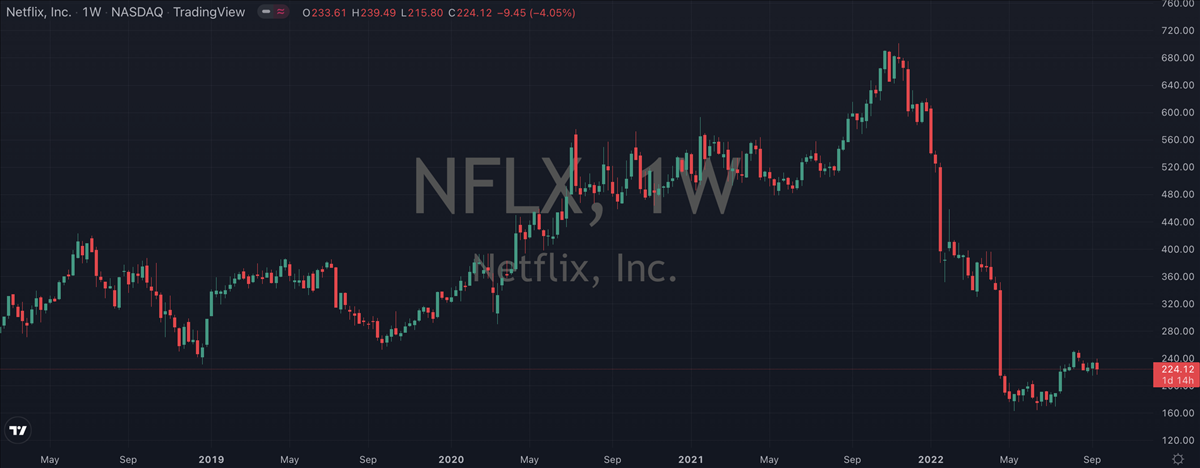
Since the fall from grace began just over a year ago, shares of streaming giant Netflix (NASDAQ: NFLX) have dropped as much as 75%. These past few months have been good to them though, and heading into the last quarter of the year they’re up about 35% from the multi-year lows they hit in May and June.
This kind of multi-month plummet may have ruled them out from ever again being compared to the likes of Apple (NASDAQ: AAPL) or Amazon (NASDAQ: AMZN), as they were when included in the FAANG group, but that’s not to say there still isn’t an opportunity for retail investors to capitalize.
Recent comments from Morgan Stanley, though not overwhelmingly bullish, were decidedly not bearish, and this can often be the first sign that a trend reversal is in the making.
Just last week the team there reiterated their Equal Weight rating Netflix shares, saying they seem to be trading around fair value right now, though some concerns remain about whether the company can achieve their 2023 subscriber goals.
It’s been not only the sharp slowdown in these subscriber numbers, but the actual decline of them that’s fuelled much of the selling over the past year. The team at Morgan Stanley is already anticipating their average revenue per user (ARPU) to grow mid-single digits for the "foreseeable future," while net additions will double year-over-year in 2023 "all while content spending growth is moderating."
Ad-supported tiers
One of the big catalysts behind this forecasted growth will be the ad-supported service tiers being rolled out later this year, something the team over at Disney Plus (NYSE: DIS) are also looking to launch.
It was reported in the WSJ this week that Netflix is estimating the advertising-supported tier of its service will reach about 40 million viewers by the third quarter of 2023. While 40 million viewers is a small figure compared to Netflix's total 220 million subscribers, it would still represent a significant number for an online video ad destination compared to the rest of the market.
The provisional launch date of 1st November should see Netflix get the jump on Disney, who aren’t expected to release their ad-supported tiers until closer to the holiday season. The new product offering should lead to an increase in the ARPU without relying exclusively on price increases, the team said, and allows for tapping into strong advertiser demand for their audiences.
Technical strength
In addition to a new and innovative revenue stream coming online in the near future, investors on the sidelines should also consider the technical setup in Netflix shares. As mentioned, they put in a low around the $164 level back in May and haven’t come close to testing it since.
Indeed, it’s basically been a case of higher highs and lower lows since then, which is a classic sign of a rally being born. Viewed in a vacuum, and with no visibility of the selling in the months beforehand, the chart since May looks quite bullish.
Shares have been consolidating around the $225 mark and if they can push on from here, that will become yet another higher low which will strengthen the case for a bottom having been locked in.
The stock’s RSI and MACD are both fairly neutral right now, reflecting the month’s worth of sideways action, so the direction of the next decisive move will be key. Netflix has a bullish catalyst approaching in about six week’s time in the form of the new tiers being launched, but will have to report earnings before then.
They’re set to be released around this time next month and will undoubtedly have many investors nervous, for good reason too. It’s been the surprisingly negative earnings reports of the past year that have done the most damage to Netflix shares, but there’s a strong case to be made that much of the bad news is already baked into the share price.
Even with the recent rally, shares are still only trading at 2018’s levels, which seems like a lifetime ago now. If they can hold this $225 level and get through their next earnings report without losing their head, we could well be looking at a solid long-term buying opportunity.
Author

Jacob Wolinsky
ValueWalk
Jacob Wolinsky is the founder of ValueWalk, a popular investment site. Prior to founding ValueWalk, Jacob worked as an equity analyst for value research firm and as a freelance writer. He lives in Passaic New Jersey with his wife and four children.