The weekender: When software turns the blade on itself
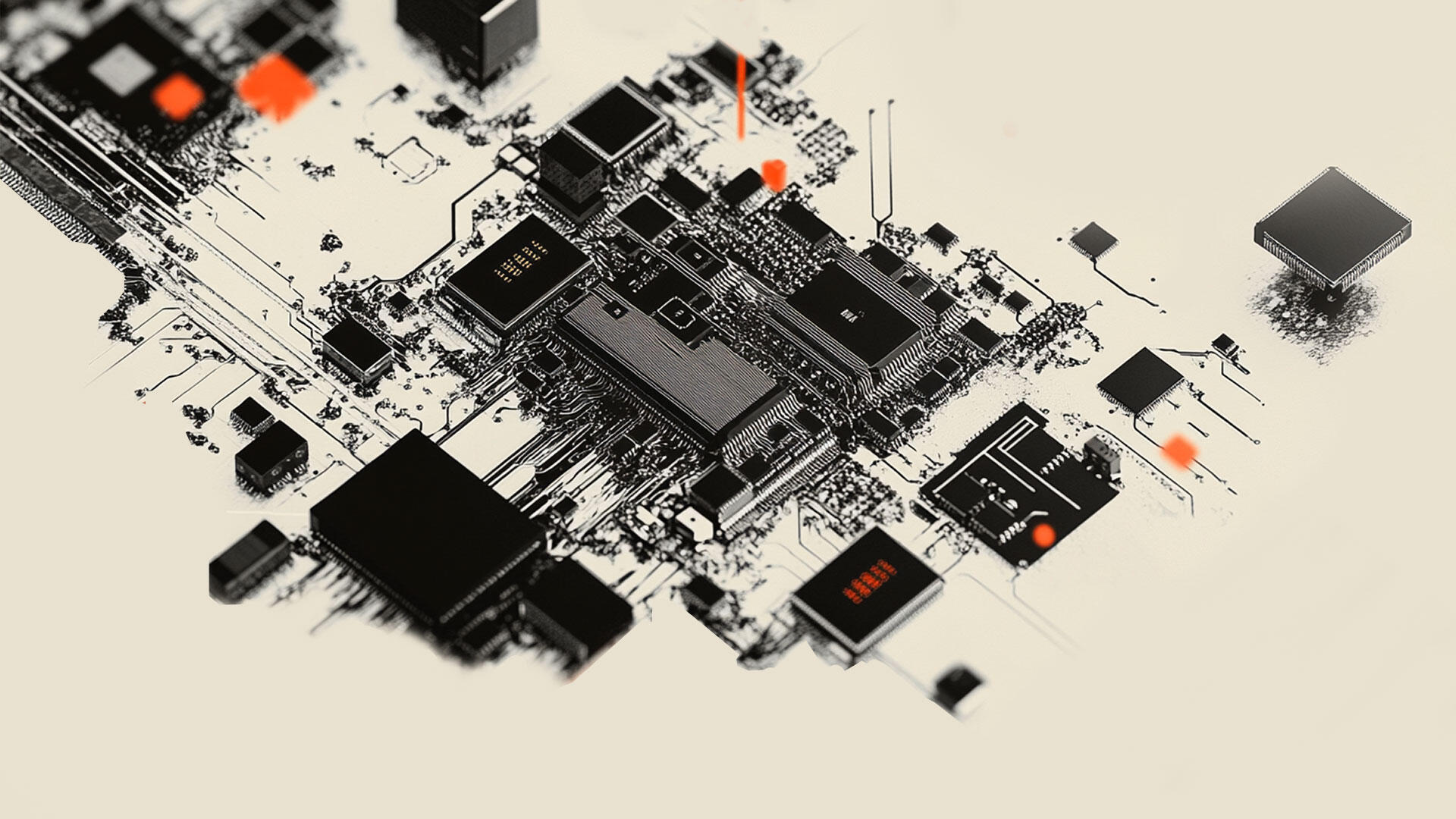
Turns the blade on itself
Yesterday was one of those sessions that tells you more about plumbing than poetry.
Equities cracked, tech led the descent, and gold dropped more than 3 per cent on a day when it was supposed to play bodyguard. That is not fear. That is funding. When multi-strat desks take equity shrapnel in real time, they sell what they can, not what they love. Gold becomes the ATM. The index barely hinted at the violence beneath the surface because the rotation is defensive within the tape itself. This is not a broad panic, so far. It is capital being reallocated at speed.
Now step back.
For 20 years, the market’s north star was simple. Software eats the world. Microsoft, Google, Meta, AWS, Apple, Nvidia. Code was not just a product. It was the operating system of modern capitalism. High margins, recurring revenue, capital light, infinite scalability. The market paid up because margins were assumed to persist all the way to the horizon.
But the next regime might be less comfortable.
It is not software eating the world. It is software eating itself.
Autonomous AI does not just threaten trucking companies and call centers. It challenges the cognitive toll booths that legacy software has charged for decades. This is not a forecast. No one truly knows the end state of AI. I am not in the crystal ball business. I trade flows. And the flows are whispering that something structural may be stirring beneath what looks like another cyclical correction.
The software and services sleeve of the S&P 500 is down 27 per cent since late October. That is not a wiggle. That is a leadership unwind. Relative to the broader S&P 500, the sector now trades at a discount for only the second time in 30 years. On a relative basis, that is rare air. On an absolute basis, 22 times forward earnings is not a fire sale. From 2008 to 2016 you could buy the same exposure cheaper for years.
Valuation tells you where you are standing. It does not tell you where the floor is.
What matters is that we are not dealing with one sell off but two overlapping waves.
The first began in late October, when the market quietly changed captains. Tech and growth ceded the helm. That was a macro rotation. Duration sensitivity, crowded positioning, margin assumptions stretched to infinity.
The second wave hit in late January, catalyzed by Microsoft earnings. Microsoft is not just another ticker. It represents roughly half of the software sub index. Its 26 per cent slide since October explains roughly half the sector drawdown. When the heavyweight stumbles, the ring feels it.
But the dispersion underneath is the real tell.
Some names held up through the first rotation only to be crushed in the second. Others were punished early and stabilized later. And a final cluster got hit coming and going. The common denominator among many of the serial losers is that they ran too far, too fast between mid-2022 and early-2025. Wild multiple expansion on the assumption that margins would stay stratospheric forever.
Margins became destiny.
And that is the crux. Software margins widened dramatically in recent years. The market did not just reward them. It capitalized them as permanent. When you price perfection, you cannot afford competition from your own offspring.
If AI compresses those margins even modestly, the equity math changes violently. A few turns off the multiple at elevated starting valuations is not a trim. It is an amputation.
So is this overdone?
That depends on what you think is being repriced. If this is merely a crowded trade being unwound and leadership rotating, the relative discount is tempting. If this is the early tremor of software confronting a new competitor that does not sleep, does not invoice, and learns exponentially, then 22 times earnings is not cheap. It is complacent.
From a trader’s seat, I am less interested in ideology and more in behaviour. The tape is telling me that capital is no longer willing to pay any price for abstract growth. The market is interrogating the durability of margins. It is questioning whether yesterday’s toll collectors become tomorrow’s roadkill.
When gold sells off with tech, it tells you funds are managing risk, not expressing conviction. When leadership fractures twice in three months, it tells you the old playbook is being rewritten. And when a sector that defined a generation starts trading at a rare relative discount, it tells you the narrative shield has cracked.
The market’s biggest story for two decades was code conquering industry.
The next one may be code cannibalizing code.
And if that is even partially true, this is not just a correction. It is the opening chapter of a regime shift.
In markets, revolutions do not announce themselves with trumpets. They begin with subtle changes in who gets sold first.
Author

Stephen Innes
SPI Asset Management
With more than 25 years of experience, Stephen has a deep-seated knowledge of G10 and Asian currency markets as well as precious metal and oil markets.