The premature head and shoulders pattern I’m watching on XMR
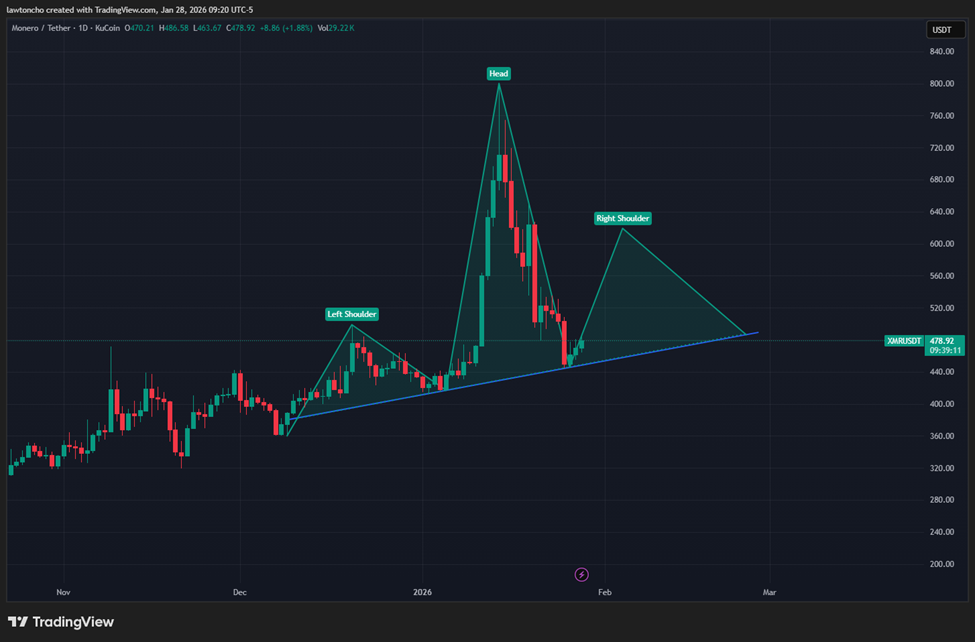
Monero (XMR/USD) is a cryptocurrency that has been on my radar recently as I continue to monitor shifts in market structure across the crypto space. Over the past two weeks, XMR has experienced a meaningful pullback. From its highs on January 14th, price is currently down more than 40%, which naturally puts it in a position where both sentiment and technicals become worth paying closer attention to.
When I zoom out to the daily chart, what stands out to me is the development of a premature head and shoulders pattern. While this formation is not yet confirmed, the structure is beginning to take shape in a way that I find notable. The neckline can be drawn from the December 9th region through January 5th, extending into where price is currently trading. At this stage, I’m simply observing how price behaves around these levels rather than making assumptions about what must happen next.
From a technicals perspective, premature patterns are exactly that—early. They require patience and confirmation, and until that confirmation occurs, they remain a developing idea rather than a completed signal. This is why I prefer to treat setups like this as something to watch closely rather than something to act on aggressively. The market still has room to invalidate or strengthen the structure depending on how price evolves from here.
For those less familiar, XMR—also known as Monero—is a cryptocurrency coin that trades actively in the broader digital asset market. Like many crypto assets, it experiences periods of sharp expansion followed by equally sharp pullbacks. That volatility is part of what makes coins like XMR worth monitoring from a technical standpoint, especially when larger chart patterns begin to form after extended moves.
Regardless of how clean a chart may look or how compelling a pattern appears, risk management remains non-negotiable when trading cryptocurrency. Crypto markets can move quickly, invalidate ideas without warning, and punish poor positioning. For me, the focus right now is awareness, patience, and respecting the technicals as they continue to develop.
Author

Lawton Ho
Verified Investing
A marketing expert sharing his journey to mastering the charts.


![How Wall Street rigs the game [Video]](https://editorial.fxsstatic.com/images/i/market-chaos-01.jpg)