The message of SpaceX earnings is blunt: The AI supercycle is far from over
- SpaceX's 161% rise in annual revenue for Q3 is only the beginning.
- Musk's company could double capex to $35-$40 billion in Q4.
- AI business is gearing up to add 10 GW of compute in 2027.
- JPMorgan hikes price target over 100% to $500.
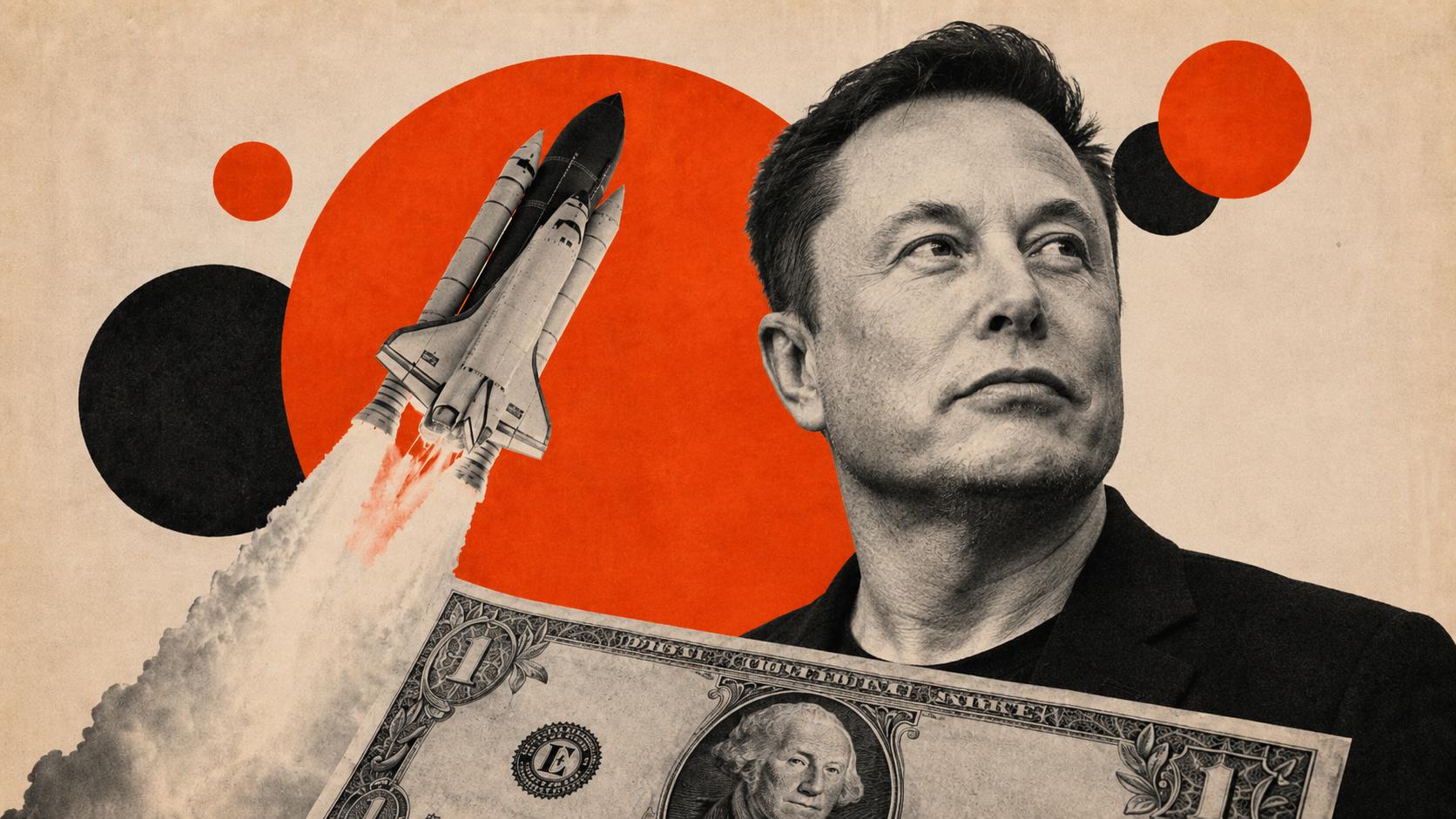
Space Exploration Technologies (SPCX) third-quarter earnings, delivered after the market close on Tuesday, are a blaring siren to all AI investors. The AI boom is not letting up despite recent anxiety in the market. At least not if founder Elon Musk has anything to do with it.
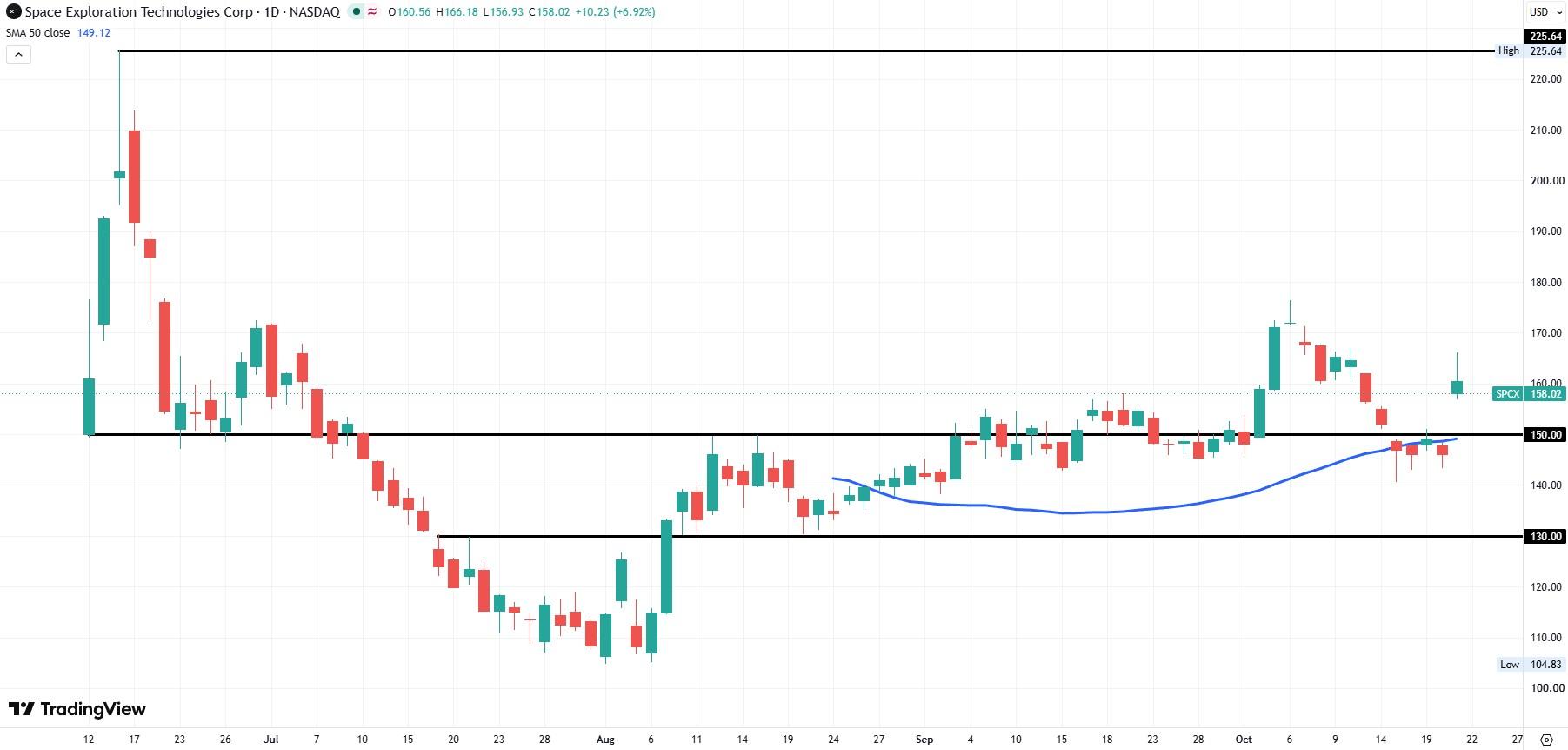
The aerospace-telecom-semiconductor-cum-AI company has seen its stock rocket up 10% in the aftermath on Wednesday, adding about $200 billion to its market cap. And a big reason for that is just how colossal the projections are.
In a bid to understand just how massive this company might become, Musk admitted during the earnings call that SpaceX and Tesla (TSLA), his other trillion-dollar company, had set up a committee to explore a possible merger.
AI revenue is exploding higher at SpaceX
SpaceX may have reported eye-popping revenue of $14.6 billion in Q3, up 161% YoY, but that pales in comparison to the future. Many laughed when CEO Musk made his $1 trillion in revenue by 2031 boast, but that figure now seems at least possible.
“We now see total company revenues in the range of $33 billion to $37 billion for Q1 of 2027,” said CFO Bret Johnsen on the earnings call.
Heading into the earnings release, the revenue projections, which are prone to upward revisions, were already at $161 billion in 2027 and $309 billion for 2028.
While all three corporate segments of SpaceX's business are experiencing massive growth, the AI segment is clearly the focus. The Super Intelligence (SI) segment posted revenue of $7.6 billion in the quarter, leapfrogging Connectivity's $5.2 billion, with a little over $600 million coming from its acquisition of Cursor.
Johnsen said that the SI segment ended the quarter with 1.7 GW of compute capacity and would reach 2.2 GW by the end of October. That makes Musk's claim that his company would reach 2.5 to 3.0 GW of compute by the end of the year well within reach. But that's only half the story, because SpaceX is already claiming that it will quadruple compute by the end of 2027, adding 10 GW of compute by the end of that calendar year.
This puts SpaceX compute capacity in league with the major rollouts of OpenAI and Anthropic and means that SpaceX's SI segment could likely surpass both AI labs in the back half of this decade. However, Musk was clear to state that he intends to retain about half of the company's compute for in-house model training and commercial offerings, with the other half available to rent out to other companies.
Connectivity raises profitability, Space segment hinges on Starship
Connectivity segment revenue was $5.2 billion in Q3, and that part of the company, which sells broadband internet access to customers, reached a gross margin of 55%. Profits from that segment helped SpaceX reach a quarterly net income of $4.4 billion, a massive improvement from the $1.1 billion loss the company reported a year ago when it was private. Adjusted EBITDA of $8.8 billion for Q3 was also impressive.
“We added 1.6 million consumers [in Q3,] reaching just under 14 million global broadband consumer subscribers," said COO Gwynne Shotwell. “We surpassed 22 million monthly users on Starlink Mobile as of the end of the quarter, up 37% QoQ”
The Connectivity segment should grow heavily from here after receiving approval from the Federal Communications Commission (FCC) to launch 15,000 mobile V2 satellites in recent weeks. The company also agreed to acquire a portfolio of low-band spectrum to expand its communications offerings.
The Space segment grew revenue just 6% YoY to $1.8 billion, but Musk said its new, reusable, heavy-load launch platform Starship would begin weekly flights in the first half of next year.
“We expect twice weekly or maybe even more frequently than that by the end of next year,” Musk added.
SpaceX is now on track to reach its previous goal of $100 billion in annual recurring revenue by year-end, but it is also spending heavily to meet those revenue goals. CFO Johnsen said that Q4 capex will hit $35 billion to $40 billion in Q4 alone, which is possibly double the $19.6 billion in Q3 capex.
Musk had fewer specifics about SpaceX's Terafab semiconductor project but said he expects to test the latest chips by May or June of next year. The “aspiration is to reach volume production around Q3 of 2028 at Gibbons Creek," Musk said in answer to an analyst question during the earnings call Q&A segment.
What the analysts are saying
Piper Sandler analyst Alexander Potter had the funniest response. "Clearly, we (and our sell-side peers) have been grossly mis-modeling SPCX, and our model requires substantial revision," Potter wrote in a client note.
Potter left his prior $140 price target in place ahead of a forthcoming reassessment.
JPMorgan analyst Doug Anmuth more than doubled his price target, which jumped from $240 to $500. That is now the highest on the Street, but Anmuth explicitly placed the target date for December 2027.
Cantor raised its price target from $246 to $345. UBS and Citi each raised their targets to $230 and $240.
The most eye-popping projection came from early SpaceX investor Peter Diamandis, who was interviewed on CNBC following the earnings rollout. Diamandis, who invested in SpaceX in 2013 when it was worth less than $10 billion, claimed that SpaceX will be the first $10 trillion company and will eventually hit $100 trillion.
"SpaceX has stopped being just a rocket company," Diamandis said in the interview with CNBC. "It's now a super intelligence company. It's a global communications company. It's a dominant infrastructure company. There's nothing like this."
Author

Clay Webster
FXStreet
Clay Webster grew up in the US outside Buffalo, New York and Lancaster, Pennsylvania. He began investing after college following the 2008 financial crisis.
















