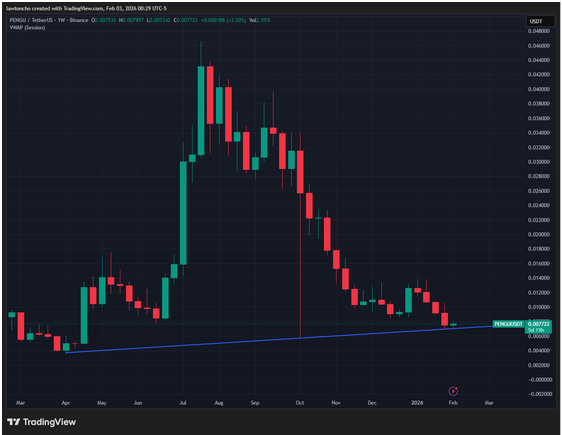
The major trendline keeping PENGU afloat

Pudgy Penguins (PENGU) has had a difficult year, and there’s no way around that. From its highs less than a month ago, the cryptocurrency is now down more than 44%, a sharp pullback that has caught the attention of traders across the board. This move did not happen in isolation. It came alongside broader weakness in the crypto market, following the pullbacks we’ve seen in major names like Bitcoin and Ethereum. When the leaders stumble, altcoins like PENGU often feel that pressure more aggressively.
When I step back and look at PENGU from a larger timeframe, the story becomes much clearer through the technicals. Despite the heavy selling, there is still a key structure holding price up for now. PENGU is currently resting on a major upsloping trendline that has been respected over time. This trendline can be drawn by connecting the Liberation Day lows from April, carrying that line through the lows formed in October, and extending it forward to where price is trading today. As long as this trendline remains intact, it represents the primary technical support keeping PENGU afloat.
That said, this is not a level I take lightly. Trendlines like this often act as a line in the sand. If price continues to respect it, it can serve as a base for stabilization. However, if this upsloping trendline breaks and confirms to the downside, the technicals would shift meaningfully. In that scenario, the risk of a much deeper move lower increases, and a more severe breakdown could be incoming for the altcoin. From my perspective, this is the level that matters most right now.
For those less familiar with Pudgy Penguins, it’s important to understand it within the context of the broader altcoin market. PENGU is a cryptocurrency that, like many altcoins, tends to move with overall market sentiment while also experiencing sharper swings during periods of volatility. That’s why levels like long-term trendlines are so important—they help frame risk and define where the market’s structure is still holding versus where it begins to fail.
As always, I want to emphasize discipline. Crypto markets move fast, and technical levels can resolve quickly once they break. Whether you’re actively trading or simply monitoring price action, proper risk management is essential. The technicals can give us structure and context, but how you manage risk is what ultimately determines long-term survival in this market.
Author

Lawton Ho
Verified Investing
A marketing expert sharing his journey to mastering the charts.