|

Stocks survive PCE and consumer data – FOMC too?

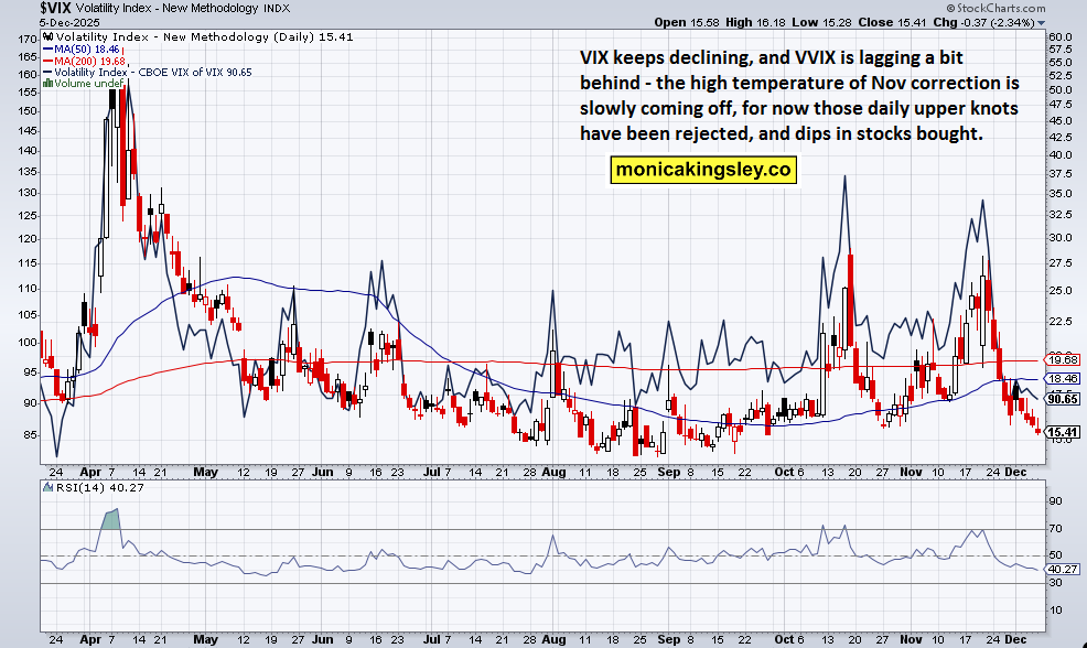
S&P 500 took a dive 75min before the opening bell, retail enthusiastically bought into PCE and UoM data release, and prices then settled little changed on the pre-flush level. What‘s apparent from checking the hourly on both ES and NDX this week? A series of higher highs and higher lows – remarkable resilience in a week that started with BTC selloff early Monday.

Friday was a bad day for crypto too, yet Nasdaq held considerably better once again. Mag 7 stocks are acting less uniform as a group, and the yearly winners (NVDA and earlier discussed GOOGL) clearly show up – I would highlight further discussed banking sectors too.

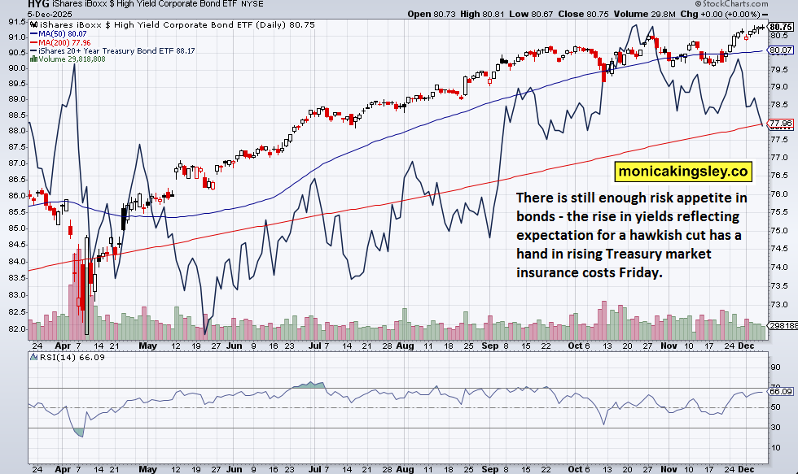
With the traditional Santa Claus rally expectation, we must ask whether there is sufficient breadth in the market to support such a feat – and whether Powell next week giving us a widely expected hawkish cut, will be enough for stocks to go on… look at ORCL and AVGO earnings too.

Friday‘s dynamic to highlight is the poor data expectation, so readily bought, and when the data came, they weren‘t nearly enough that bad to sink the 500-strong index.

Look also at retailers‘ performance, check out also DG, and UoM data – with leading indicators for services being better than for manufacturing, that tells us as much as there is to say about that recession risk… or for the „contagion“ of rising Japanese yields that were unable to sink Nikkei, let alone stocks around the world… nuff said.
Author

Monica Kingsley

Monica Kingsley

Monicakingsley

Monica Kingsley is a trader and financial analyst serving countless investors and traders since Feb 2020.


More from Monica Kingsley
Share:

Editor's Picks

AUD/USD holds above 0.7000 ahead of FOMC policy meeting

AUD/USD attracts some dip-buyers near 0.7000 during the Asian session on Tuesday, stalling the previous day's pullback from a one-month high as bets for a November RBA rate hike continue to act as a tailwind for the Aussie. Meanwhile, the US Dollar consolidates gains from the past two days ahead of the crucial two-day FOMC meeting starting later today, further supporting the currency pair.

USD/JPY consolidates above 157.50 as traders await Fed, BoJ meetings

USD/JPY trades above mid-157.00s during the Asian session on Tuesday, looking to build on its recovery from an over one-month low as speculation that the BoJ may hold off on aggressive rate hikes undermines the Japanese Yen. Meanwhile, the US Dollar sits near a one-week high, further supporting the currency pair. Bulls, however, seem hesitant ahead of Wednesday’s FOMC decision and the BoJ policy update on Friday.

Gold trades above $4,000 and a three-month low as focus remains on FOMC

Gold attracts fresh sellers during the Asian session on Tuesday, reversing part of the previous day's modest recovery from a three-month low. US bond yields rebound slightly after the recent decline to a three-week low, helping the US Dollar preserve its gains recorded over the past two days and weighing on the non-yielding bullion. The commodity, however, holds above $4,000 as bears seem hesitant ahead of Wednesday’s FOMC rate decision.

Ethereum: BitMine continues buying as ETH slips below $2,355

Ethereum (ETH) treasury firm BitMine Immersion Technologies (BMNR) extended its buying streak of the top altcoin last week while expanding its share buybacks. The company said Monday that it acquired 10,452 ETH over the past week, continuing a buying streak that stretches to June 2025.

Everyone's bracing for a hawkish central bank week. Here's why the surprise could be dovish

Five of the world's major central banks are preparing to announce monetary policy decisions this week, with investors increasingly anticipating higher interest rates as the global energy shock continues to push inflation above target.

What November 3 means for the Fed's rate path and the US Dollar

The USD faces a decisive period ahead of the November 3 midterm elections. While markets anticipate another interest rate increase from the Fed in December, the battle for control of Congress could reshape fiscal policy expectations and, indirectly, the path of US monetary policy in 2027.