|
SPDR financial sector ($XLF) blue box area offering a buying opportunity


In today’s article, we’ll review the recent performance of SPDR Financial Sector ($XLF) through the lens of Elliott Wave Theory. We’ll look at how the pullback from all-time highs unfolded as a textbook 3-swing correction and discuss what could come next. Let’s explore the structure and the expectations for this ETF.
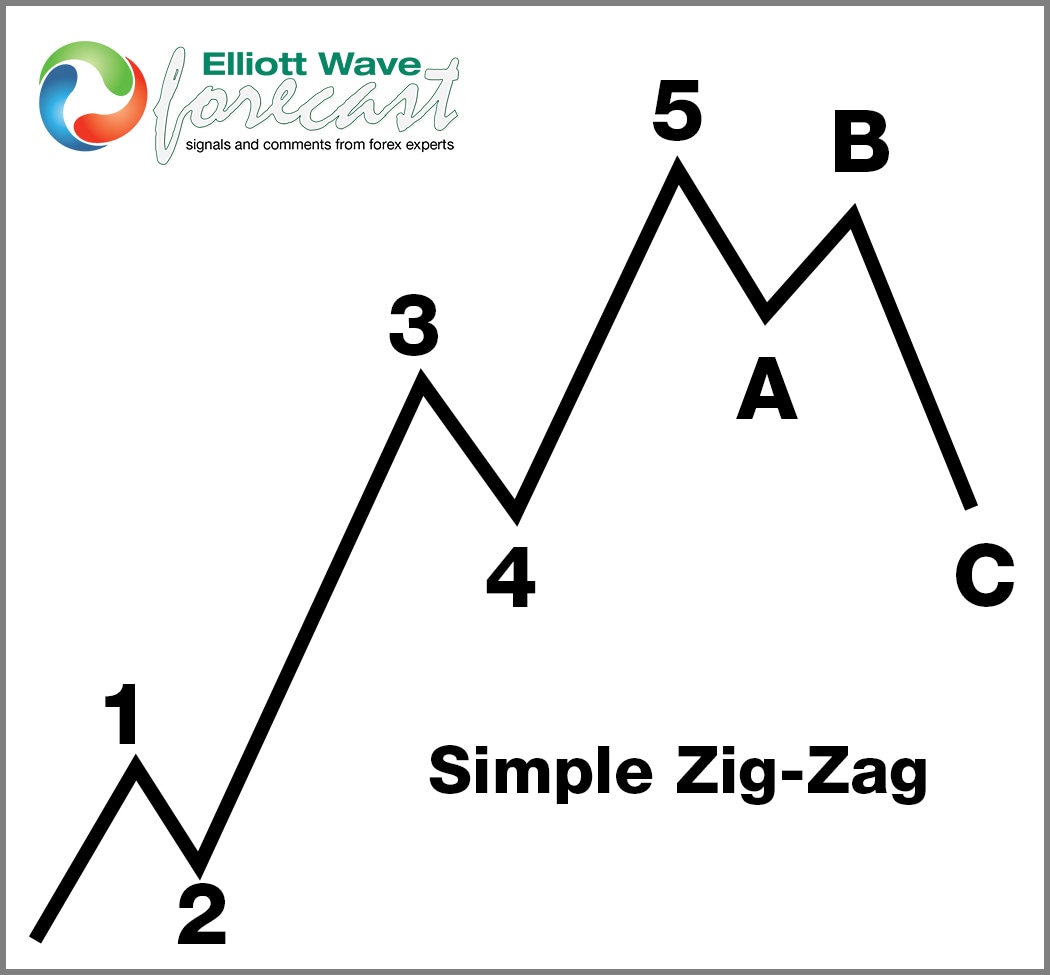
Five-wave impulse structure + ABC correction
$XLF one-hour Elliott Wave chart 1.12.2026
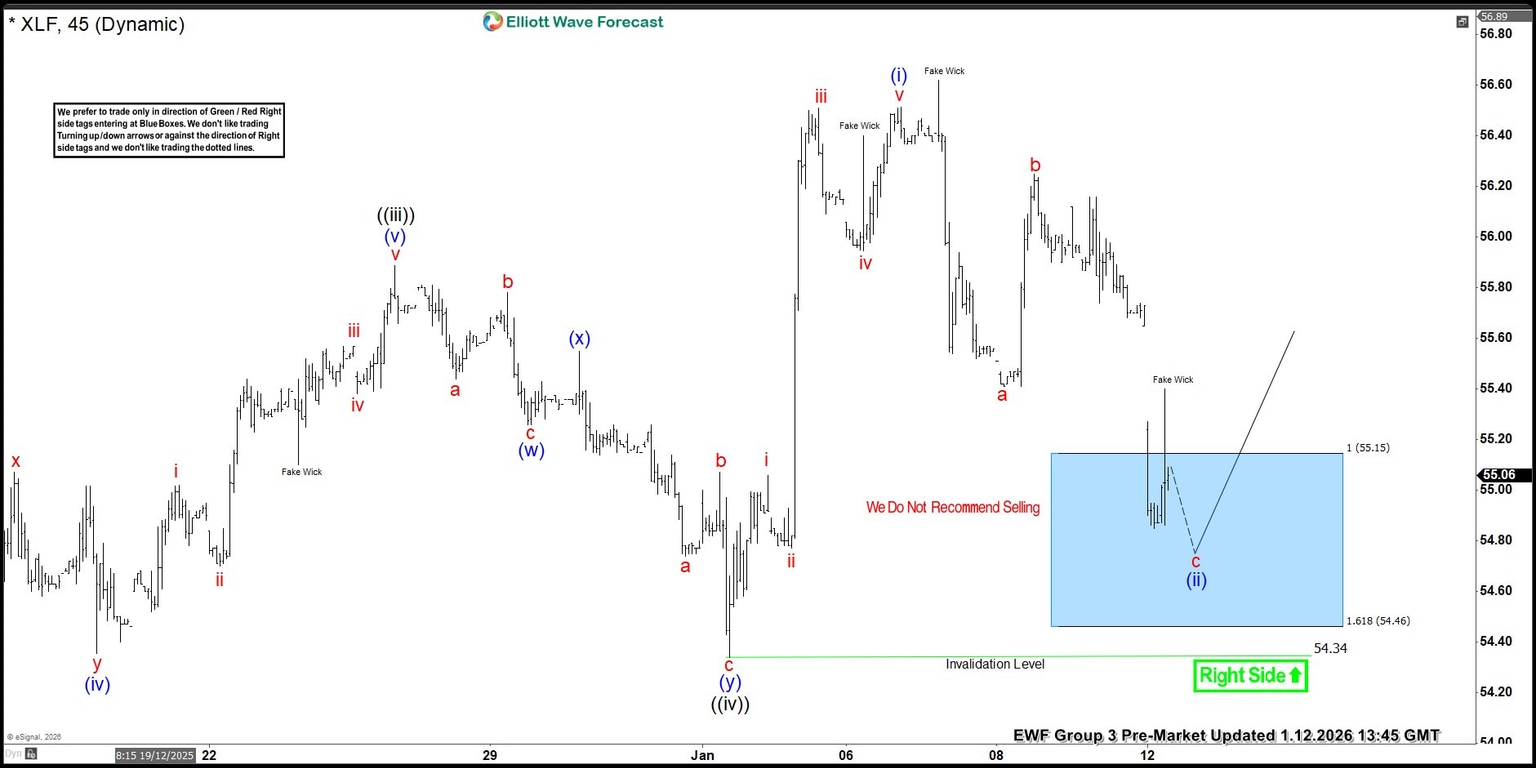
In the 1-hour Elliott Wave chart from January 12, 2026, $XLF completed a clear 5-wave impulsive cycle labeled blue (i). After such a move, a corrective pullback is typical. As expected, the ETF began to retrace in three swings, forming what we identify as an ABC correction.
The price action suggested that buyers would likely appear near the blue box area between $55.15 and $54.46. This zone represents the ideal region where a correction usually ends and a new bullish cycle begins.
In other words, the market took a brief pause before potentially resuming its primary uptrend. Therefore, this structure aligns well with a standard Elliott Wave correction, offering traders a technical roadmap.
What’s next
At this stage, $XLF remains well-supported against the November 2025 and January 2026 lows. Traders who entered in the blue box area can now focus on the 50% retracement level as the next important target.
However, the market may not move in a straight line. Minor pullbacks are natural. In fact, these short-term corrections could offer fresh buying opportunities for those waiting to join the trend. As always, it’s important to monitor price behavior closely and apply proper risk management.
Conclusion
In conclusion, our Elliott Wave analysis of $XLF suggests the ETF continues to trade within a bullish framework. By using Elliott Wave Theory, traders can better anticipate market structure, identify continuation zones, and plan trades with greater confidence.
In addition, understanding how impulse and correction phases interact helps improve risk control, especially in volatile markets like this one. Therefore, maintaining flexibility and discipline remains key as this structure evolves.
Author
Elliott Wave Forecast Team
ElliottWave-Forecast.com
More from Elliott Wave Forecast Team