|

SOS Stock Price: Sos Ltd edges lower as institutional Bitcoin adoption continues

  • NYSE:SOS fell by 0.44% during Wednesday’s trading session.
  • The Central African Republic becomes the second country to legalize Bitcoin.
  • Fidelity introduces Bitcoin investing for Americans in their 401Ks.

NYSE:SOS fell below water during the final minutes of Wednesday’s session as a last hour pullback in the broader markets pushed the stock into the red. Shares of SOS fell by 0.44% and closed the trading session at $0.39. Markets remained volatile on Wednesday although it was an improvement over Tuesday’s session. After jumping out to a positive start in the morning, all three major averages pulled back and erased most of their gains by the closing bell. The Dow Jones rebounded by adding 62 basis points, the S&P 500 rose by 0.21%, while the struggling NASDAQ dipped into the red with a 0.01% loss to close the session.


Stay up to speed with hot stocks' news!


Bitcoin–related companies received some more promising news on Wednesday, as the Central African Republic (CAR) has officially adopted the blue-chip crypto as a legal tender. CAR became the second country to do so following in the footsteps of El Salvador last year. While initial results out of El Salvador have not been as bullish as many in the crypto industry first forecasted, it seems that other governments are still considering adopting Bitcoin into their economies. CAR is one of the world’s poorest countries, but is a major producer of resources like diamonds, gold, and uranium.

SOS stock forecast
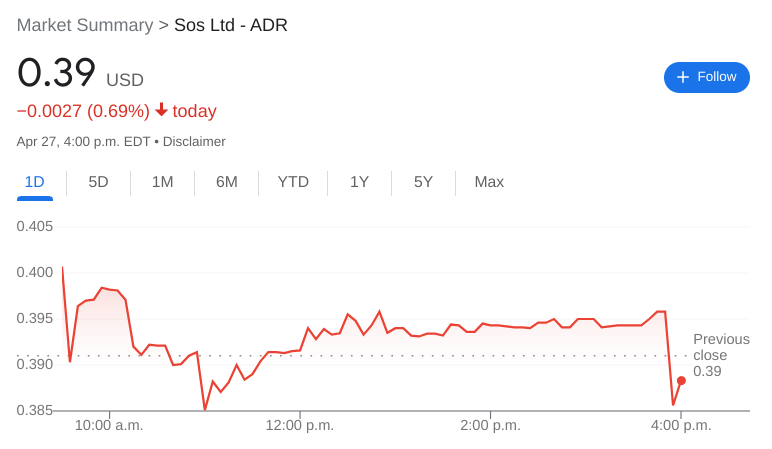
SOS Stock

In stateside Bitcoin news, Fidelity Investments is showing that they are bullish on cryptocurrencies for the long-term. So much so that the investment firm is allowing Americans to add Bitcoin to their 401K retirement portfolios in a first for the country. Investors will be able to add up to 20% of their accounts in Bitcoin. Not surprisingly, major Bitcoin investor MicroStrategy (NASDAQ:MSTR) was the first company to sign up for the account.

Author

More from Stocks Reporter
Share:

Editor's Picks

GBP/USD off highs, back to 1.3620

GBP/USD remains slightly on the defensive at the end of the week, receding to the low 1.3600s after hitting fresh tops past 1.3670 earlier in the day. Cable’s correction comes after two daily gains in a row and amid a tepid advance in the Greenback, while poor UK data also accompany the downside.

EUR/USD treads water below 1.1700

EUR/USD now trades with modest losses around 1.1670 following another unsuccessful atempt to advance past 1.1700 the figure in a convincing fashion. The pair’s decline follows a maginal rebound in the US Dollar as market participants continue to assess recent US data as well as developments from the US bond market.

Gold trims gains, recedes to the sub-$4,600 area

Gold rapidly leaves behind Thursday’s inconclusive price action and advances markedly on Friday, briefly surpassing the $4,600 mark per troy ounce to hit three-month peaks. Meanwhile, the precious metal’s solid performance comes despite marginal gains in the buck coupled with another day of rising US Treasury yields across the curve.

Crypto Today: Bitcoin, Ethereum, XRP bulls accelerate rally amid rising ETF inflows

The cryptocurrency market remains bullish on Friday, led by Bitcoin’s surge above $77,000. Altcoins, including Ethereum and Ripple, mirror BTC’s positive outlook, trading near $2,400 and $1.35, respectively.

Week ahead – Fed’s Jackson Hole and Nvidia earnings to dictate markets

Kevin Warsh to make his Jackson Hole debut amid confusing messaging. But a major hawkish surprise unlikely after bond market intervention. Nvidia earnings to also determine market direction as stock rally cools.

$20 billion offered, $2 billion taken: Why Treasury doubled its buyback cap

The US Treasury moved off its own calendar on Wednesday, and that is the part worth sitting with. At 12:32 GMT, the department said it would at least double the size of liquidity support buyback operations in the 10-year to 20-year and 20-year to 30-year sectors, lifting the maximum from $2 billion per operation to at least $4 billion, effective September 9 and running to November 4.