Silver bulls move in on a critical level of resistance
- Silver is moving in on a critical level of resistance as the US dollar crumbles.
- US ADP jobs data is a negative prelude ahead of the Nonfarm Payrolls showdown, pressuring the greenback.


The price of silver continues to test the ceiling of the dynamic resistance as the US dollar struggles to stay within a bullish territory.
At the time of writing, XAG/USD is trading at $24.17 between a low of $23.76 and a high of $24.026.
The US dollar has come under further pressure on Wednesday as measured against a basket of major currencies, (DXY index), following a US jobs market report that has missed expectations by a mile.
The data could be seen as a prelude to the highly anticipated Nonfarm Payrolls report this Friday.
The ADP National Employment Report has shown that private payrolls rose by 374,000 in August, up from 326,000 in July but well short of the 613,000 forecasts.
The data has been perceived to be indicative of a broad cool-down in the labour market recovery amid a persistent worker drought.
This brings the risks of the highly contagious COVID Delta variant to the fore and dampens prospects of an imminent taper announcement from the US Federal Reserve.
On the flipside, factory activity has surprised to the upside by expanding at an ever-so-slightly accelerated pace last month due to an uptick in new orders.
The Institute for Supply Management's (ISM) purchasing managers' index (PMI) added a modest 0.4 points to 59.9.
The final take on August manufacturing PMI was also delivering a positive reading of 61.1.
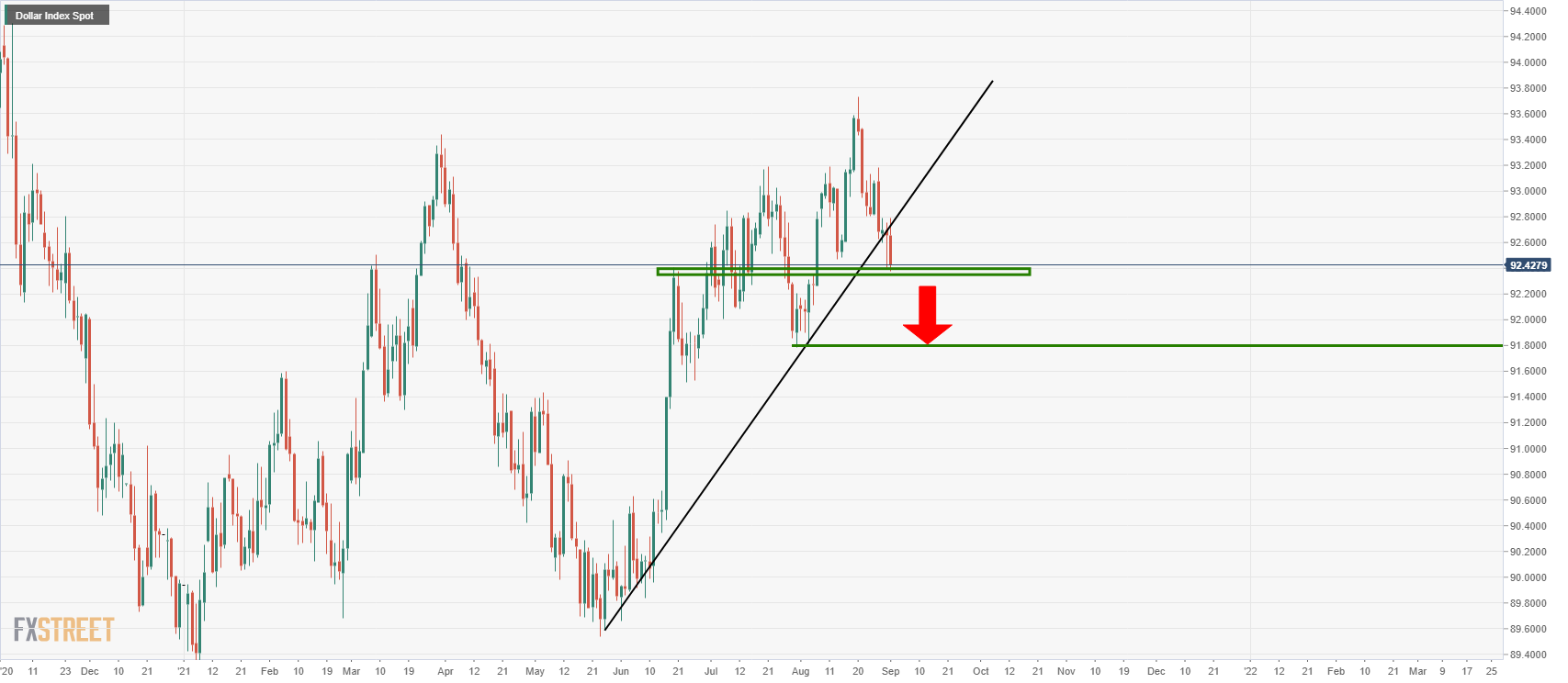
Nevertheless, the DXY index is in the red by some 0.23% at the time of writing and has moved in on a critical structure near the June highs which might be regarded as the last defence before 91.80:
DXY daily chart
Silver price analysis
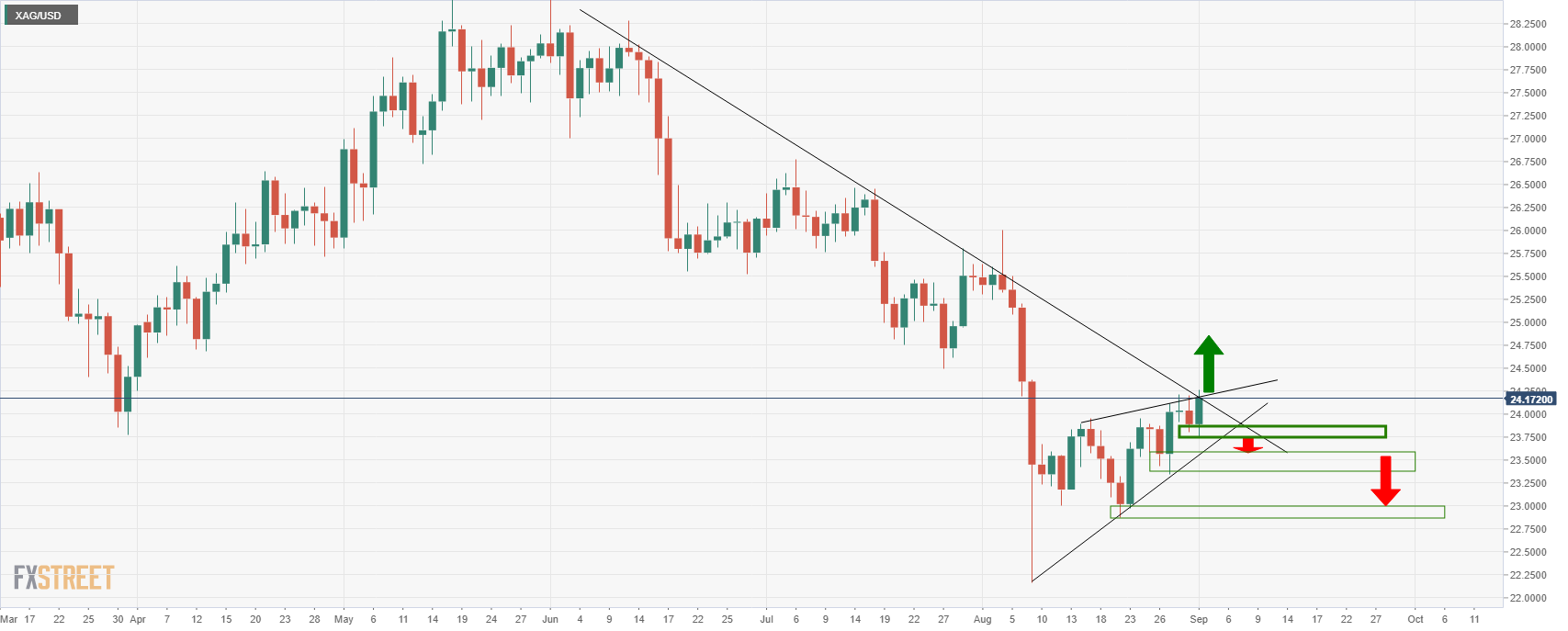
The price of silver is testing a dynamic level of resistance and a breach there will leave the bulls in good stead for prospects of a medium-term bullish breakout.
On the downside, 23.50 guards 23.00/22.80 support levels.
Author
Ross J Burland
FXStreet
Ross J Burland, born in England, UK, is a sportsman at heart. He played Rugby and Judo for his county, Kent and the South East of England Rugby team.