Should you convert your Traditional IRA to a Roth? Here are the tax implications
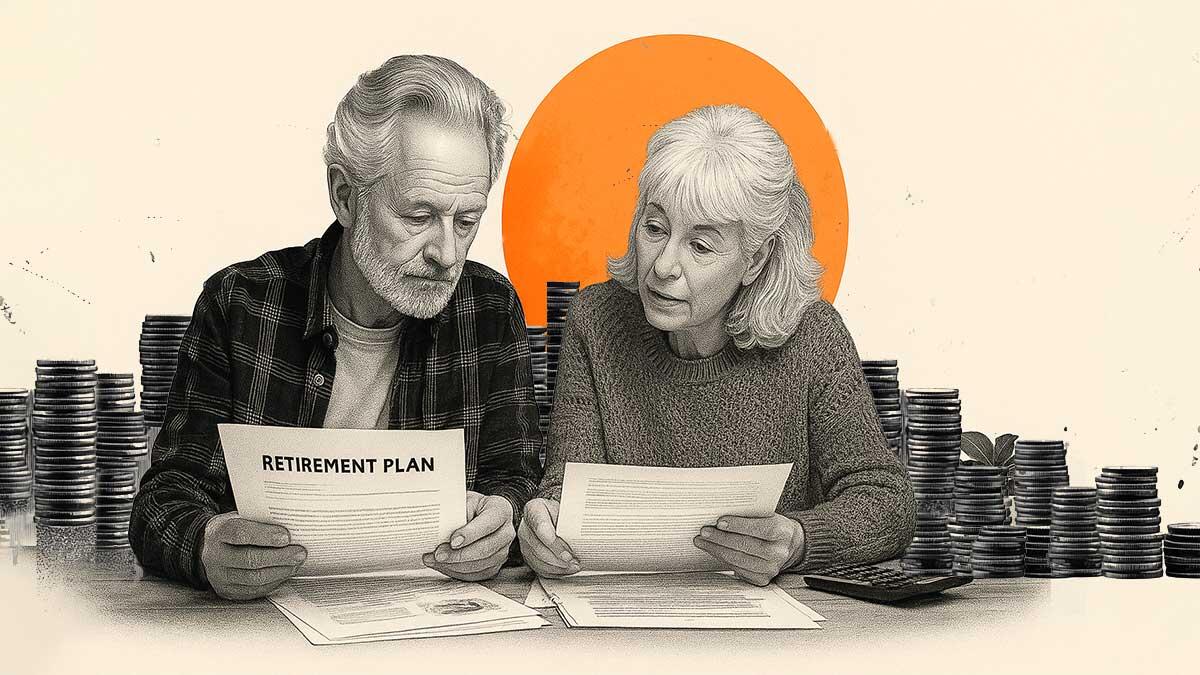
The Individual Retirement Account (IRA) is a cornerstone of retirement planning in the United States. Among the strategic choices available to savers, there is growing interest in converting a Traditional IRA to a Roth (or Roth conversion).
This move transforms tax-deferred retirement savings into tax-free growth assets. But beware: there are immediate tax consequences to such a decision, and it's imperative to understand them before taking the plunge.
From Traditional IRA to Roth IRA: Understanding the basics
A Traditional IRA allows you to make tax-deductible contributions, but imposes income tax on subsequent withdrawals. Conversely, a Roth IRA works with after-tax dollars: you pay taxes at the time of contribution or conversion, but withdraw your funds tax-free at retirement, under certain conditions.
A Roth conversion involves transferring all or part of a Traditional IRA to a Roth IRA. In return, you pay tax immediately on the converted amount, as if you had withdrawn it.
Tax implications: A hefty bill to be anticipated
When you make an IRA conversion, the amount transferred is added to your taxable income for the year.
This can push you over a higher tax bracket, increasing not only your federal taxes, but also your Medicare premiums, state taxes and even the taxable portion of your Social Security.
For example, if you convert $30,000 while in a 22% marginal bracket, you'll owe $6,600 in federal taxes, not including other tax charges. If part of this conversion puts you in the 24% bracket, the bill climbs even higher.
So it's often a good idea to spread conversions over several years, to avoid bracket creep and smooth out the tax burden.
Advantages of a Roth conversion
Despite the short-term tax implications, a Roth conversion offers some long-term advantages:
- Tax-free growth and withdrawals: As long as you meet the five-year rule and are over age 59 and a half, your withdrawals (principal + gains) are tax-free.
- No Required Minimum Distributions (RMDs): Unlike Traditional IRAs, the Roth does not impose RMDs after age 73 or 75, offering greater flexibility.
- Beneficial inheritance: Your heirs can withdraw the money without paying federal income tax, under certain conditions.
- Tax diversification: Having both a Traditional IRA and a Roth allows you to better control your taxes in retirement, depending on your needs.
Beware the five-year rule
A little-known trap: every Roth conversion starts a "five-year period". If you withdraw the converted money within this period, you risk a 10% penalty, with some exceptions.
This rule applies regardless of your age, even if you've already had a Roth open for a long time.
Mistakes to avoid
- Paying taxes with the IRA itself: If you use the converted money to pay taxes, you diminish your retirement capital, and if you're under 59 years and a half, you also incur the 10% penalty.
- Ignore the pro rata rule: If you have both deductible and non-deductible contributions in your IRAs, the IRS imposes a proportional (pro rata) calculation on any conversion. You cannot choose to convert only the non-taxable portion.
- Converting too much at once: This can explode your taxable income, jeopardize certain tax credits, and affect your Medicare premiums or the taxation of your Social Security benefits.
When is conversion relevant?
Here are a few cases where the Roth conversion may make sense:
- You anticipate an increase in your tax rate in retirement (for example, if you have little income today, or if you believe taxes will rise in the future).
- Your investments have fallen: converting during a market downturn allows you to transfer more units for less tax.
- You're young or far from retirement: the longer the money stays invested in the Roth, the greater the tax gain.
- You don't need RMDs and want to optimize your children's inheritance.
When avoid conversion?
- If you're going to need the money in less than five years, it's best not to convert.
- If you're in a high tax bracket today, but anticipate a drop when you retire.
- If you don't have the non-IRA cash to pay the taxes due on conversion.
How to convert a Traditional IRA to a Roth?
The simplest and safest method is a direct transfer between institutions (trustee-to-trustee). You can also request a transfer between accounts in the same bank, or proceed by check within 60 days, which is more risky.
Don't forget to complete form 8606 with your tax return to notify the IRS of the conversion.
A strategic tool, but not universal
Roth conversion is a powerful tool for retirement planning, but it requires personalized analysis. It's not an "all or nothing" decision: you can convert in stages, choosing amounts according to your tax brackets, future needs and wealth objectives.
Before making any decisions, it's best to consult a tax advisor or financial planner. The wrong conversion can be costly. The right strategy, on the other hand, can optimize your retirement income and reduce your tax burden for decades to come.
IRAs FAQs
An IRA (Individual Retirement Account) allows you to make tax-deferred investments to save money and provide financial security when you retire. There are different types of IRAs, the most common being a traditional one – in which contributions may be tax-deductible – and a Roth IRA, a personal savings plan where contributions are not tax deductible but earnings and withdrawals may be tax-free. When you add money to your IRA, this can be invested in a wide range of financial products, usually a portfolio based on bonds, stocks and mutual funds.
Yes. For conventional IRAs, one can get exposure to Gold by investing in Gold-focused securities, such as ETFs. In the case of a self-directed IRA (SDIRA), which offers the possibility of investing in alternative assets, Gold and precious metals are available. In such cases, the investment is based on holding physical Gold (or any other precious metals like Silver, Platinum or Palladium). When investing in a Gold IRA, you don’t keep the physical metal, but a custodian entity does.
They are different products, both designed to help individuals save for retirement. The 401(k) is sponsored by employers and is built by deducting contributions directly from the paycheck, which are usually matched by the employer. Decisions on investment are very limited. An IRA, meanwhile, is a plan that an individual opens with a financial institution and offers more investment options. Both systems are quite similar in terms of taxation as contributions are either made pre-tax or are tax-deductible. You don’t have to choose one or the other: even if you have a 401(k) plan, you may be able to put extra money aside in an IRA
The US Internal Revenue Service (IRS) doesn’t specifically give any requirements regarding minimum contributions to start and deposit in an IRA (it does, however, for conversions and withdrawals). Still, some brokers may require a minimum amount depending on the funds you would like to invest in. On the other hand, the IRS establishes a maximum amount that an individual can contribute to their IRA each year.
Investment volatility is an inherent risk to any portfolio, including an IRA. The more traditional IRAs – based on a portfolio made of stocks, bonds, or mutual funds – is subject to market fluctuations and can lead to potential losses over time. Having said that, IRAs are long-term investments (even over decades), and markets tend to rise beyond short-term corrections. Still, every investor should consider their risk tolerance and choose a portfolio that suits it. Stocks tend to be more volatile than bonds, and assets available in certain self-directed IRAs, such as precious metals or cryptocurrencies, can face extremely high volatility. Diversifying your IRA investments across asset classes, sectors and geographic regions is one way to protect it against market fluctuations that could threaten its health.
Author

Ghiles Guezout
FXStreet
Ghiles Guezout is a Market Analyst with a strong background in stock market investments, trading, and cryptocurrencies. He combines fundamental and technical analysis skills to identify market opportunities.

















