Bullock Speech: RBA Governor discusses policy outlook after raising interest rate
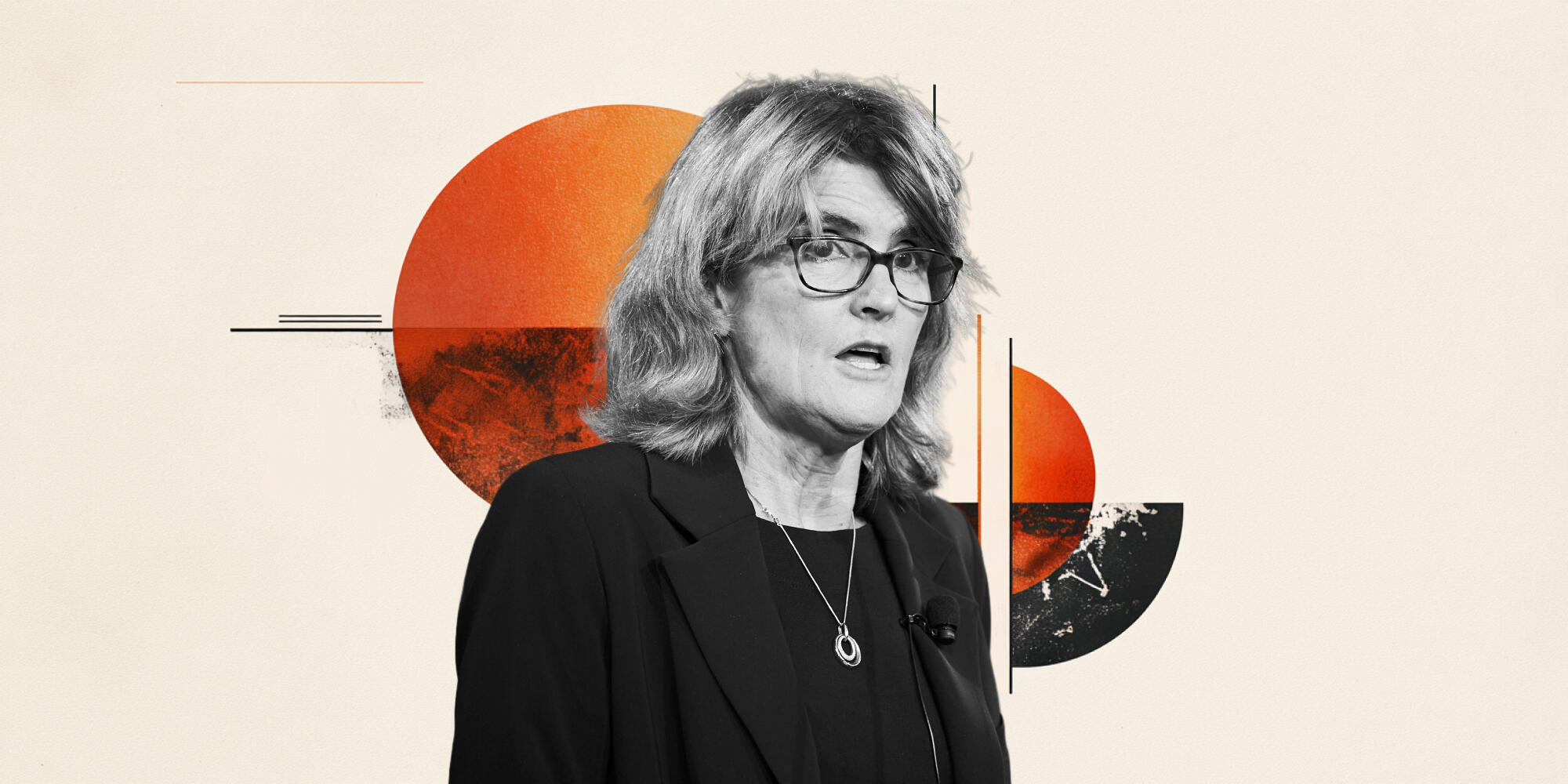
Reserve Bank of Australia (RBA) Governor Michele Bullock is addressing the press conference, explaining the reasons behind raising the benchmark interest rate by 25 basis points (bps) to 3.85% after the February monetary policy meeting.
Bullock is taking questions from the press as part of a new reporting format introduced by the central bank last year.
Key quotes from the RBA press conference
Inflation pulse is too strong.
We cannot allow inflation to get away from us again.
Did not discuss 50 bps rate rise.
Board will be cautious on rates.
Seeing some tightening in financial condtions through the A$.
Rising A$ is helpful at the margin.
Do not know if this will be a tightening cycle.
Can't rule anything out or in.
Board will be very actively monitoring data.
This section below was published at 03:30 GMT to cover the Reserve Bank of Australia's monetary policy announcements and the initial market reaction.
The Reserve Bank of Australia (RBA) board members decided on Tuesday to raise the Official Cash Rate (OCR) by 25 basis points (bps) to 3.85% from 3.6%, following the conclusion of the February monetary policy meeting.
The decision was widely expected by the market.
Summary of the RBA Monetary Policy Statement
Today’s policy decision was unanimous.
The board will be attentive to the data and the evolving assessment of the outlook and risks to guide its decisions.
While inflation has fallen substantially since its peak in 2022, it picked up materially in the second half of 2025.
Board judged that inflation is likely to remain above target for some time and it was appropriate to increase the cash rate target.
A wide range of data over recent months have confirmed that inflationary pressures picked up materially in the second half of 2025.
Some of the increase in inflation reflects greater capacity pressures.
Board considers that inflation is likely to remain above target for some time.
While part of the pick-up in inflation is assessed to reflect temporary factors, it is evident that private demand is growing more quickly than expected, capacity pressures are greater than previously assessed.
Labor market conditions are a little tight.
Labor market conditions remain a little tight and that they have stabilised in recent months.
Board is focused on its mandate to deliver price stability and full employment and will do what it considers necessary to achieve that outcome.
There are uncertainties about the outlook for domestic economic activity and inflation and the extent to which monetary policy is restrictive.
Forecasts based on assumption of 3.9% cash rate by June, 4.2% by December.
Raises inflation forecasts out to end 2027.
Assumed rise in cash rate expected to restore balance between demand and supply.
Economy judged to be further from balance than assumed, growing above potential.
Some indicators suggest financial conditions may now be "somehat accommodative".
Private demand growth was much stronger than expected in the second half of 2025.
Inflation in Q4 was "materially higher" than expected, partly due to less persistent factors.
Total credit growth has picked up sharply, cash rate below some measures of neutral.
RBA sharply raises forecasts for business investment through 2026, thanks in part to data centres.
Raises forecasts for government spending and dwelling investment.
Some of that demand growth was sector-specific and might not persist.
Sees GDP growth 2.3% Q4 2025, 1.8% Q4 2026, 1.6% Q4 2027.
Sees CPI inflation 4.2% Q2, 3.6% Q4 , 2.7% Q4 2027, 2.6% Q2 2028.
Sees trimmed mean inflation 3.7% Q2, 3.2% Q4, 2.7% Q4 2027, 2.6% Q2 2028.
Global economic growth better than expected in 2025, downside risks have lessened.
Sees unemployment rate 4.3% Q4 2026, 4.5% Q4 2027, 4.6% Q2 2028.
AUD/USD reaction to the RBA interest rate decision
The Australian Dollar catches fresh bids in an immediate reaction to the RBA’s decision. The AUD/USD pair retakes 0.7000, as of writing, up 0.75% on the day.
Australian Dollar Price Today
The table below shows the percentage change of Australian Dollar (AUD) against listed major currencies today. Australian Dollar was the strongest against the US Dollar.
| USD | EUR | GBP | JPY | CAD | AUD | NZD | CHF | |
|---|---|---|---|---|---|---|---|---|
| USD | -0.13% | -0.11% | -0.05% | -0.08% | -0.80% | -0.34% | -0.15% | |
| EUR | 0.13% | 0.02% | 0.07% | 0.05% | -0.67% | -0.21% | -0.02% | |
| GBP | 0.11% | -0.02% | 0.09% | 0.03% | -0.68% | -0.23% | -0.04% | |
| JPY | 0.05% | -0.07% | -0.09% | -0.02% | -0.74% | -0.29% | -0.09% | |
| CAD | 0.08% | -0.05% | -0.03% | 0.02% | -0.72% | -0.26% | -0.07% | |
| AUD | 0.80% | 0.67% | 0.68% | 0.74% | 0.72% | 0.46% | 0.65% | |
| NZD | 0.34% | 0.21% | 0.23% | 0.29% | 0.26% | -0.46% | 0.19% | |
| CHF | 0.15% | 0.02% | 0.04% | 0.09% | 0.07% | -0.65% | -0.19% |
The heat map shows percentage changes of major currencies against each other. The base currency is picked from the left column, while the quote currency is picked from the top row. For example, if you pick the Australian Dollar from the left column and move along the horizontal line to the US Dollar, the percentage change displayed in the box will represent AUD (base)/USD (quote).
This section below was published on February 2 at 21:45 GMT as a preview of the Reserve Bank of Australia (RBA) policy announcements.
- The Reserve Bank of Australia is set to hike the interest rate by 25 bps to 3.85% in February.
- RBA Governor Bullock’s words and updated economic forecasts could offer hints on future rate hikes.
- The Australian Dollar braces for intense volatility on the RBA policy announcements.
The Reserve Bank of Australia (RBA) is widely expected to raise the Official Cash Rate (OCR) to 3.85% from 3.6% after concluding its first monetary policy meeting of 2026.
The decision will be announced on Tuesday at 03:30 GMT, accompanied by the Monetary Policy Statement (MPS) and the quarterly economic forecasts, followed by RBA Governor Michele Bullock’s press conference at 04:30 GMT.
The Australian Dollar (AUD) is set to rock in reaction to the RBA policy announcement and updated economic projections.
RBA is set to break the global easing trend
The RBA is on track to deliver its first interest rate hike in more than two years when it meets on Tuesday for its February monetary policy meeting, ditching the global easing trend in an attempt to curb the rising inflationary pressures.
During the press conference following the December monetary policy decision, Governor Michele Bullock explicitly said, “the Board will do what it needs to do to get inflation down,” adding that “If data suggests inflation is not slowing, that will be considered at the Feb board meeting.”
Data from the Australian Bureau of Statistics (ABS) showed last Wednesday that the monthly Consumer Price Index (CPI) leaped to 3.8% in December from 3.4% in November and above forecasts of a 3.6% rise.
The trimmed mean CPI, the RBA’s closely watched measure of core inflation, rose 0.9% quarterly in the fourth quarter, beating the market forecasts of a 0.8% increase.
Following the hot inflation numbers, money markets implied a 73% probability of a rate hike, compared with 60% previously, according to Reuters.
Meanwhile, Australia’s big four banks, including the ANZ, Westpac, Commonwealth Bank of Australia and the National Australia Bank (NAB), altered their call, forecasting a quarter-point RBA rate hike in February.
Another economic indicator backing the expected rate lift-off was the Australian labor data. On January 22, the ABS said that the Unemployment Rate unexpectedly dropped to 4.1%, the lowest level since May, from 4.3%. Net employment jumped by 65.2K in December from -28.7K in November.
How will the Reserve Bank of Australia’s decision impact AUD/USD?
The AUD appears exposed to two-way risks against the US Dollar (USD) in the lead-up to the RBA showdown.
AUD/USD could snap the corrective trend and resume its uptrend if the RBA Governor Bullock’s comments and the updated economic forecasts suggest that more rate hikes remain on the table in the coming months.
Conversely, the Aussie pair could stretch its recent downtrend if RBA Governor Bullock plays down expectations of further rate hikes amid a potentially stable inflation projection.
Dhwani Mehta, Asian Session Lead Analyst at FXStreet, highlights key technical levels for trading AUD/USD following the policy announcement.
“AUD/USD is trading under the 0.7000 threshold ahead of the RBA rate call, holding its correction from a three-year peak of 0.7094 set on Thursday. The 14-day Relative Strength Index (RSI) has fallen sharply from the overbought region to currently test the 60 level, suggesting that the upward bias still remains intact.”
“The Aussie pair could reverse course and initiate a fresh uptrend toward the 0.7050 psychological level on a hawkish RBA rate hike. The next relevant resistance levels are aligned at the 2026 high of 0.7094 and the February 2023 high of 0.7158. Alternatively, the pair could challenge the 0.6900 area if the RBA disappoints the hawks. A firm break below that level will unleash additional downside toward the 0.6850 psychological barrier. The last line of defense for buyers is seen at the 0.6800 round figure,” Dhwani adds.
Australian Dollar FAQs
One of the most significant factors for the Australian Dollar (AUD) is the level of interest rates set by the Reserve Bank of Australia (RBA). Because Australia is a resource-rich country another key driver is the price of its biggest export, Iron Ore. The health of the Chinese economy, its largest trading partner, is a factor, as well as inflation in Australia, its growth rate and Trade Balance. Market sentiment – whether investors are taking on more risky assets (risk-on) or seeking safe-havens (risk-off) – is also a factor, with risk-on positive for AUD.
The Reserve Bank of Australia (RBA) influences the Australian Dollar (AUD) by setting the level of interest rates that Australian banks can lend to each other. This influences the level of interest rates in the economy as a whole. The main goal of the RBA is to maintain a stable inflation rate of 2-3% by adjusting interest rates up or down. Relatively high interest rates compared to other major central banks support the AUD, and the opposite for relatively low. The RBA can also use quantitative easing and tightening to influence credit conditions, with the former AUD-negative and the latter AUD-positive.
China is Australia’s largest trading partner so the health of the Chinese economy is a major influence on the value of the Australian Dollar (AUD). When the Chinese economy is doing well it purchases more raw materials, goods and services from Australia, lifting demand for the AUD, and pushing up its value. The opposite is the case when the Chinese economy is not growing as fast as expected. Positive or negative surprises in Chinese growth data, therefore, often have a direct impact on the Australian Dollar and its pairs.
Iron Ore is Australia’s largest export, accounting for $118 billion a year according to data from 2021, with China as its primary destination. The price of Iron Ore, therefore, can be a driver of the Australian Dollar. Generally, if the price of Iron Ore rises, AUD also goes up, as aggregate demand for the currency increases. The opposite is the case if the price of Iron Ore falls. Higher Iron Ore prices also tend to result in a greater likelihood of a positive Trade Balance for Australia, which is also positive of the AUD.
The Trade Balance, which is the difference between what a country earns from its exports versus what it pays for its imports, is another factor that can influence the value of the Australian Dollar. If Australia produces highly sought after exports, then its currency will gain in value purely from the surplus demand created from foreign buyers seeking to purchase its exports versus what it spends to purchase imports. Therefore, a positive net Trade Balance strengthens the AUD, with the opposite effect if the Trade Balance is negative.
Author

FXStreet Team
FXStreet
Composed of a group of economic journalists and FX experts, the FXStreet content team produces and oversees all content published on FXStreet. It provides a purely journalistic approach to the Forex market.