|

Pound Sterling Price News and Forecast: GBP/USD slips as trader war fears, central bank uncertainty weigh

GBP/USD slips as trader war fears, central bank uncertainty weigh

The Pound Sterling (GBP) is dropping some 0.29% against the US Dollar (USD) on Friday, set to end the week unchanged after major central banks featured monetary policy decisions led by the Federal Reserve (Fed) and the Bank of England (BoE). At the time of writing, GBP/USD is trading at 1.2931 after hitting a daily peak of 1.2969. Read More...
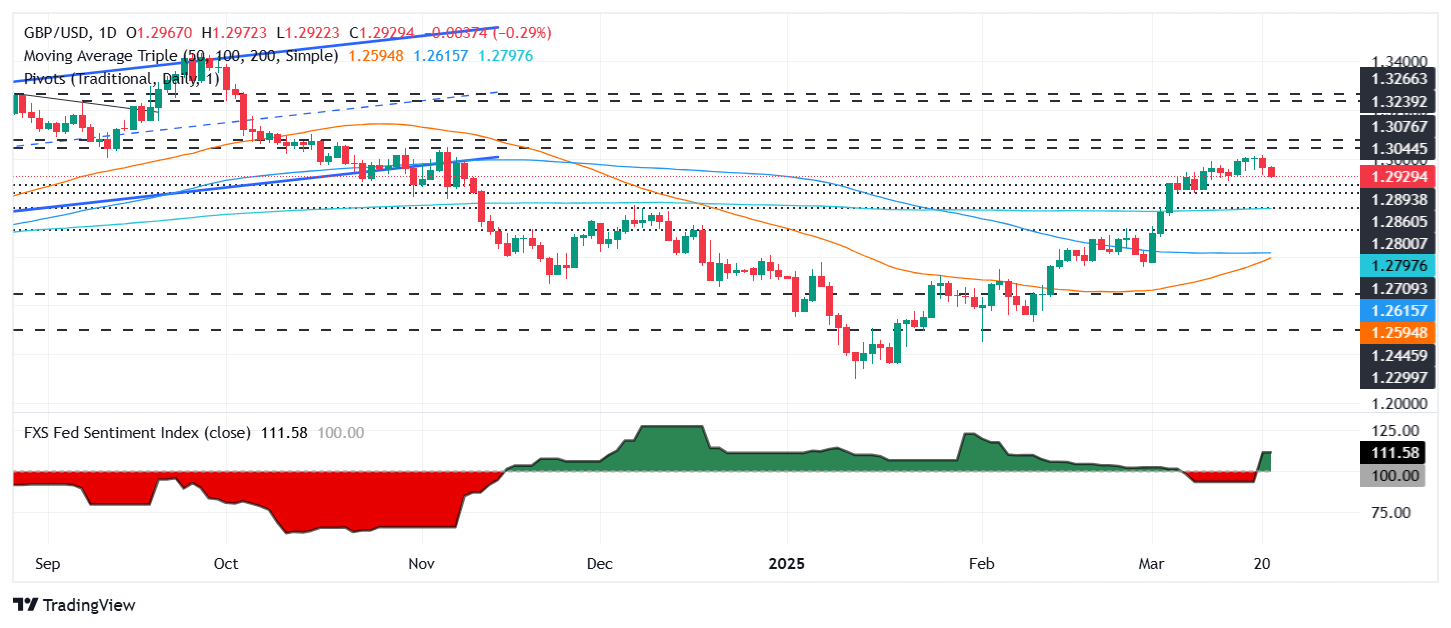
Pound Sterling underperforms US Dollar as Fed supports restrictive policy stance

The Pound Sterling (GBP) extends correction to near 1.2920 against the US Dollar (USD) in North American trading hours on Friday. The GBP/USD pair weakens as the US Dollar extends recovery amid growing expectations that the Federal Reserve (Fed) will not cut interest rates soon. The US Dollar Index (DXY), which tracks the Greenback’s value against six major currencies, gathers strength to break above the key resistance of 104.00. Read More...
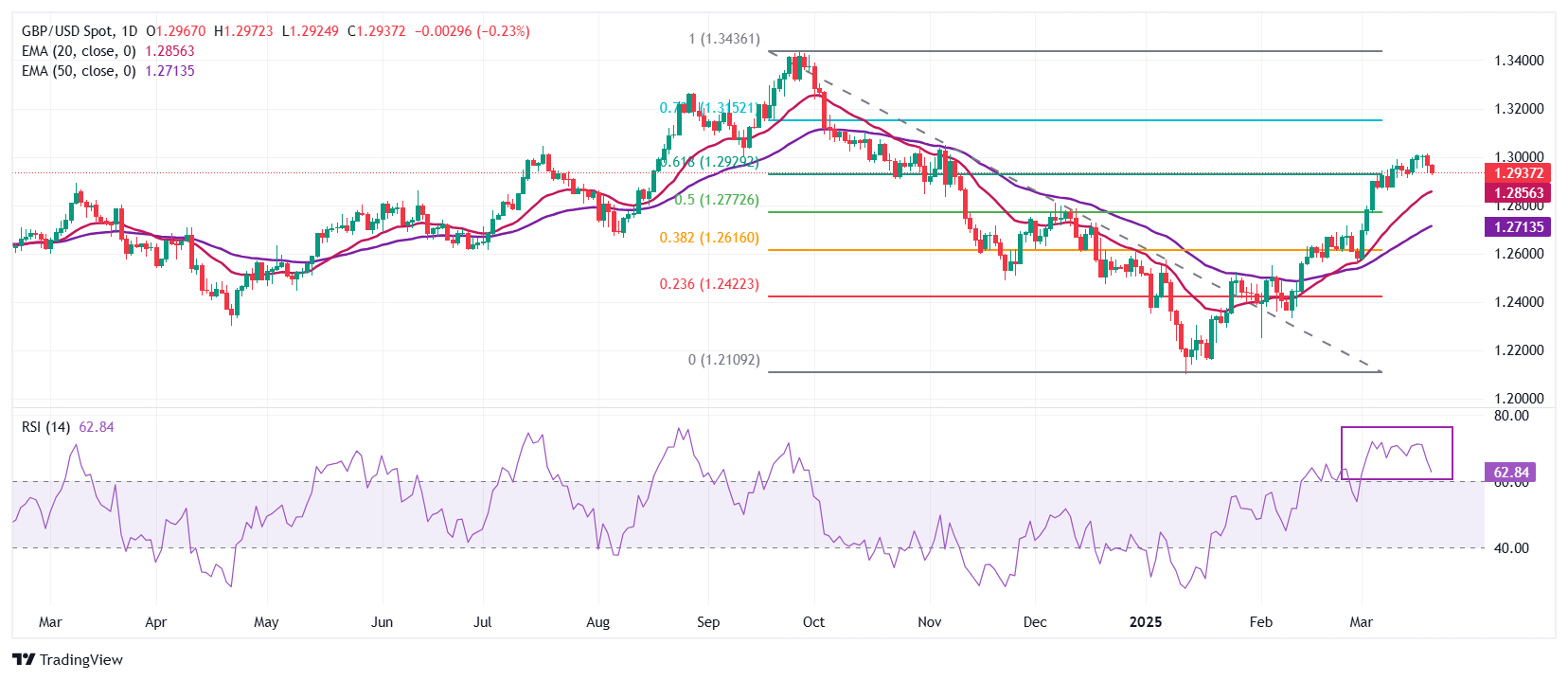
GBP/USD consolidates above mid-1.2900s; remains close to multi-month peak set on Thursday

The GBP/USD pair lacks any firm intraday direction on Friday and oscillates in a narrow trading band, around the 1.2960 area during the Asian session. Spot prices, however, remain close to the highest since early November – levels beyond the 1.3000 psychological mark touched on Thursday – and remain at the mercy of the US Dollar (USD) price dynamics. Read More...

Author

FXStreet Team

Composed of a group of economic journalists and FX experts, the FXStreet content team produces and oversees all content published on FXStreet. It provides a purely journalistic approach to the Forex market.


More from FXStreet Team
Share:

Editor's Picks

AUD/USD consolidates above 0.7000; remains close to monthly top

AUD/USD holds steady above 0.7000 during the Asian session on Friday, trading just below the previous day's monthly low amid diverging forces. A hawkish RBA continues to support the Aussie, while the recent decline in US bond yields keeps the US Dollar depressed near a three-week low. However, oil-driven inflation fears reinforce Fed hike bets, which, along with geopolitical risks, could benefit the safe-haven buck and cap the currency pair.

USD/JPY bounces off one-month low; climbs to 157.00 amid reviving USD demand

USD/JPY rebounds from the 156.00 neighborhood, or a one-month low touched during Friday’s Asian session, with bulls looking to extend momentum beyond 157.00 amid the emergence of some US Dollar buying. Meanwhile, Japan's National CPI rose to a nine-month peak and reaffirmed BoJ rate-hike bets, which could support the Japanese Yen and cap gains for the currency pair.

Gold hits fresh three-month low below $4,000 amid surging energy prices

Gold slides to a fresh three-month low at $3,986.74 in the Asian trade on Friday. The precious metal faces intense selling pressure, following a consolidation breakdown that took place on the range between $4,227.90 and $4,066.64 in the past three weeks.


Cardano: Whale selling deepens correction
Cardano (ADA) edges higher by nearly 2% on Friday, following a roughly 6% decline the previous day. The pullback aligns with the sell-side appeal among large-wallet investors, commonly referred to as whales, and Cardano derivatives. The technical outlook for ADA is bearish, with downside momentum persisting. Whales are losing their appetite for holding ADA tokens, fueling near-term selling pressure.
The Bank of England just got its clearest reason to hike. Here's what it's really watching

UK inflation as measured by the CPI accelerated to 3.5% YoY in September, up from 3.1% in August, according to the Office for National Statistics. This is the highest level since October 2025, exceeding economists' expectations of 3.4% and pushing inflation further from the BoE's 2% target.

What November 3 means for the Fed's rate path and the US Dollar

The USD faces a decisive period ahead of the November 3 midterm elections. While markets anticipate another interest rate increase from the Fed in December, the battle for control of Congress could reshape fiscal policy expectations and, indirectly, the path of US monetary policy in 2027.