|

Pound Sterling Price News and Forecast: GBP/USD rises as US data fuels rate cut speculation

GBP/USD Price Forecast: Rises as US data fuels rate cut speculation

The Pound Sterling enjoys a good rebound off the weekly low of 1.3087 and rises in early trading on Wednesday during the North American session, climbing over 0.22% against the Greenback.  Soft US jobs data increased the odds of a 50-basis points rate cut by the Federal Reserve and underpinned the GBP/USD higher, trading at 1.3163. Read More...
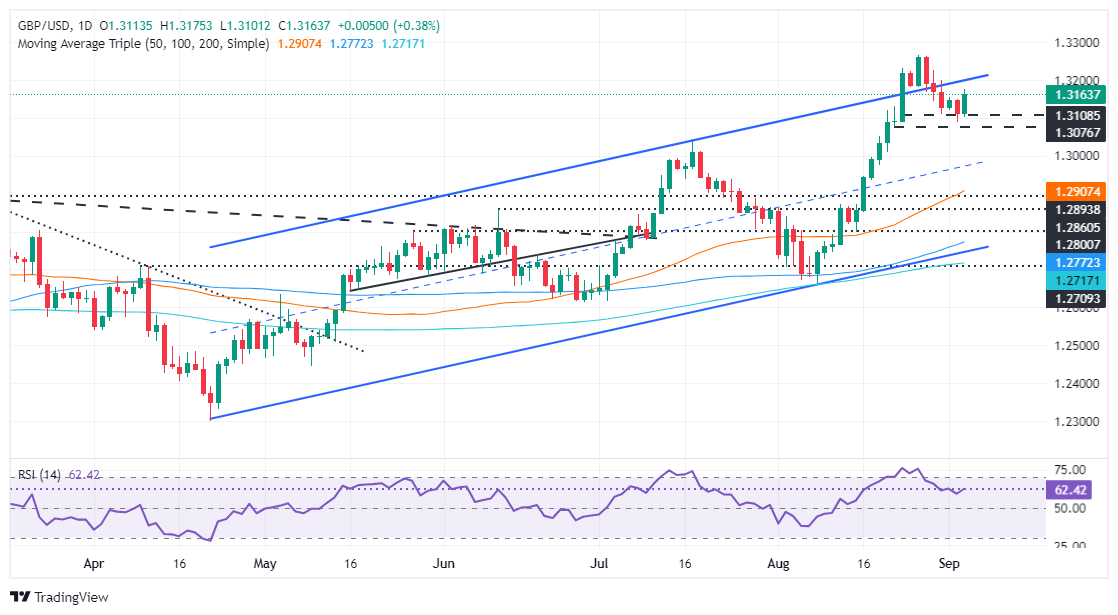
Pound Sterling bounces back from 1.3100 after weak US Job Openings

The Pound Sterling (GBP) jumps to near 1.3160 against the US Dollar (USD) in Wednesday’s North American session after falling to near the round-level support of 1.3100. The GBP/USD pair gains strong buying momentum as weak United States (US) JOLTS Job Openings data for July prompted downside risks to labor market. The US Job Openings data showed that fresh job vacancies came in lower at 7.673 million than estimates of 8.1 million and June's reading of 7.91 million, downwardly revised from 8.184 million. Read More...
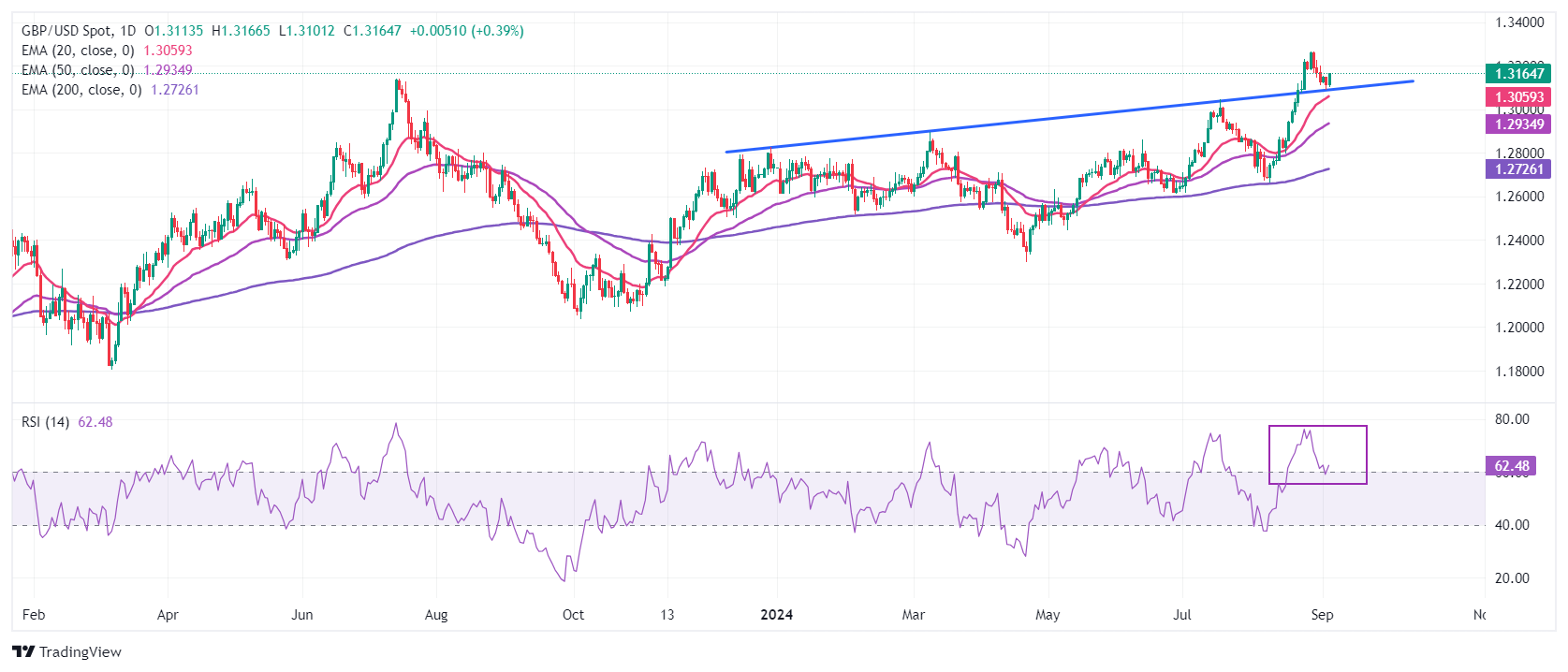
GBP/USD holds steady above 1.3100 ahead of Fed Beige Book

The GBP/USD pair flat lines near 1.3110 during the early European session on Wednesday. However, the risk-off sentiment ahead of the key US events could provide some support to the US Dollar (USD) and drag the major pair lower. The US JOLTS Job Openings and Fed Beige Book are due later on Wednesday. Read More...


Author

FXStreet Team

Composed of a group of economic journalists and FX experts, the FXStreet content team produces and oversees all content published on FXStreet. It provides a purely journalistic approach to the Forex market.

More from FXStreet Team

Share:

Editor's Picks

AUD/USD hits nine-week lows below 0.7000 on RBA Bullock's remarks

AUD/USD reverses a brief uptick and turns lower to hit nine-week lows below 0.7000 in the European morning on Tuesday, as traders digest cautious remarks from Reserve Bank of Australia (RBA) Governor Michele Bullock during the press conference. Earlier on, the RBA raised the cash rate to 4.60%, as widely expected, leaving the door open to further rate hikes if needed.

USD/JPY consolidates near 157.50 as a bullish USD counters intervention risks

USD/JPY struggles to capitalize on the overnight bounce from a one-week low, consolidating around 157.50 in the Asian session on Tuesday. Trump's concerns about the Japanese Yen's weakness fueled speculation about another US-Japan joint intervention. This, along with the hawkish BoJ, underpins the JPY and caps the currency pair. Meanwhile, rising Fed rate-hike bets and oil-driven inflation fears continue to push US bond yields to multi-year highs, keeping the US Dollar pinned near a two-month high and supporting the pair.

Gold: Bulls seem hesitant as Fed hike bets, higher bond yields, and bullish USD cap upside

Gold clings to modest recovery gains through the first half of the European session, albeit it lacks follow-through and remains below $4,150. Moreover, the bearish fundamental backdrop keeps the precious metal within striking distance of the lowest level since August 4, around the $4,100 neighborhood touched on Monday, and warrants caution before positioning for any meaningful appreciation.

Chainlink trims gains after CCIP 2.0 launch, Swift ledger integration

Chainlink (LINK) edges below $15.00 on Tuesday, trimming its 10% gains from the previous day, driven by the launch of its new Cross-Chain Interoperability Protocol 2.0 and Swift ledger integration for tokenized deposits and 24/7 cross-border payments.

Focus turns to US job openings
In the euro area, focus turns to the September flash inflation print for Spain which will give the first indication of where the euro area data on Friday lands. We expect a modest rise in headline due to higher energy costs and a small increase in core inflation. We also receive the European Commission's business survey for September.
Fed vs BoJ: Both hiked. The market only believes one of them – and the chart shows which

The Fed and the BoJ have just done something remarkably similar. Both central banks raised interest rates by 25 bps last week, both are confronting inflation risks, and both signal that future decisions will depend on incoming economic data.