|

Pound Sterling Price News and Forecast: GBP/USD extends the previous day’s reversal from three-week high

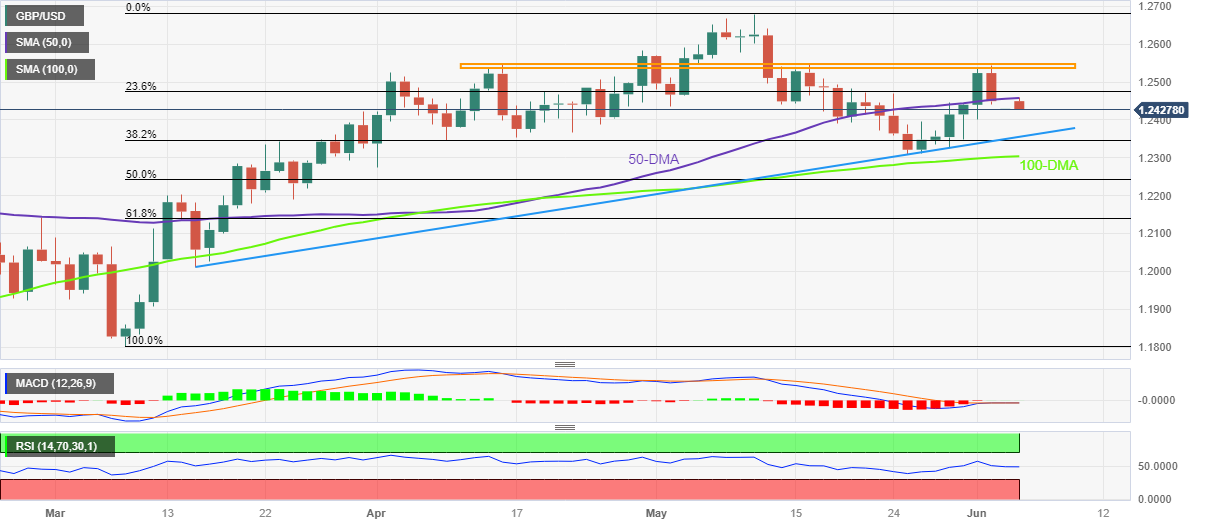
GBP/USD: Cable sellers cheer 50-DMA break as US NFP recall Fed hawks, PMIs in focus

GBP/USD remains pressured toward 1.2400 while extending the previous day’s U-turn from a three-week high heading into Monday’s London open, mildly offered near intraday low of 1.2426 by the press time. In doing so, the Cable pair justifies the market’s dicey momentum amid a lack of major data/events, as well as Fed policymakers’ blackout period ahead of next week’s Federal Open Market Committee (FOMC).

That said, the Cable pair marked the first weekly gain in four despite retreating from a short-term key horizontal resistance area on Friday. In doing so, the Pound Sterling justifies hawkish concerns about the Bank of England (BoE) despite recently justifying an increase in the odds of the Federal Reserve (Fed) rate hike concerns, backed by the upbeat US employment data. It’s worth noting that the political jitters in the UK also prod the GBP/USD buyers, especially when the US diplomats have successfully avoided the debt payment default woes. Read more...

GBP/USD Price Analysis: Cable bears cheer 50-DMA break to approach 1.2400

GBP/USD remains on the back foot around 1.2430 as it stretches the post-NFP reversal from a three-week high during the early hours of Monday’s Asian session. In doing so, the Cable pair drops below the 50-DMA support while extending the previous day’s U-turn from a horizontal resistance area comprising multiple levels marked since mid-April.

Not only the U-turn from the key resistance zone and a downside break of the 50-DMA but the steady RSI (14) line also suggest further downside of the Pound Sterling. With this, the quote is all set to prod the 1.2400 round figure. Read more...
Author

FXStreet Team

Composed of a group of economic journalists and FX experts, the FXStreet content team produces and oversees all content published on FXStreet. It provides a purely journalistic approach to the Forex market.


More from FXStreet Team
Share:

Editor's Picks

AUD/USD bounces back toward 0.6950 on fresh USD supply

AUD/USD bounces back toward 0.6950 in the Asian session on Friday. The US Dollar retreats from 17-month highs as traders take profits off the table ahead of the all-important US Nonfarm Payrolls report. Meanwhile, the Australian Dollar draws support from reviving expectations of a November interest rate hike amid elevated global yields and inflation risks.


USD/JPY struggles near 158.00 as USD retreats ahead of NFP

USD/JPY is struggling for fresh impetus near 158.00, moving away from the top end of its weekly range in the Asian session on Friday, after hotter-than-expected Tokyo CPI and amid a broad US Dollar retreat. Traders reposition themselves ahead of US Nonfarm Payrolls.

Gold fades the earlier optimism; back below $4,200

Gold could not sustain the post-NFP bull run past the $4,200 mark per troy ounce, receding toward the $4,180 region at the end of the week. The precious metal’s inconclusive price action comes amid fresh selling pressure hurting the US Dollar as investors assess the latest NFP data.

Week ahead: Fed minutes in the spotlight amid bond market rout
The first full week of October and the final quarter of the year get underway with little fanfare in terms of the economic agenda. But far from being short on excitement, the coming week will test market nerves, as government bond yields continue to soar on growing worries that the energy crisis will only get worse, fuelling inflation.
CFTC Report: Speculators turn more defensive as Oil exposure falls
The week in one sentence: During the week leading up to September 29, long positions in crude oil were significantly reduced, while short positions in the Canadian Dollar went up. In addition, the positioning of the Australian Dollar and the Japanese Yen declined, while Coffee buying stood out against a more general background of defensiveness.
The Euro is near a one-year low: Inflation could trigger its rebound, not its fall

EUR/USD has fallen to its lowest level since May 2025. The pair hit 1.1312 on Wednesday and trades well below the January peak of 1.2082. The decline reflects a powerful combination of US Dollar strength, geopolitical uncertainty and renewed concerns about Europe's exposure to higher energy prices.















