Pinterest (PINS) rallies off lows but temporary pullbacks possible along the ride up

Pinterest is up today, rallying off a massive 50% drop from early this year and an almost 70% decline from all-time highs, showing the kind of beaten-down bounce that can produce explosive short-term moves.
That bounce continues with price now up 35% off those lows from about 11 trading days ago, which is the type of rapid recovery that often occurs when heavily sold stocks find a floor and shorts start covering while bargain hunters step in.
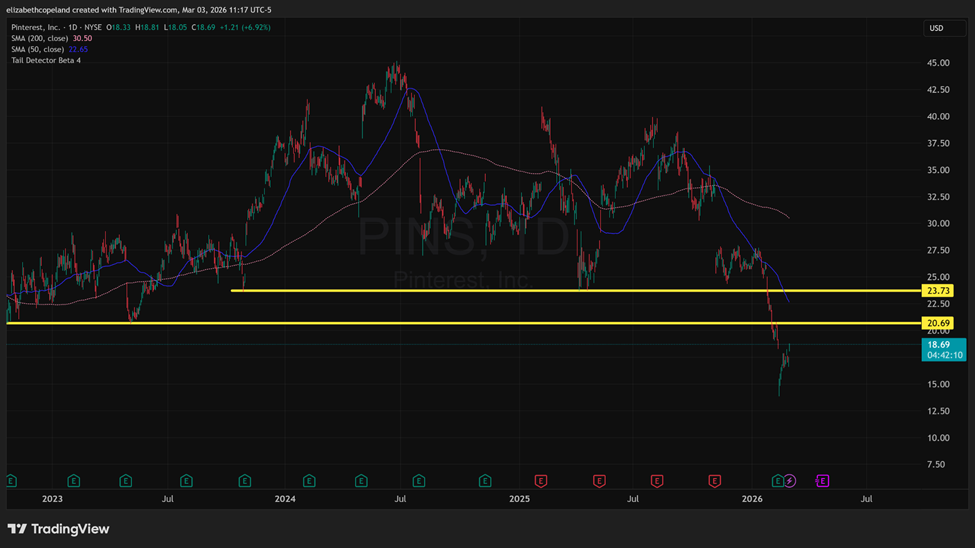
Runs to the upside are likely with PINS being so beaten down, as stocks that have declined this much often experience sharp counter-trend rallies as the selling pressure exhausts and buyers sense opportunity at depressed levels. The next area we could see an intraday temporary pullback will be $20.69, which marks previous pivot lows that now act as resistance on the way back up.
This is a classic example of support-turned-resistance where levels that previously provided a floor become barriers when price returns from below, as traders who bought those lows may look to exit at breakeven or small profits. Beyond that first resistance, there's another zone at $23.73 where more pivot lows connect, creating additional overhead supply that could produce another temporary pullback if PINS continues its momentum higher.
For traders watching Pinterest's recovery, the 35% bounce in just 11 trading days demonstrates the volatility and momentum potential in beaten-down names, but these resistance levels at $20.69 and $23.73 provide the roadmap for where temporary pullbacks are likely to occur. The key word here is temporary—given how oversold PINS became with a 70% decline from all-time highs, the path of least resistance may be higher as the stock works to fill the void created by the massive selloff, but expect some choppiness and profit-taking at these former support levels that now act as resistance.
Author

Elizabeth Copeland
Verified Investing
Elizabeth is a trader and financial journalist who uses her sharp analytical skills to spot market shifts early and trade with precision.