PepsiCo (PEP Stock) earnings report for Q3

PepsiCo is scheduled to release its third-quarter earnings report on October 5, 2021. This release will forecast the company’s third-quarter earnings report based on the company’s previous quarterly report. The company achieved record net revenue and earnings per share in the second quarter. PepsiCo reported net income of $2.36 billion, or $1.70 per share, up from $1.65 billion, or $1.18 per share, a year ago.
Annual net sales increased by 20.5% to $19.22 billion, exceeding forecasts of $17.96 billion. Organic sales increased by 12.8% when foreign currency, investments, and divestitures were excluded.
Pepsi’s American beverage segment experienced the highest organic sales growth of the group’s divisions during the quarter, at 21%. The volume of its beverages increased by 15% during the quarter, and foodservice revenue quadrupled, which includes sales to restaurants, stadiums, and college campuses.
Frito-Lay North America, which includes Doritos and Cheetos, increased revenue by 6%. Convenience stores and foodservice outlets aided in the growth of sales as consumers became more mobile. As a result, the category has seen robust sales throughout the pandemic. It had grown organically by 6% the previous year.
Quaker Foods North America was the only sector to report a decline in organic revenue. Its volume decreased by 21%, resulting in a 14% decline in organic revenue. Organic sales increased by 23% year over year as consumers increased their breakfast consumption at home, increasing demand for maple syrup and oatmeal. According to Pepsi, organic revenue for the segment increased by 9% over the previous two years. Prior to the pandemic, it was the smallest component of Pepsi’s company.
Following such a good quarter, the firm now forecasts an 11% increase in constant currency profits per share, up from its earlier projection of high single digits. For 2021, the forecasted core profits per share are $6.20. Analysts for the whole year predicted an earnings increase of 7.2%.
Pepsi also lowered its organic sales growth projection for 2021 from the mid-single digits growth to 6%. As a result, the company’s estimates are more cautious, which may help it surpass expectations in the second half of the year .
Most investors who follow the stock expect earnings to grow slower than revenues, which increased by 4% to $1.73 per share in Q3. However, owing to Pepsi’s increasing sales presence and ambitious development investments in sectors like energy drinks, the longer-term picture is one of improving profit margins .
PepsiCo stock analysis
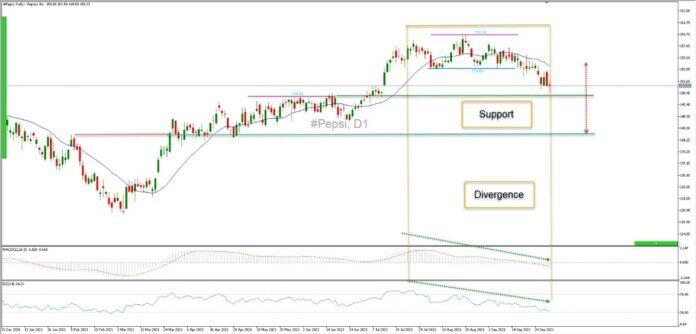
Although the company is gaining ground on organic sales, the stock price has declined since August 20. Although then it hit a high of 159, it has since been fluctuating between 150 and 159. The most recent drop came on September 30, when the price went below 150 for the first time since July 2021.
The price is below the 100-day MA on the daily chart, and the MACD is pointing downwards. This suggests a mild downtrend. Considering the overall scenario, the next resistance for PepsiCo lies around 166. If the price crosses this level, it could travel towards the $180 mark.
On the other hand, the stock’s support lies at 140. If the price breaches this level, it could further deescalate to the 130 mark .