|

NZD/USD Price Analysis: brief pullback questions 20-day SMA support

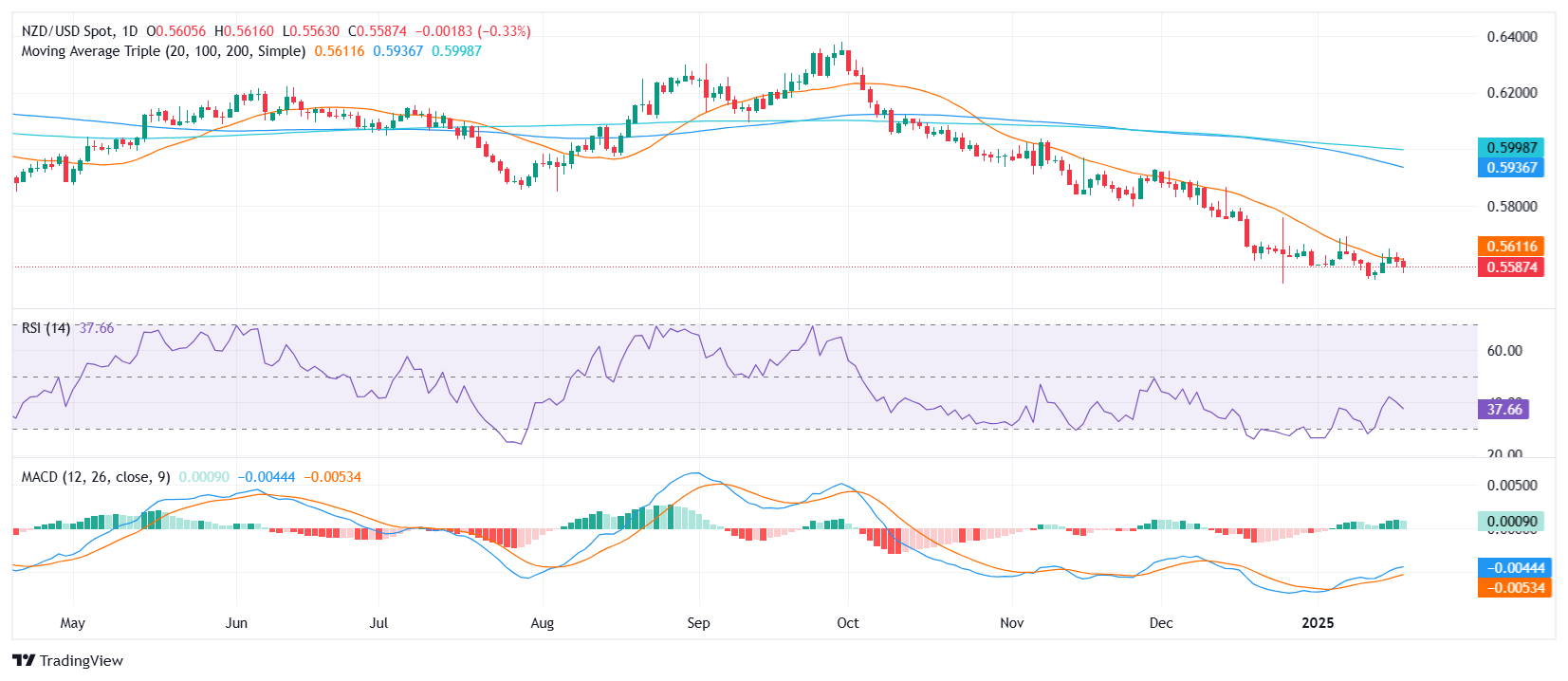
  • NZD/USD fell at the end of the weekresting around 0.5590 after struggling to sustain previous gains.
  • RSI plunges to 40 in negative territory, pointing to weakening momentum as sellers regain confidence.
  • MACD histogram shows rising green bars, hinting that not all bullish interest has faded despite the drop.

The NZD/USD pair lost ground on Friday, sliding 0.30% to settle near 0.5590. This downturn casts doubt on the sustainability of the pair’s recent consolidation above its 20-day Simple Moving Average (SMA), a region that might still offer a line of defense for buyers hoping to maintain upward traction. With sellers beginning to chip away at gains seen earlier in the week, it remains uncertain whether the pair can cling to its fragile support zone.

From a technical perspective, momentum readings are mixed. The Relative Strength Index (RSI) has retreated sharply to 40, underscoring a renewed bout of bearish pressure. Meanwhile, the Moving Average Convergence Divergence (MACD) histogram continues to produce green bars, suggesting that some underlying bullish sentiment persists but in a less confident manner. These conflicting signals underscore the delicate nature of the current price action.

Should NZD/USD consolidate effectively near the 20-day SMA, now around the 0.5600 mark, buyers may attempt another push higher, with 0.5630 serving as an interim hurdle before a potential run at 0.5650. Conversely, a decisive breach below 0.5580 would likely hand control back to the bears, exposing lower targets near the 0.5550 region and undermining the pair’s nascent support base.

NZD/USD daily chart
Author

Patricio Martín

Patricio is an economist from Argentina passionate about global finance and understanding the daily movements of the markets.


More from Patricio Martín
Share:

Markets move fast. We move first.

Orange Juice Newsletter brings you expert driven insights - not headlines. Every day on your inbox.

By subscribing you agree to our Terms and conditions.

Editor's Picks

EUR/USD drops to daily lows near 1.1630

EUR/USD now loses some traction and slips back to the area of daily lows around 1.1630 on the back of a mild bounce in the US Dollar. Fresh US data, including the September PCE inflation numbers and the latest read on December consumer sentiment, didn’t really move the needle, so the pair is still on course to finish the week with a respectable gain.

GBP/USD trims gains, recedes toward 1.3320

GBP/USD is struggling to keep its daily advance, coming under fresh pressure and retreating to the 1.3320 zone following a mild bullish attempt in the Greenback. Even though US consumer sentiment surprised to the upside, the US Dollar isn’t getting much love, as traders are far more interested in what the Fed will say next week.

Gold makes a U-turn, back to $4,200

Gold is now losing the grip and receding to the key $4,200 region per troy ounce following some signs of life in the Greenback and a marked bounce in US Treasury yields across the board. The positive outlook for the precious metal, however, remains underpinned by steady bets for extra easing by the Fed.

Crypto Today: Bitcoin, Ethereum, XRP pare gains despite increasing hopes of upcoming Fed rate cut

Bitcoin is steadying above $91,000 at the time of writing on Friday. Ethereum remains above $3,100, reflecting positive sentiment ahead of the Federal Reserve's (Fed) monetary policy meeting on December 10.

Week ahead – Rate cut or market shock? The Fed decides

Fed rate cut widely expected; dot plot and overall meeting rhetoric also matter. Risk appetite is supported by Fed rate cut expectations; cryptos show signs of life. RBA, BoC and SNB also meet; chances of surprises are relatively low.

Ripple faces persistent bear risks, shrugging off ETF inflows

Ripple is extending its decline for the second consecutive day, trading at $2.06 at the time of writing on Friday. Sentiment surrounding the cross-border remittance token continues to lag despite steady inflows into XRP spot ETFs.















