NZD/USD Price Analysis: Bears maintain control, eyes on 200-day SMA
- The NZD/USD declined to 0.6095, extending its recent downtrend.
- RSI is in negative territory and declining, while the MACD is flat and red.
- A break below 0.6100 could open the door for a further decline towards 0.6000.

In Monday's session, the NZD/USD pair extended its recent decline, falling by 0.30% to 0.6095. The technical indicators are also bearish, suggesting that the selling pressure is likely to continue if the buyers fail to sustain the 0.6100 area where the 200-day Simple Moving Average (SMA) converges.
The Relative Strength Index (RSI) is currently at 40, which is in negative territory and declining mildly. This suggests that selling pressure is increasing slightly and that the bears are in control of the market. The Moving Average Convergence Divergence (MACD) histogram is currently flat and red, indicating a bearish outlook. As long as the RSI remains below 50 and the MACD histogram remains red, the technical outlook will remain bearish for the NZD/USD.
NZD/USD daily chart
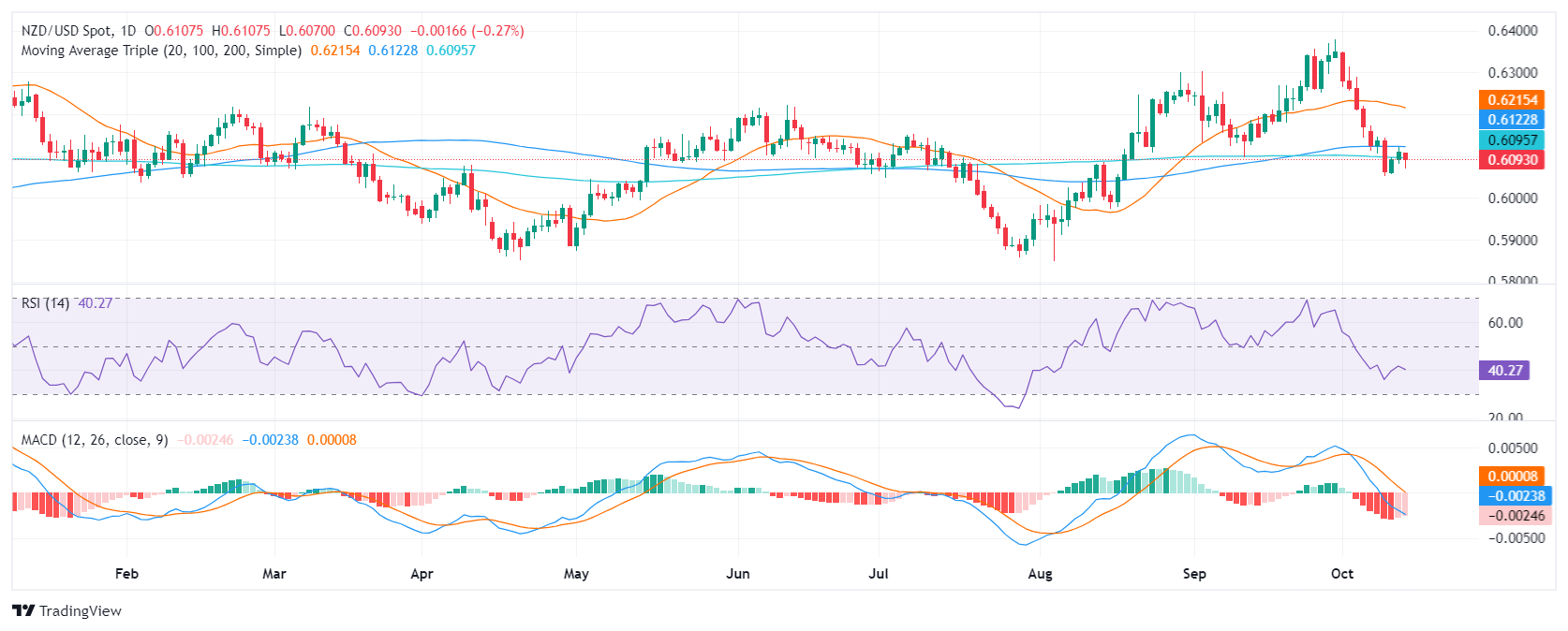
The overall outlook for the NZD/USD is bearish as the pair lost its 20-day Simple Moving Average (SMA) last week.The 200-day SMA at 0.6100 is providing some support, but a break below this level could open the door for a further decline towards 0.6000. On the upside, resistance can be seen at 0.6150 and 0.6200.
Author

Patricio Martín
FXStreet
Patricio is an economist from Argentina passionate about global finance and understanding the daily movements of the markets.