|

NZD/JPY Price Analysis: Bullish momentum strengthens, threatens 92.00

  • NZD/JPY sees a continuation of its uptrend with buying pressure dominating.
  • Technical indicators, including the RSI and MACD, support the bullish outlook.
  • The pair attempting to breach the 100 and 200-day SMA convergence.

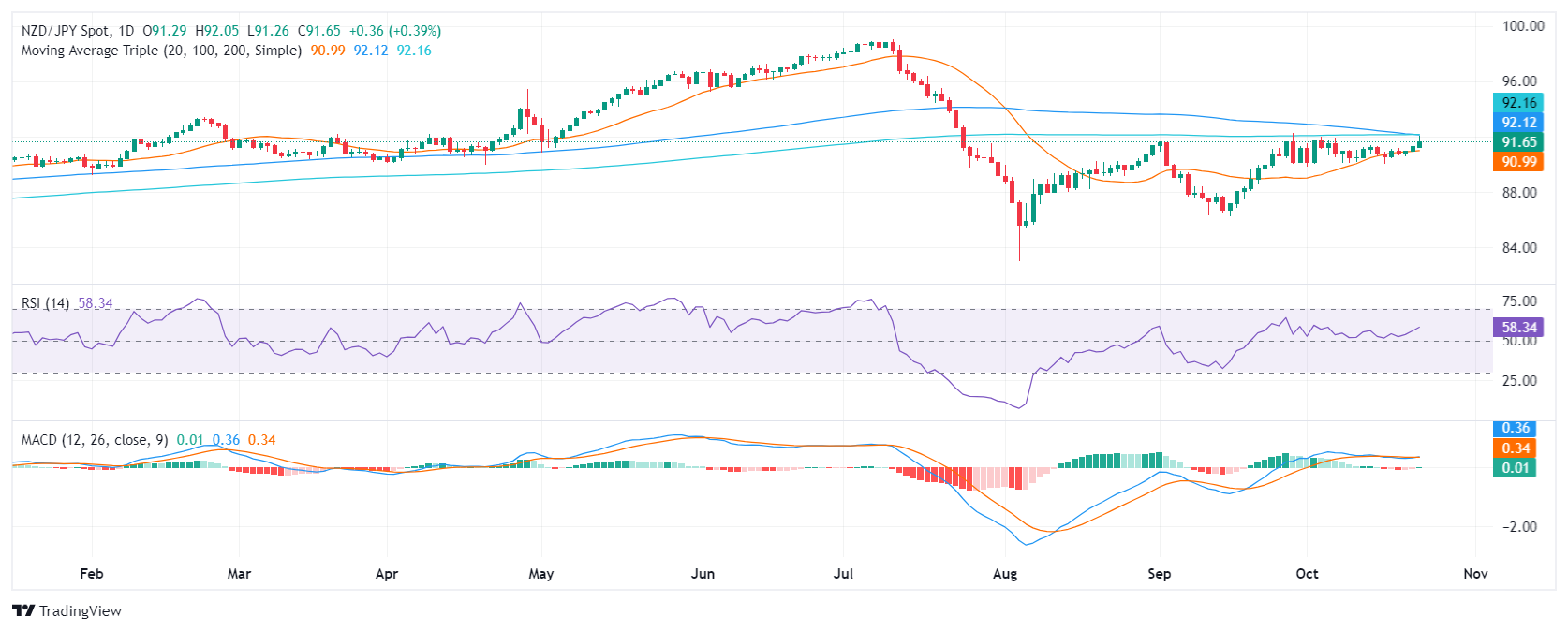
Wednesday's trading session witnessed sustained buying pressure in NZD/JPY, leading to a 0.45% increase to 91.65. The pair extended its upward momentum from previous sessions, indicating a growing bullish sentiment.

Technical indicators reinforce the positive outlook for NZD/JPY. The RSI, which measures the strength of buying pressure, has risen to 60 and the upward sloping movement suggests that buying pressure is increasing. The MACD, which measures the relationship between the pair's short-term and long-term moving averages, also supports the bullish sentiment. The histogram is green and flat, indicating that buying pressure is dominant.

Key support and resistance levels remain relevant, with support at 91.50,91.30 and 91.00 and resistances are seen at 92.00 (100 and 200-day SMA convergence), 92.30 and 92.50. These levels are likely to influence the pair's price action in the near term. The 20-day SMA, a crucial support level, has successfully held off selling pressure, contributing to the pair's bullish bias.

NZD/JPY daily chart
Author

Patricio Martín

Patricio is an economist from Argentina passionate about global finance and understanding the daily movements of the markets.


More from Patricio Martín
Share:

Editor's Picks

British Pound eases to 1.3450 area following downwardly revised Manufacturing PMI data

The British Pound is trimming previous gains against the US Dollar on Monday, returning to the mid-range of the 1.3400s down from fresh seven-week highs, above 1.3500 earlier on the day. Weaker-than-expected UK manufacturing data added pressure on the Pound, which rallied at the Asian session opening, amid news of a halt to the hostilities in Iran.

EUR/USD challenges 1.1500 on Dollar’s recovery

EUR/USD now accelerates its downtrend and comes closer to the 1.1500 level on Monday. The pair’s correction follows the decent improvement in the US Dollar amid solid data US releases and easing concerns on the geopolitical front.

Gold: The $4,000 mark holds the downside for now

Gold adds to Friday’s pullback, although it remains well underpinned by the key $4,000 threshold per troy ounce on Monday. The US Dollar’s inconclusive price action seems enough to cap the yellow metal’s potential upside, although renewed hopes for a US-Iran peace deal and fading expectations of a Fed rate hike could limit the Greenback’s recovery.

Week ahead: US payrolls report and AI earnings to keep investors on edge

After the Fed decision, NFP report awaited for more rate hike clues. Employment also on the agenda in Canada and New Zealand. Chinese trade and Japanese wage data to be watched too. But Iran and AI headlines to remain in driver’s seat for risk sentiment.

The Bitcoin futures yield collapse: Once over 20%, now less than Treasury notes
Once a goldmine for carry traders, Bitcoin futures have flipped, consistently underperforming plain‑vanilla U.S. Treasuries every month since February. Carry trades consistently yielded 20% or more across regulated and unregulated crypto exchanges during the 2021 bull market. The strategy involved shorting Bitcoin futures while simultaneously buying a spot exchange-traded fund (ETF).
9-3: Is the Federal Reserve’s vote tally Warsh's new forward guidance?
The rate did not move. Neither did the statement, and that’s the more interesting fact. Set the July 29 Federal Open Market Committee (FOMC) statement beside the one issued on June 17, and the two documents are identical apart from a single verb and a paragraph at the bottom naming three dissenters.