Nvidia (NVDA) stock advances after GTC conference announcements
- Nvidia is holding its GTC conference from September 19 to 21.
- CEO Jensen Huang unveiled a new GPU architecture and graphics card.
- Nvidia stock advanced slightly ahead with the announcement despite a down market.
Nvidia (NVDA) stock was able to fight off the market's downdraft on Tuesday due to a flurry of new announcements at its GTC developer conference. CEO Jensen Huang's keynote address in the morning session was live-streamed around the world and instantly got some investors excited.
Depite the Nasdaq selling off, NVDA stock advanced 0.7% mid-session to trade at $134.73.
Nvidia GTC conference news
Huang began his keynote address by giving a demonstration of Nvidia's RacerX simulation, which looked completely life-like. Huang said the entire simulation ran on a single Nvidia GPU and that future videogames will likely following this simulation model rather than coming with pre-baked contours.
Next up in Huang's keynote address were the great strides Nvidia has made with its new Ada Lovelace GPU architecture. Showcasing the enhanced graphics abilities of the new GPU, Huang said the Ada Lovelace RTX featured 78 billion transistors and 18,000 CUDA cores. This phenomenal leap gives it two to three times faster ray tracing and improves overall game performance over the older Ampere architecture by 25%.
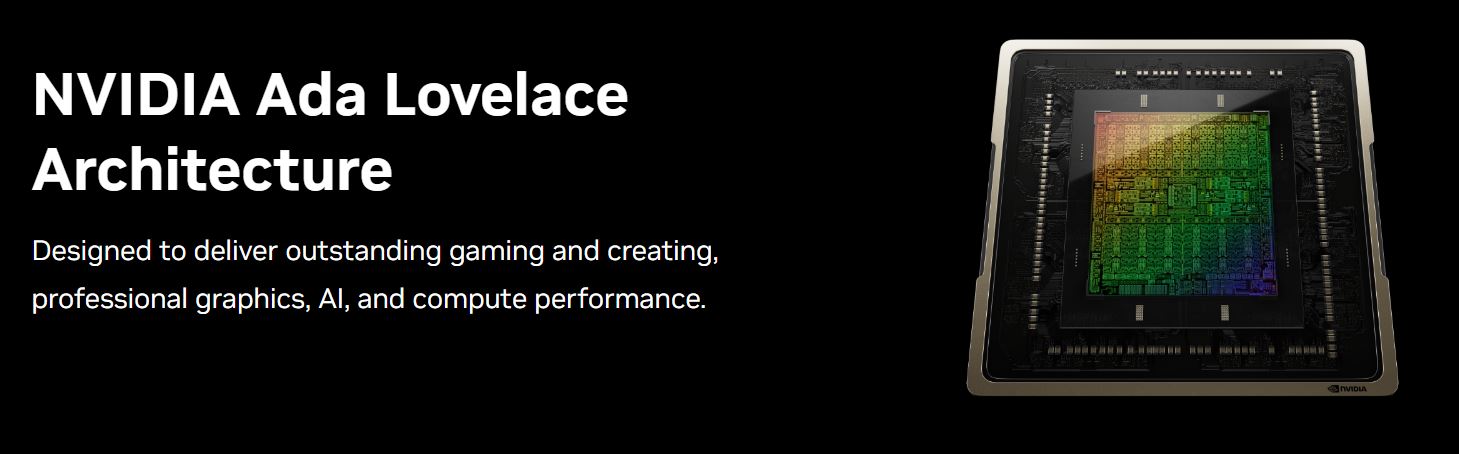
"Computer graphics is a full-stack process," Huang said. He touted the new architecture's fourth-generation tensor cores and added that "Ada’s third-generation RT Cores have twice the ray-triangle intersection throughput, increasing RT-TFLOP performance by over 2x."
Basically, the new architecture allows the GPU to actually predict frames in real-time using artificial intelligence even if the actual rendering has not completed processing.
"Some pixels are calculated, [but] most are predicted," Huang said.
As an example, Huang showed Microsoft's Flight Simulator game with Nvidia RTX and demonstrated that the game could run at a rate of 120 frames per second rather than 65 per second using the older architecture.
"Rendering is now 16x fast than just four years ago," Huang mused.
He unveiled the new GeForce RTX 4090 graphics card, which utilizes the new Ada Lovelace GPUs, and said they would go on sale for $1,599 beginning on October 12.
Additionally, Huang gave a demonstration of Nvidia's Omniverse platform, which can be used to simulate 3D worlds for games or movies but also has many commercials uses. For instance, he gave examples of companies already using the platform to build robotics systems or simulate real world manufacturing.
"Deutsche Bahn uses Omniverse to create a digital twin of 5,700 stations and 33,000Km of track," so that it can test various new approaches and designs for its operations, Huang said. He also mentioned that Lowe's (LOW) was using the platform to experiment with various in-store layouts.
Nvidia stock forecast
Nvidia stock, as we have mentioned before, is trading just above a long-term demand zone. Nvidia has used the region between $116 and $127 as support dozens of times in the past. Specifically, this region allowed NVDA to consolidate during the period between September 2020 and March 2021.
Additionally, the 200-week moving average has just reached $127.29 and also might act as significant support. NVDA stock actually briefly touched this area last week when it touched a 52-week low of $126.17. Expect NVDA to enter solidly into this region, however, before making a reversal higher. The current consensus price target on Wall Street is $201.60.
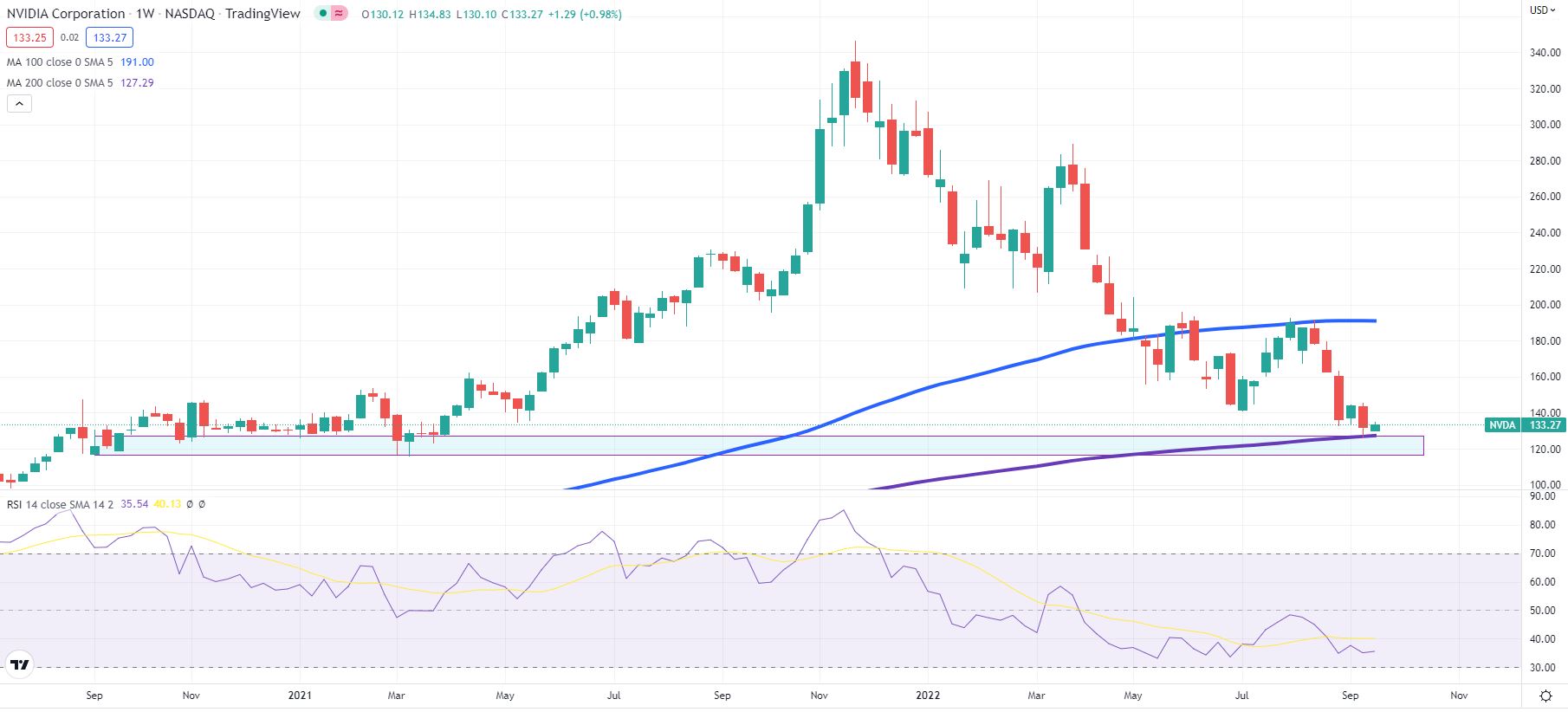
NVDA weekly chart
Author

Clay Webster
FXStreet
Clay Webster grew up in the US outside Buffalo, New York and Lancaster, Pennsylvania. He began investing after college following the 2008 financial crisis.

















