|

Northern Star Resources Ltd – NST analysis and Elliott Wave technical forecast [Video]

ASX: NST Elliott Wave technical analysis

Today’s Elliott Wave update for the Australian Stock Exchange (ASX) focuses on NORTHERN STAR RESOURCES LTD – NST.

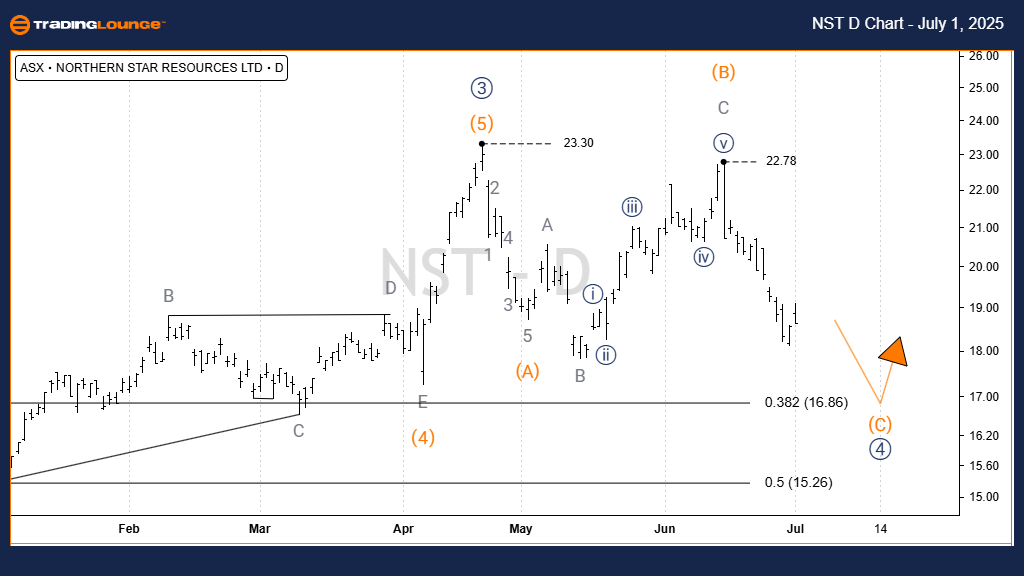
According to our analysis, ASX: NST appears to be entering a short-term bearish trend, potentially dropping to the 16.86 level. There are currently no signs of a bullish market based on this forecast.

Elliott Wave technical analysis – One-day Chart (Semilog Scale)

  • Function: Major trend (Minor degree, grey).

  • Mode: Motive.

  • Structure: Impulse.

  • Position: Wave C) - orange of Wave 4)) - navy.

Details:

Wave 4)) - navy continues to decline, likely developing as an ABC-orange zigzag pattern. Wave A)B) - orange has completed, and since peaking at 22.78, Wave C) - orange is targeting 16.86. There is no bullish evidence currently.

  • Invalidation point: 23.78.
Chart

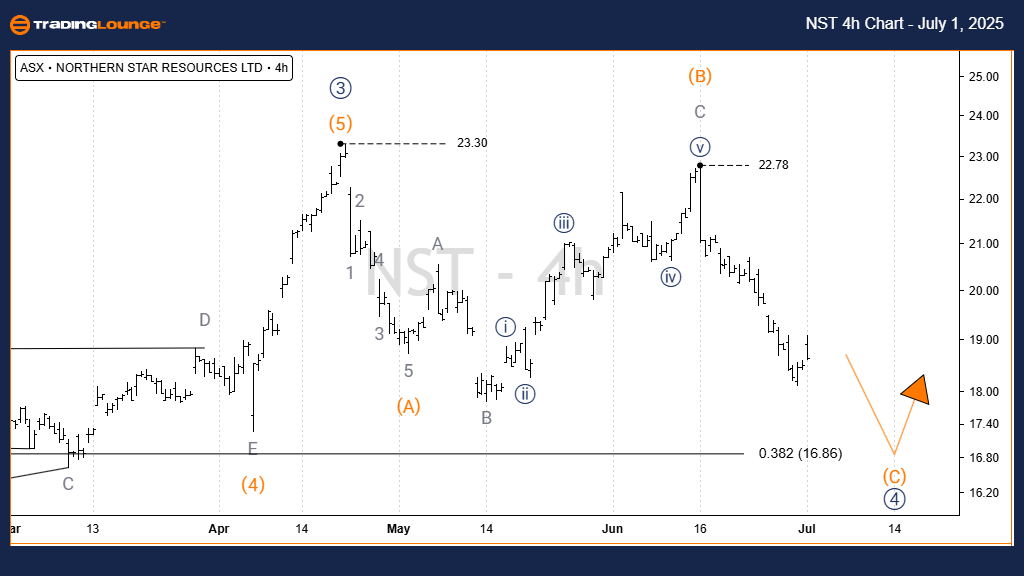
ASX: NST four-hour chart analysis

  •  Function: Major trend (Minor degree, grey).

  • Mode: Motive.

  • Structure: Impulse.

  • Position: Wave C) - orange of Wave 4)) - navy.

Details:

No new data beyond the 1D chart. Since the 22.78 peak, Wave C) - orange is continuing lower, eyeing 16.86 as a target.

  • Invalidation Point: 22.78.
Chart

Conclusion

Our forecast and technical evaluation for ASX: NST offer insights into the market’s current momentum. We outline precise price markers for validation and invalidation to strengthen the reliability of our Elliott Wave count. With a structured methodology, we aim to present the most objective and professional trading outlook.

NST analysis and Elliott Wave technical forecast [Video]

Author

Peter Mathers

Peter Mathers

TradingLounge

Peter Mathers started actively trading in 1982. He began his career at Hoei and Shoin, a Japanese futures trading company.


More from Peter Mathers
Share:

Editor's Picks

AUD/USD consolidates above 0.7000; remains close to monthly top

AUD/USD holds steady above 0.7000 during the Asian session on Friday, trading just below the previous day's monthly low amid diverging forces. A hawkish RBA continues to support the Aussie, while the recent decline in US bond yields keeps the US Dollar depressed near a three-week low. However, oil-driven inflation fears reinforce Fed hike bets, which, along with geopolitical risks, could benefit the safe-haven buck and cap the currency pair.

USD/JPY bounces off one-month low; climbs to 157.00 amid reviving USD demand

USD/JPY rebounds from the 156.00 neighborhood, or a one-month low touched during Friday’s Asian session, with bulls looking to extend momentum beyond 157.00 amid the emergence of some US Dollar buying. Meanwhile, Japan's National CPI rose to a nine-month peak and reaffirmed BoJ rate-hike bets, which could support the Japanese Yen and cap gains for the currency pair.

Gold treads water around $4,000

Gold prices maintain its offered stance in place at the end of the week, hovering around the key $4,000 threshold per troy ounce. The persistent selling bias in the precious metal comes amid decent gains in the US Dollar and an acceptable rebound in US Treasury yields across the curve, all alongside further upside traction in crude oil prices.

Crypto Today: Bitcoin holds the 50-day EMA as Ethereum and XRP face structural resistance

Bitcoin gradually ticks up on Friday, trading above $81,000. The Crypto King has recently defended structural support near $80,000, reinforcing the prevailing bullish outlook. Ethereum similarly edges higher above $2,400, while Ripple trades above $1.32 after testing support around $1.30.

The French bond panic is overdone. Here's what the market is misreading 

France's 10-year government bond yield has climbed above 5%, reigniting fears of a sovereign debt crisis in the Eurozone. With public debt exceeding €3.5 trillion, persistent budget deficits and a fragmented political landscape, investors are increasingly questioning the French government's ability to stabilize its finances.

What November 3 means for the Fed's rate path and the US Dollar

The USD faces a decisive period ahead of the November 3 midterm elections. While markets anticipate another interest rate increase from the Fed in December, the battle for control of Congress could reshape fiscal policy expectations and, indirectly, the path of US monetary policy in 2027.