NIO Stock Forecast: Nio Inc keeps falling but retains the $30 mark
- NYSE: NIO falls below $30.00 per share, approaches its 52-week low.
- A respected voice in the emerging markets sector says Chinese stocks will delist by 2024.
- Investors are shying away from Nio and following in Ark Invest’s footsteps.

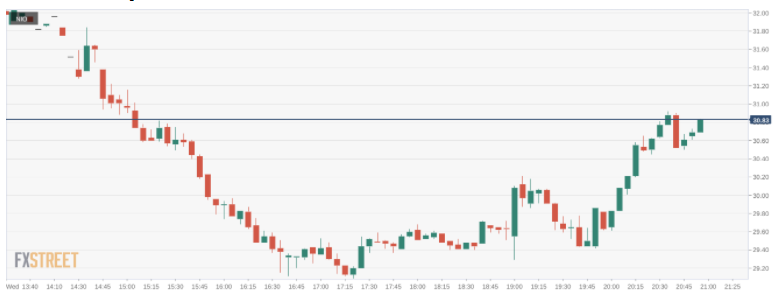
Update, December 17: NIO stock price faded its recovery and dropped 2.34% on the day, although manage to retain the $30 mark on Thursday. The rout extended into the fourth straight trading day, as bears refused to give up amid the Fed’s hawkish announcements and escalating China worries. Investors fret over the delisting of the Chinese stocks from the US indices, in light of Beijing’s persistent disregard for compliance with the American disclosure rules. Growing competition within the Electric Vehicle (EV) also poses a threat to NIO stock price.
NYSE: NIO has apparently yet to find a bottom as the popular Chinese EV maker continued to plummet during Wednesday’s session. Shares of NIO fell a further 4.67% and closed the trading day $30.79, after being down by as much as 10% during intraday trading hours. It was another tumultuous day for investors although this time, the closing bell brought with it a happy ending. The key turning point for the session was the much anticipated speech from Federal Reserve Chairman Jerome Powell, who provided a timeline on the Fed’s rate hikes for 2022. All three major indices closed the day higher, with the NASDAQ jumping by 2.15% to lead the way.
Stay up to speed with hot stocks' news!
On Wednesday morning, the Managing Director of emerging markets research at the TCW Group appeared on CNBC and provided a bearish outlook on Chinese ADRs. Loevinger stated that in his opinion, any Chinese stocks that are currently trading on US exchanges will be delisted by 2024. This comes on the heels of renewed fears amongst investors that Chinese companies will refuse the new audit rules implemented by the SEC. Earlier this month, ride-hailing giant DiDi (NYSE:DIDI) already reported it would be delisting from the New York Stock Exchange and relisting in Hong Kong.
NIO stock price
The recent sell off in Nio has actually bolstered the public image of one of its largest domestic rivals in China. XPeng (NYSE: XPEV) has been chosen by Cathie Wood of Ark Invest as the Chinese EV maker to invest in as she has added shares numerous times to her Ark ETFs. While Nio still has a much larger market cap than XPeng, the latter has seen its shares perform much better during the recent growth sector weakness. Shares of XPeng were down 2.90% on Wednesday.
Previous updates
Update: NIO maintains the sour tone, trading at $29.91 per share, down by 2.86% heading into Wall Street's close. The stock approaches a 52-week low of $29.06, a possible bearish target for the current downward trend, and a critical support level that should hold in order to change course. US indexes started the day with indexes posting gains, but rapidly changed course, and traded mixed. However, indexes resumed their declines in the last hour of trading, with Wall Street becoming a sea of red as investors acknowledge the tightening cycle has just begun.
Update: Nio rose over 2% from the open on Thursday as investor risk appetite flipped back to a more accommodative stance following the Federal Reserve's meeting on Wednesday. Investor concerns over Chinese stocks remain elevated so caution should be taken but the underlying fundamentals for NIO should remain strong.
Like this article? Help us with some feedback by answering this survey:
Author

Stocks Reporter
FXStreet