Nike (NKE) Stock Earnings Preview: Discounts may bite into quarterly results
- Nike will report FQ3 results after close on March 21.
- NKE stock has risen in anticipation above $123.
- Analysts seems to think that earnings will be hurt by tighter margins.
- Nike stock is positioned for upward momentum toward $129 or $139.

Nike (NKE) is scheduled to release earnings results for the fiscal third quarter after the close on Tuesday. Wall Street consensus has Nike pegged at $0.54 per share in GAAP earnings for the three months ending February 28, 2023. Despite rejiggering its outlook plenty so far this year, Wall Street consensus on revenue sits at $11.48 billion heading into the earnings call.
Nike stock is trading up 1.9% in Tuesday's premarket at $123.50 ahead of the results, while both the Dow and S&P 500 futures are up around 1%. The US Treasury on Tuesday is reportedly studying way to insure all US bank deposits. This has the US banking sector rising with struggling lender First Republic Bank (FRC) spiking more than 27% in the premarket.
Nike stock news: Discounts galore
Nike has not missed Wall Street consensus on either the top or bottom lines since in the past five quarters. Odds are that this quarter will be no different as the consensus figure is down from the $0.87 earned in the same quarter a year ago.
Worries over margins has led analysts to cut their EPS estimates for fiscal Q3 while mostly raising the forecast for revenue. A recent research note by Placer.ai explains why. Placer.ai tracks foot traffic for various brands. In a report that came out last week, their data showed that foot traffic at Nike and Nike Factory stores rose 8.2%, 21.8% and 6% YoY in December, January and February. Much of January's sharp spike can be attributed to a lower base from January 2022 when the Omicron strain came roaring back.
This would seem to be quite positive for shareholders, but Placer.ai found that Nike has been focused on getting rid of higher than normal inventory by offering generous discounts. These discounts are expected to reduce gross margins and profits.
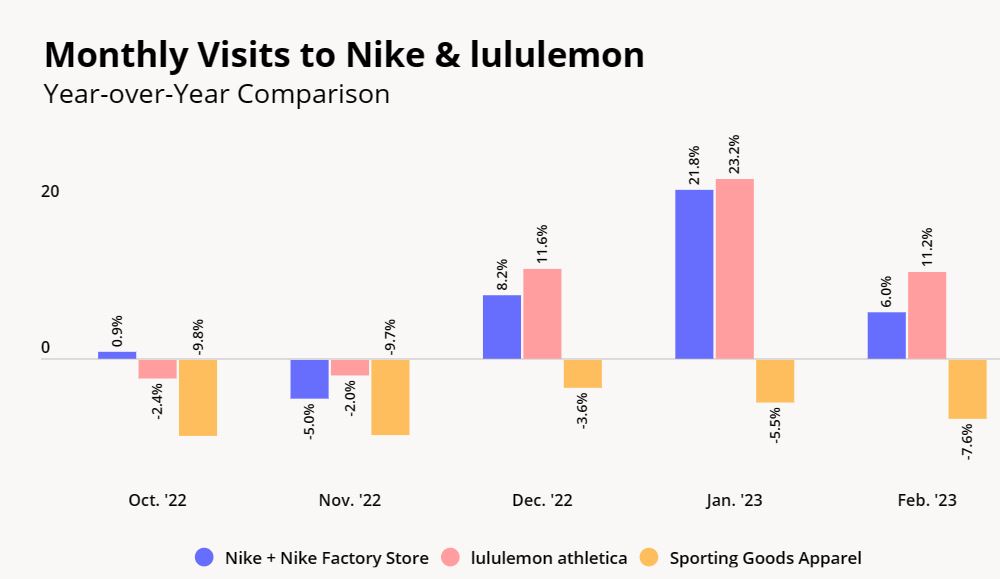
Source: Placer.ai
Equity research firm Redburn also recently gave Nike stock a $100 price target and a Sell rating due to the footwear company's expected difficulties in China. Nike CEO John Donahoe has a plan to quadruple foreign sales of Nike, but Redburn's analysts think the reopening in China will fail to materialize for Nike. A major piece of Redburn's skepticism is that Nike seems overvalued. With earnings per share expected to fall in early 2023, why is the brand selling for 35 times earnings?
Of course, a robust outlook may be enough to trigger a rally for Nike shares. However, Foot Locker (FL) lost more than 5% on Monday after offering up lackluster forward guidance.
Shareholders will also listen to the earnings call for more color on Nike's litigation with Lululemon Athletica (LULU). Nike is suing Lululemon for patent infringement in regard to textile materials and design on several lines of Lululemon footwear.
Nike stock forecast
Despite the precautious outlook by analysts, the market is not buying the despair. Both the Moving Average Covergence Divergence (MACD) and the 9-day and 21-day moving average pairs show bullish crossovers in the making. Secondly, NKE stock has a large base of support sitting nearby. This area ranges from $114 to $118.50 and offers traders an added bonus of safety. The region has been respected as both support and resistance since July of last year.
A successful earnings call will send Nike stock assuredly up to January's resistance formation around $129. A spectacular beat would have bull yearning for the March and April 2022 high around $139.
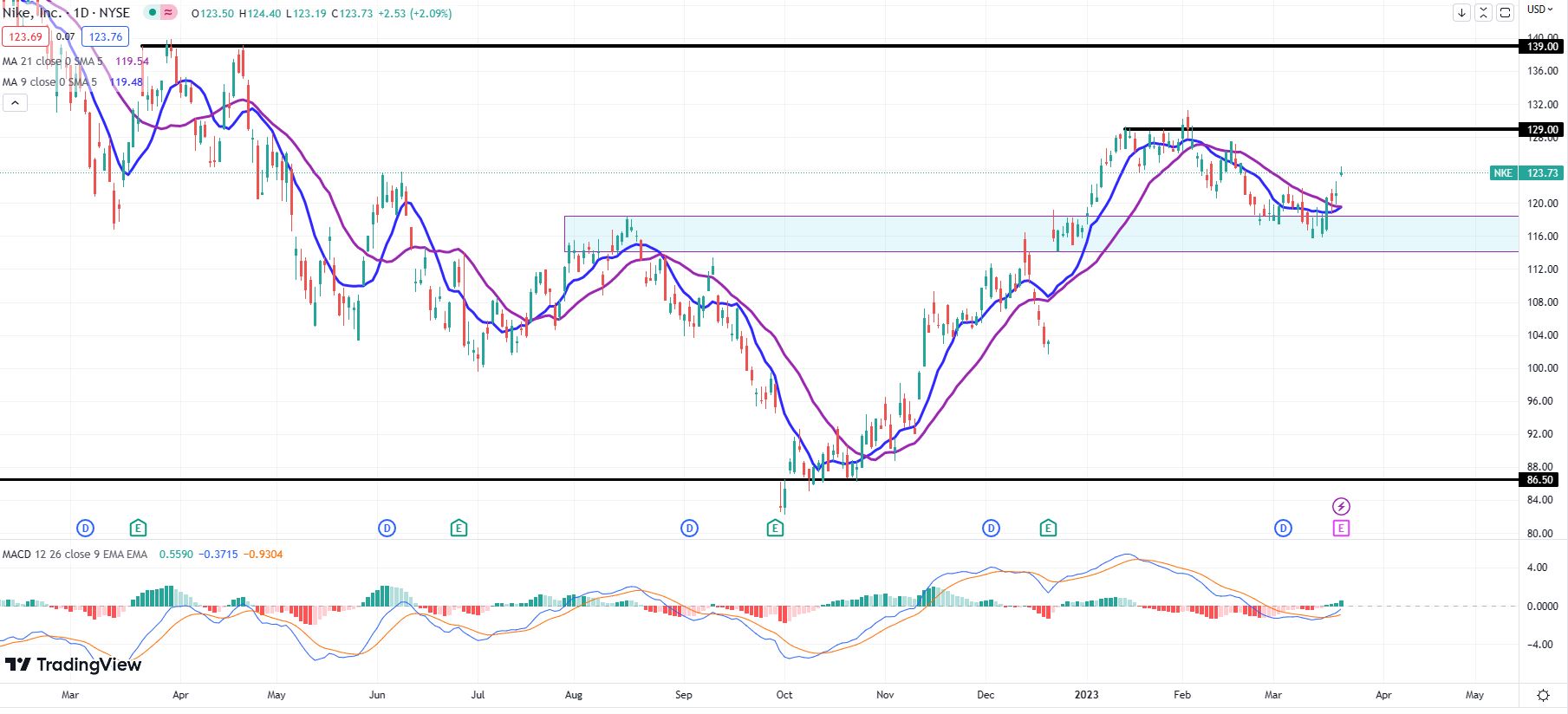
Nike daily chart
Author

Clay Webster
FXStreet
Clay Webster grew up in the US outside Buffalo, New York and Lancaster, Pennsylvania. He began investing after college following the 2008 financial crisis.

















