Mexican Peso stumbles as USD/MXN climbs, on risk-off, weak Mexico’s data
- Mexican Peso trips down as the USD/MXN pair climbs past last Friday’s high of 17.55.
- The contraction in factory activity in Mexico could sponsor a leg-up in the USD/MXN towards the 200-day SMA.
- Traders brace for Consumer Confidence data and next week’s Mexico’s inflation.
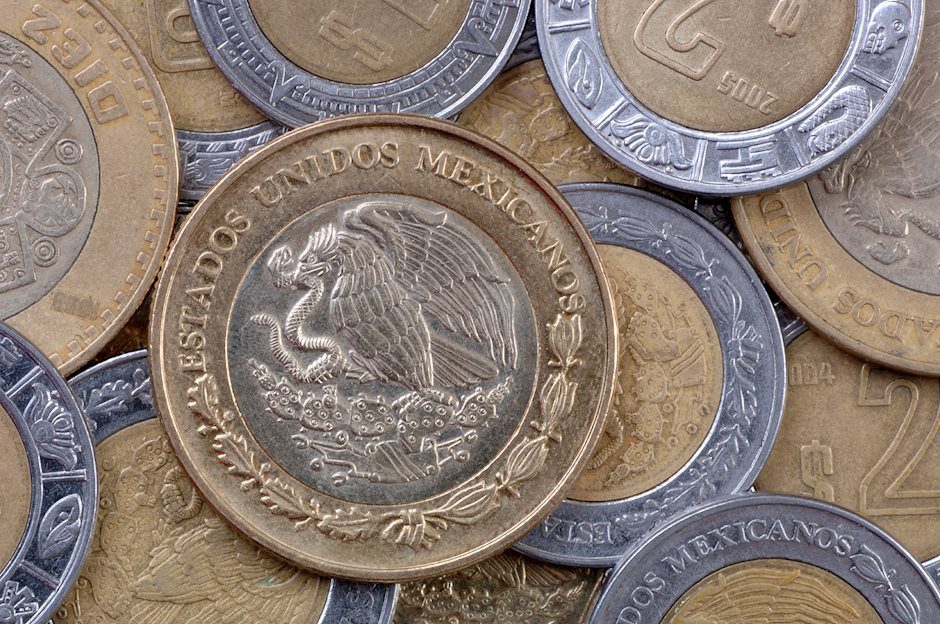

The Mexican Peso (MXN) finished Monday’s session with a more than 1.40% loss versus the US Dollar (USD), characterized by market sentiment deterioration. Hence, the USD/MXN jumped off last week’s lows at around 17.30s and is rising toward the 17.67 area as the week begins.
Mexico’s economic docket witnessed the release of the S&P Global Manufacturing PMIs, which came below expectations and beneath the 50 contraction/expansion threshold, suggesting the economy is losing steam. That weighed on the Mexican currency, even though the Mexican central bank reported that remittances in August jumped on annual advances by 8.6%.
Daily Digest Market Movers: Mexican Peso to remain under pressure if USD/MXN stays above 17.65
- Mexico’s August remittances were $5,563 million in US Dollars, an advance of 8.6% YoY.
- Banxico’s latest poll amongst economists reported that interest rates are expected to remain at 11.25%, while inflation would dip to 4.66%.
- The same poll shows the exchange rate is set to finish at around 17.64, down from 17.75.
- Mexico’s S&P Global Manufacturing PMI for September came at 49.8, sliding to contractionary territory and below August’s 51.2, as the economy loses steam.
- Business confidence in Mexico improved from 53.7 to 53.8.
- Mexico’s economy could slow down due to complex external shocks, according to the financial system stability committee.
- The Bank of Mexico (Banxico) held rates at 11.25% and revised its inflation projections from 3.5% to 3.87% for 2024, above the central bank’s 3% target (plus or minus 1%).
- Banxico’s Government Board highlighted Mexico’s economic resilience and the strong labor market as the main drivers to keep inflation at the current interest rate level.
- BBVA updated Mexico’s economic growth forecast, with the Gross Domestic Product rising by 3.2% from 2.4% in 2023 to 2.6% from 1.8% in 2024.
- Mexico’s Unemployment Rate edged lower from 3.1% in July to 3.0% in August, according to the National Statistics Agency (INEGI).
- September’s first-half inflation in Mexico was 4.44%, down from 4.64% in August, according to INEGI.
- Being an emerging market currency, the Mexican Peso weakens amid risk aversion.
- Moody’s rating agency warned the fiscal strategy of the Mexican government in 2024 must be credible after the June elections in defining the country’s stable outlook.
- In July, Moody’s lowered Mexico's rating to “Baa2” with a “stable” outlook but warned of fiscal pressures for the next government due to the 2024 economic budget.
Technical Analysis: Mexican Peso
The Mexican Peso (MXN) is erasing last Friday’s gains, with the USD/MXN beginning to form a bullish-engulfing candle pattern after the pair bottomed at around 17.41. The emerging market currency could continue its depreciation if the exotic pair manages to break resistance at September’s 27 high at 17.81, immediately followed by the 200-day Simple Moving Average (SMA) at 17.82. Once those two areas are cleared, the USD/MXN next stop could be 18.00.
Risk sentiment FAQs
What do the terms"risk-on" and "risk-off" mean when referring to sentiment in financial markets?
In the world of financial jargon the two widely used terms “risk-on” and “risk off'' refer to the level of risk that investors are willing to stomach during the period referenced. In a “risk-on” market, investors are optimistic about the future and more willing to buy risky assets. In a “risk-off” market investors start to ‘play it safe’ because they are worried about the future, and therefore buy less risky assets that are more certain of bringing a return, even if it is relatively modest.
What are the key assets to track to understand risk sentiment dynamics?
Typically, during periods of “risk-on”, stock markets will rise, most commodities – except Gold – will also gain in value, since they benefit from a positive growth outlook. The currencies of nations that are heavy commodity exporters strengthen because of increased demand, and Cryptocurrencies rise. In a “risk-off” market, Bonds go up – especially major government Bonds – Gold shines, and safe-haven currencies such as the Japanese Yen, Swiss Franc and US Dollar all benefit.
Which currencies strengthen when sentiment is "risk-on"?
The Australian Dollar (AUD), the Canadian Dollar (CAD), the New Zealand Dollar (NZD) and minor FX like the Ruble (RUB) and the South African Rand (ZAR), all tend to rise in markets that are “risk-on”. This is because the economies of these currencies are heavily reliant on commodity exports for growth, and commodities tend to rise in price during risk-on periods. This is because investors foresee greater demand for raw materials in the future due to heightened economic activity.
Which currencies strengthen when sentiment is "risk-off"?
The major currencies that tend to rise during periods of “risk-off” are the US Dollar (USD), the Japanese Yen (JPY) and the Swiss Franc (CHF). The US Dollar, because it is the world’s reserve currency, and because in times of crisis investors buy US government debt, which is seen as safe because the largest economy in the world is unlikely to default. The Yen, from increased demand for Japanese government bonds, because a high proportion are held by domestic investors who are unlikely to dump them – even in a crisis. The Swiss Franc, because strict Swiss banking laws offer investors enhanced capital protection.
Author
Christian Borjon Valencia
FXStreet
Markets analyst, news editor, and trading instructor with over 14 years of experience across FX, commodities, US equity indices, and global macro markets.