Johnson & Johnson (JNJ) shares are entering in a bull trap

Johnson & Johnson (JNJ) is an American multinational corporation founded in 1886 that develops medical devices, pharmaceuticals, and consumer packaged goods. Its common stock is a component of the Dow Jones Industrial Average, and the company is ranked No. 36 on the 2021 Fortune 500 list of the largest United States corporations by total revenue.
JNJ January 2023 daily chart
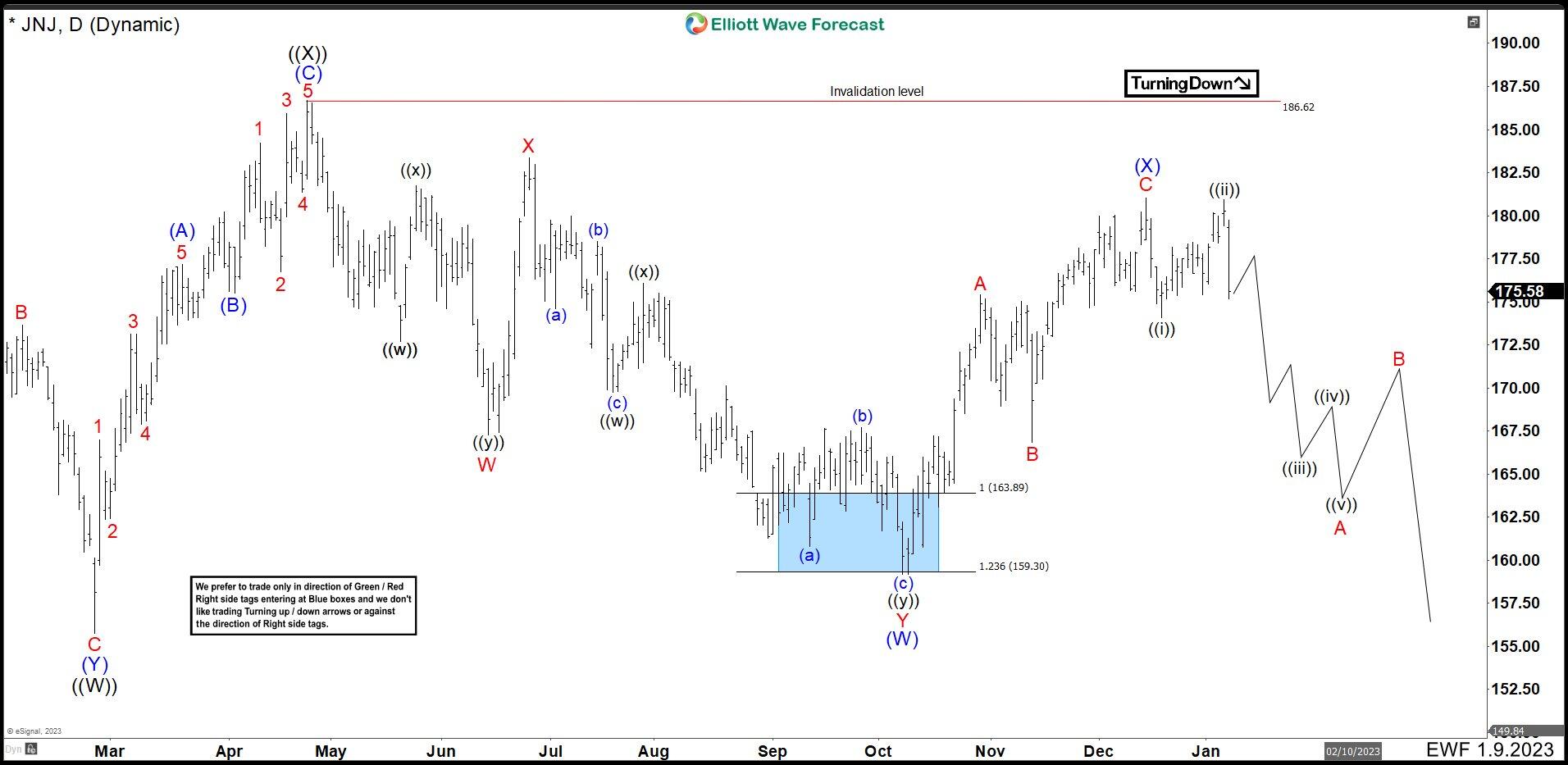
In the last analysis, we predicted that the JNJ share price will continue to fall. The ideal was to make a zigzag ABC correction that would complete wave (Y) of ((Y)) and thus wave II to continue the rally. Well, the market fell building the expected structure and bounced from the 100% Fibonacci extension zone.
JNJ May 2023 daily chart
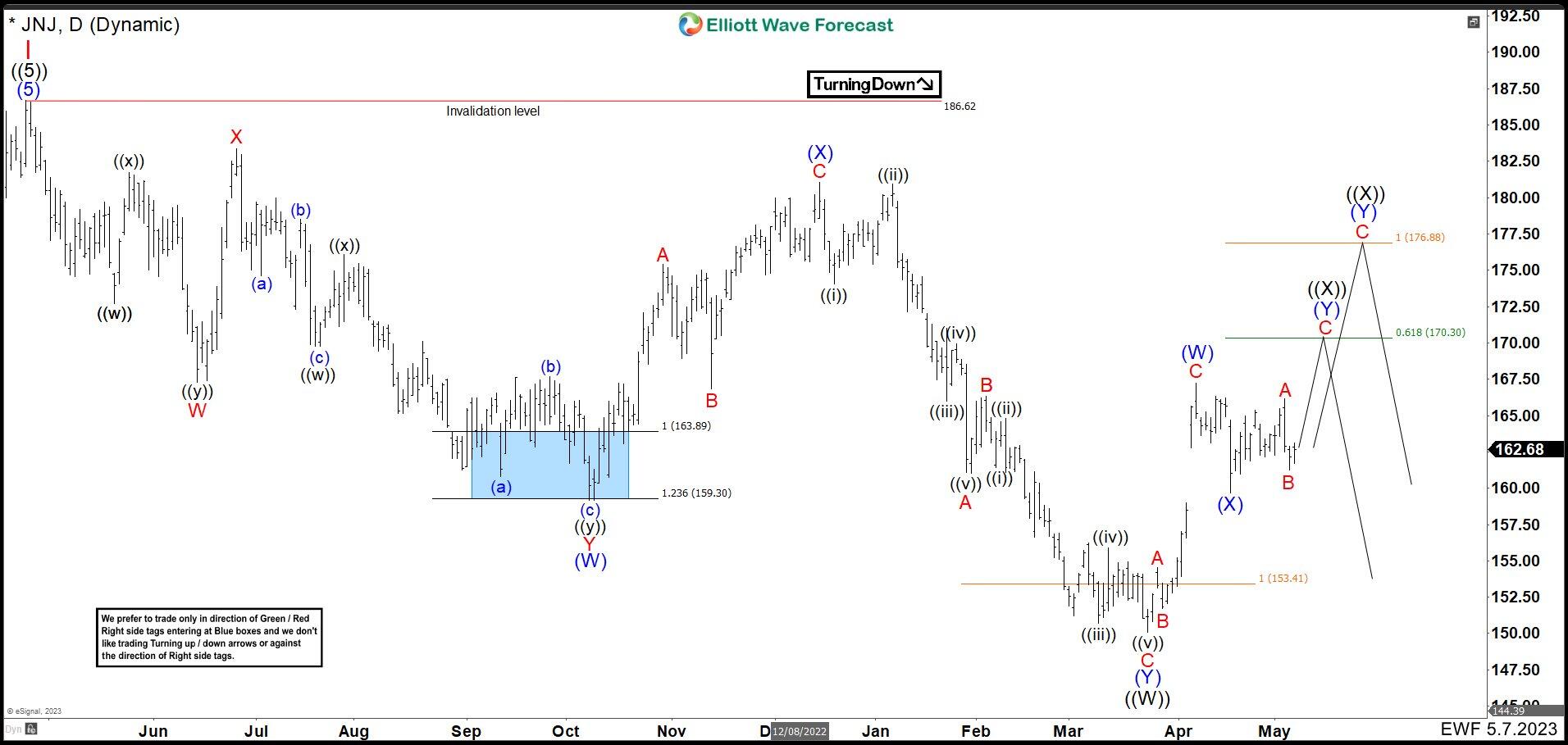
In the new chart, we adjust the daily count. We can see that wave I ended at 186.62 and the next 7 waves down completed wave ((W)) at 150.11. The change comes after analyzing the Dow Jones Stock Index and ETFs such as XLV and IHE. By examining these instruments, we can see that the most logical thing is for the JNJ rally to fail. Therefore, it is better to call the current rise as connector ((X)) and then see 3 more waves to the downside. We are marking 2 possibilities. The first that the price reaches 170.30 and falls or that it reaches the equal legs at 176.88 before the sellers enter the market.
XLV May 7th 2023 daily chart
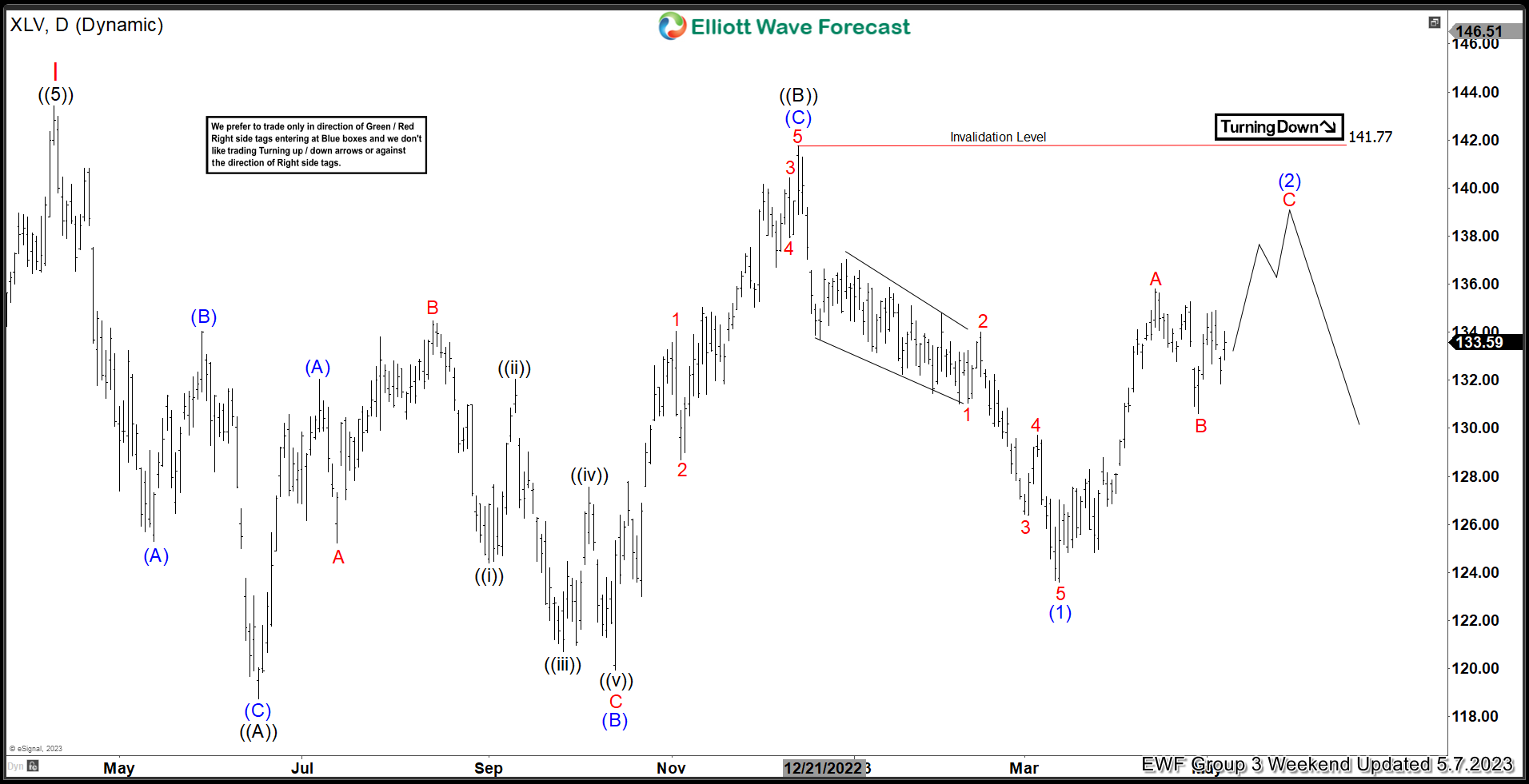
In the latest daily update of the Health Care Select Sector SPDR Fund (XLV), we can see how the market could be developing a flat correction, and even, the wave ((B)) could build a triangle that would likewise send the fund to the downside. Near term, we see that we must finish wave (2) and for that, the price should move a little higher before entering in bearish movement. As you can see, the structure is very similar to the JNJ stock.
IHE May 7th 2023 weekly chart
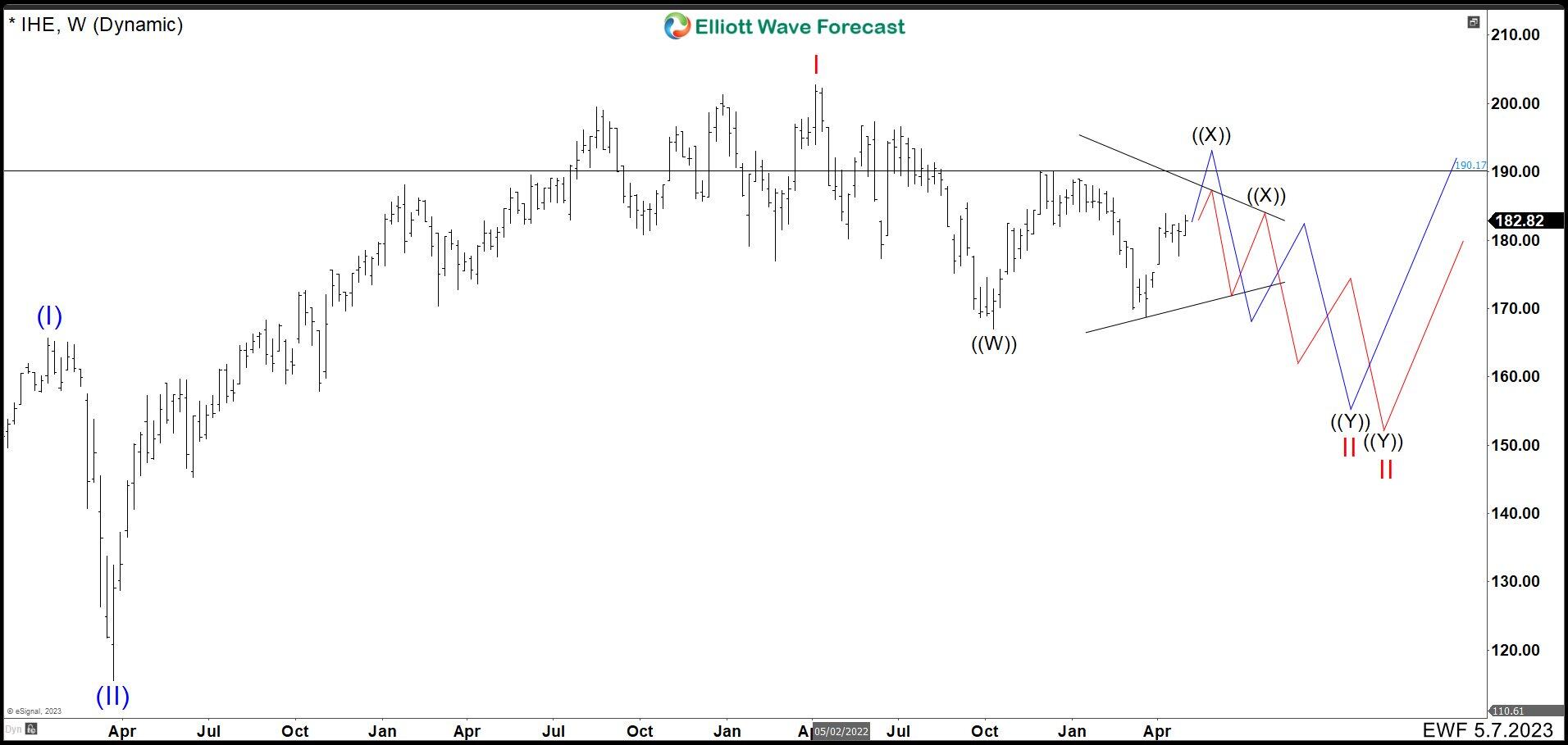
In the iShares US Pharmaceuticals ETF (IHE) chart, we can see after completing wave I the fund fell in 3 waves to end wave ((W)). From here, the wave ((X)) has two outputs. The first is for the price to break above 190.17 (blue line) to complete a flat correction. This would be the best to have a clear corrective structure before continuing lower. The other possibility (red line) is that the wave ((X)) is a triangle. The we should see more sideways movement before continuing with the higher degree correction.
Author

Elliott Wave Forecast Team
ElliottWave-Forecast.com
















