GBP/USD struggles to regain balance ahead of key labor data
- GBP/USD took a hard hit on Wednesday after UK government issues reared their head.
- US NFP jobs data will be due on Thursday this week.
- American markets are closing early this week for Friday’s US holiday.

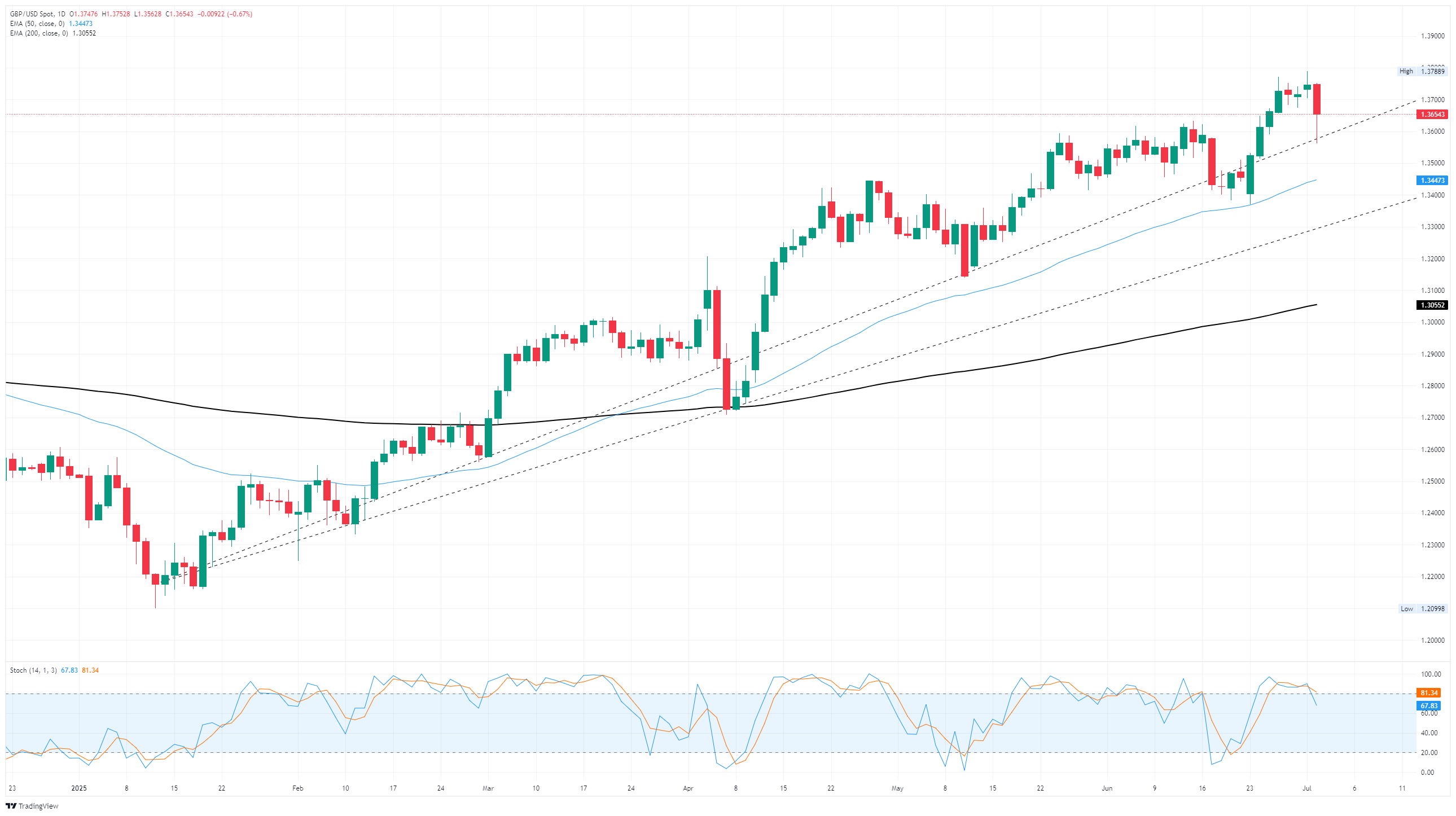
GBP/USD tumbled on Wednesday, falling back below the 1.3600 handle in a sharp plunge fueled by a sharp increase in UK bond yields. Intraday bidding action managed to shave off the worst of the lows, but Cable price action is still poised for further downside as the Pound Sterling and US Dollar race to the bottom.
UK Prime Minister Kier Starmer and his government failed to deliver on welfare cuts, a key principle of his budget proposals to bring UK government financing back under control. PM Starmer also left the possibility of tax hikes on the table, drawing the ire of markets and political critics. Further government instability is on the cards for the UK, as PM Starmer is expected to begin shuffling his cabinet in a move to consolidate and maintain his party’s control in the face of a mucky economic outlook.
US ADP Employment Change figures also missed the mark on Wednesday, contracting by 33K net job gains in a sharp reversal of market forecasts for modest growth. ADP tends to serve as a popular (albeit shaky) forecast of US Nonfarm Payrolls data. Despite a breakdown of the correlation between ADP and NFP jobs numbers, this week’s ADP report has left investor reeling as they second-guess their expectations for the US economy.
US NFP net job gains data for June is still expected to clock in around 110K net new employment positions, down slightly from May’s figures but still in positive territory. A further decline in headline jobs figures, as well as rising possibilities for steep downside revisions to older data, bodes poorly for both rate cut expectations and trader confidence that the US economy is well-sheltered from potential economic fallout from President Donald Trump’s whiplash tariff policies. Reciprocal tariffs that were announced in April are due to come back into effect next week after a last-minute 90-day extension, but the trade deals the Trump administration was hoping for remain limited at best.
GBP/USD price forecast
Cable’s Wednesday plunge pushed GBP/USD into its lowest bids in over a week, wiping out near-term gains and sending intraday price action back into rising trendlines that have pushed the pair consistently higher from multi-year lows posted in January.
GBP/USD daily chart
Nonfarm Payrolls FAQs
Nonfarm Payrolls (NFP) are part of the US Bureau of Labor Statistics monthly jobs report. The Nonfarm Payrolls component specifically measures the change in the number of people employed in the US during the previous month, excluding the farming industry.
The Nonfarm Payrolls figure can influence the decisions of the Federal Reserve by providing a measure of how successfully the Fed is meeting its mandate of fostering full employment and 2% inflation. A relatively high NFP figure means more people are in employment, earning more money and therefore probably spending more. A relatively low Nonfarm Payrolls’ result, on the either hand, could mean people are struggling to find work. The Fed will typically raise interest rates to combat high inflation triggered by low unemployment, and lower them to stimulate a stagnant labor market.
Nonfarm Payrolls generally have a positive correlation with the US Dollar. This means when payrolls’ figures come out higher-than-expected the USD tends to rally and vice versa when they are lower. NFPs influence the US Dollar by virtue of their impact on inflation, monetary policy expectations and interest rates. A higher NFP usually means the Federal Reserve will be more tight in its monetary policy, supporting the USD.
Nonfarm Payrolls are generally negatively-correlated with the price of Gold. This means a higher-than-expected payrolls’ figure will have a depressing effect on the Gold price and vice versa. Higher NFP generally has a positive effect on the value of the USD, and like most major commodities Gold is priced in US Dollars. If the USD gains in value, therefore, it requires less Dollars to buy an ounce of Gold. Also, higher interest rates (typically helped higher NFPs) also lessen the attractiveness of Gold as an investment compared to staying in cash, where the money will at least earn interest.
Nonfarm Payrolls is only one component within a bigger jobs report and it can be overshadowed by the other components. At times, when NFP come out higher-than-forecast, but the Average Weekly Earnings is lower than expected, the market has ignored the potentially inflationary effect of the headline result and interpreted the fall in earnings as deflationary. The Participation Rate and the Average Weekly Hours components can also influence the market reaction, but only in seldom events like the “Great Resignation” or the Global Financial Crisis.
Author

Joshua Gibson
FXStreet
Joshua joins the FXStreet team as an Economics and Finance double major from Vancouver Island University with twelve years' experience as an independent trader focusing on technical analysis.

















