GBP/USD slips amid strong US Dollar, hawkish Fed tilt
- GBP/USD falls 0.19% as DXY reclaims 107.00 amid Fed hawkishness.
- UK adds 107K jobs and wage growth jumps 5.9%, but fails to lift Sterling.
- Markets await UK inflation, US housing data and FOMC minutes for direction.

The Pond Sterling (GBP) retreated after rallying for three consecutive days, dropping some 0.19% even though the United Kingdom's (UK) jobs data was solid. Meanwhile, a hawkish tilt by Federal Reserve (Fed) officials and United States (US) President Donald Trump's tariffs policies add to the uncertainty, underpinning the Greenback. GBP/USD trades at 1.2602.
Pound retreats despite upbear UK jobs data; traders await inflation data
In the UK, the economy added 107K people to the workforce, exceeding estimates of 50K. Consequently, the Unemployment Rate in the fourth quarter stood steady at 4.4%, while pay growth, as revealed by Average weekly earnings before bonuses, jumped 5.9%.
Meanwhile, Fed Governor Christopher Waller crossed the wires on Monday, saying that Trump’s tariffs would have a modest impact on prices. His colleague Philadelphia Fed Patrick Harker said he doesn’t see a reason for an imminent change in interest-rate policy.
Harker’s view is closer to the hawkish comments revealed by Fed Chair Jerome Powell's semi-annual testimony to the US Congress, in which he reiterated that the central bank is in no rush to ease policy.
Traders currently see a 25-basis-point rate cut by July, though the odds for a December cut are at 80%, revealed Prime Market Terminal data.
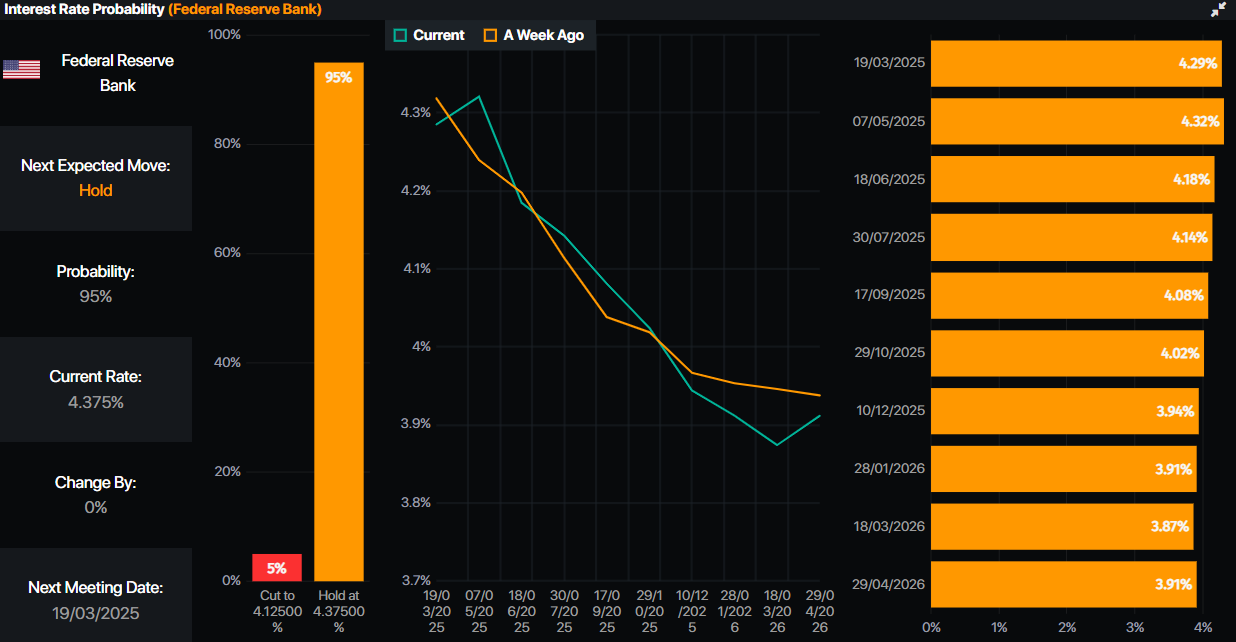
Source: Prime Market Terminal
In the meantime, the GBP/USD pair extended its losses as the US Dollar Index (DXY) gains 0.26% and reclaims the 107.00 mark.
Ahead of the day, Fed officials will continue to grab the headlines, though traders are awaiting the UK’s inflation data on Wednesday, US housing data, and the latest Federal Open Market Committee (FOMC) minutes.
GBP/USD Price Forecast: Technical outlook
The GBP/USD pair is forming a ‘bearish harami’ two-candle chart pattern, which indicates that sellers could drive the exchange rate lower, setting their sights below 1.2600. The Relative Strength Index (RSI) is bullish, though aiming slightly lower, indicating that the downside risks remain.
If GBP/USD tumbles below the February 17 low of 1.2577, look for a test of the February 5 high, which turned support at 1.2549. Then, look for the 50-day Simple Moving Average (SMA) at 1.2467. On the other hand, buyers need to drive the exchange rate past 1.2634 to challenge the 100-day SMA at 1.2678.
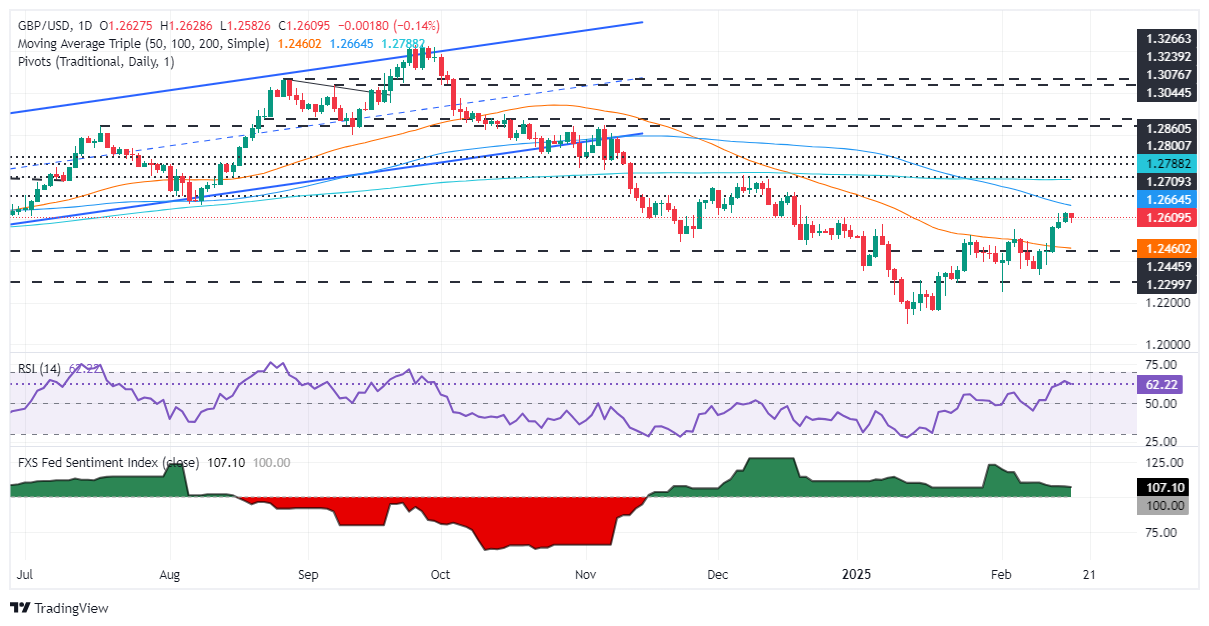
British Pound PRICE Today
The table below shows the percentage change of British Pound (GBP) against listed major currencies today. British Pound was the strongest against the New Zealand Dollar.
| USD | EUR | GBP | JPY | CAD | AUD | NZD | CHF | |
|---|---|---|---|---|---|---|---|---|
| USD | 0.29% | 0.16% | 0.20% | 0.07% | 0.16% | 0.66% | 0.12% | |
| EUR | -0.29% | -0.14% | -0.10% | -0.22% | -0.13% | 0.37% | -0.17% | |
| GBP | -0.16% | 0.14% | 0.06% | -0.09% | 0.00% | 0.50% | -0.04% | |
| JPY | -0.20% | 0.10% | -0.06% | -0.14% | -0.05% | 0.43% | -0.09% | |
| CAD | -0.07% | 0.22% | 0.09% | 0.14% | 0.09% | 0.59% | 0.05% | |
| AUD | -0.16% | 0.13% | -0.00% | 0.05% | -0.09% | 0.50% | -0.05% | |
| NZD | -0.66% | -0.37% | -0.50% | -0.43% | -0.59% | -0.50% | -0.53% | |
| CHF | -0.12% | 0.17% | 0.04% | 0.09% | -0.05% | 0.05% | 0.53% |
The heat map shows percentage changes of major currencies against each other. The base currency is picked from the left column, while the quote currency is picked from the top row. For example, if you pick the British Pound from the left column and move along the horizontal line to the US Dollar, the percentage change displayed in the box will represent GBP (base)/USD (quote).
Author

Christian Borjon Valencia
FXStreet
Markets analyst, news editor, and trading instructor with over 14 years of experience across FX, commodities, US equity indices, and global macro markets.

















