GBP/USD flounders near 1.2650 as markets focus on US data
- GBP/USD struggles to find momentum for a recovery after Tuesday’s backslide.
- UK data is thin this week, with investors focusing on US labor and output figures.
- US ISM PMI beat the street, underlying manufacturing costs outlook eases further.

The GBP/USD is cycling near 1.2650, holding steady despite a lack of recovery from Tuesday’s sharp decline. Broader markets are largely focused on US data on Wednesday, with the US ISM Manufacturing Purchasing Managers’ Index (PMI) leading the charge.
The US USM Manufacturing PMI for December beat expectations, but still remains in contraction territory after printing at 47.4 versus the forecast 47.1 in a slight rebound from November’s 46.7.
Read More: US ISM Manufacturing surprised to the upside in December
The US ISM Manufacturing Employment Index for December also beat expectations, coming in at 48.1 against the forecast 46.1, a healthy uptick from the previous four-month low of 45.8. ISM Manufacturing Prices Paid settled lower than expected, coming in at 45.2 compared to the forecast 47.5, and easing back even further from November’s 49.9 as producer inflation continues to cool.
Wednesday’s big data beat will come from the Federal Reserve’s (Fed) latest meeting minutes, slated to release towards the end of the US session at 19:00 GMT. Fed officials have been working overtime trying to throw cold water on red-hot market expectations that broke off the chain after Fed Chairman Jerome Powell’s perceived rate pivot in December, but results have been mixed and market expectations of a more furious pace of rate cuts in 2024 have only slightly subsided.
With the meeting minutes drafted after Fed chair Powell’s latest public appearance, investors can expect the meeting review to come in a carefully wrapped expectations-managing package.
Thursday brings another round of ADP Employment Change numbers for December as a preview of Friday’s US Nonfarm Payrolls (NFP), but the indicator has had a shaky relationship with the larger, heftier, and later data release as of late, and investors should expect the numbers to mix on their respective results.
Thursday’s ADP Employment Change is forecast to tick upwards from 103K to 115K, while Friday’s NFP data is expected to soften from 199K to 168K. Revisions to older data should be expected.
GBP/USD Technical Outlook
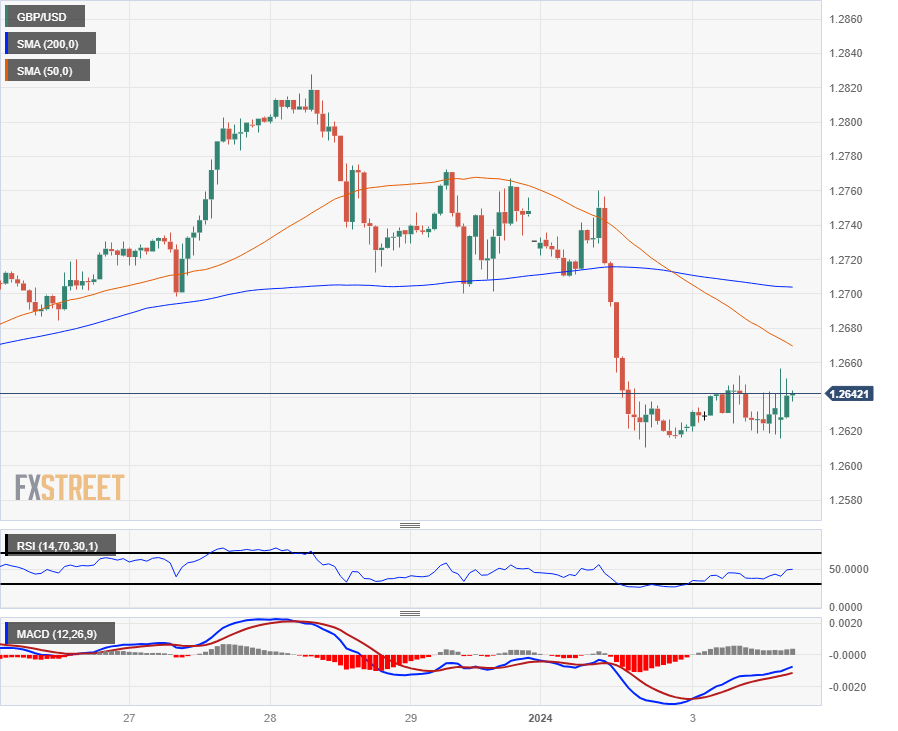
The Pound Sterling remains sharply off near-term highs against the US Dollar, with the GBP/USD down nearly 1.5% from last week’s peak of 1.2828. Intraday action is set to face bearish technical pressure following a downside cross of the 50-hour and 200-hour Simple Moving Averages (SMA), and the 1.2700 handle represents the level for bulls to beat.
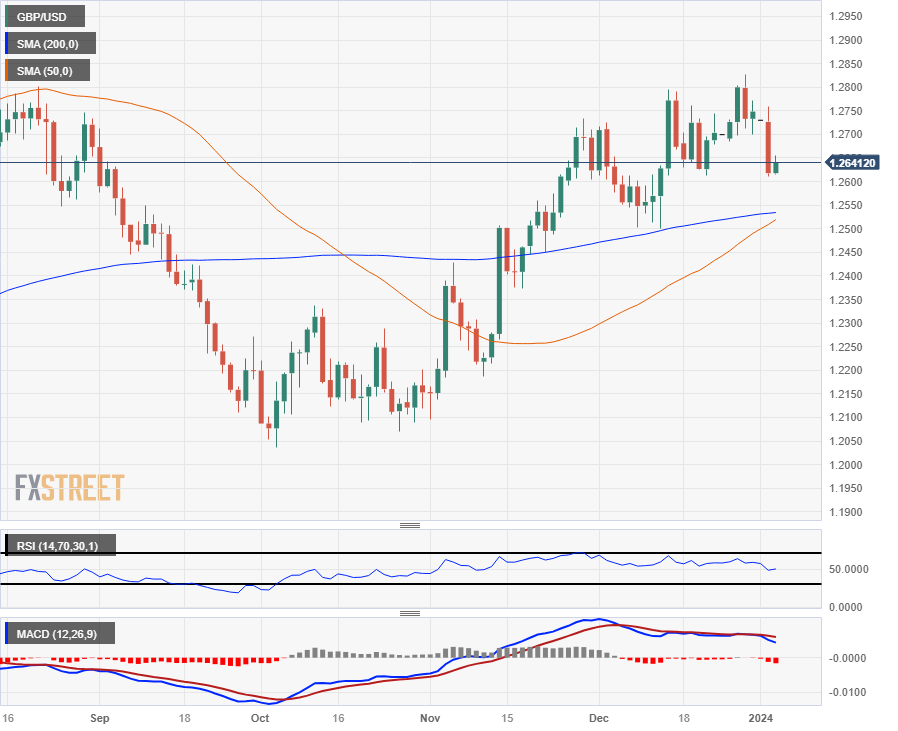
Things are notably more bullish on the daily candlesticks with the GBP/USD trading on the high side of the 200-day SMA near 1.2550, and the 50-day SMA is set for a bullish cross of the longer moving average. On the low side, technical indicators have been softening since the start of December, and further topside momentum sees growing headwinds with higher highs making notably less progress than at the outset of the bullish rollover from October’s lows near 1.2050.
GBP/USD Hourly Chart
GBP/USD Daily Chart
GBP/USD Technical Levels
Author

Joshua Gibson
FXStreet
Joshua joins the FXStreet team as an Economics and Finance double major from Vancouver Island University with twelve years' experience as an independent trader focusing on technical analysis.














