GBP/USD drifts lower as UK data disappoints and Fed cautious tone caps upside
- GBP/USD steady as UK Retail Sales miss forecasts, signaling softer consumer demand after BoE rate cut.
- BoE cut rates on a 5–4 vote, but Governor Bailey struck a cautious tone, stressing uncertainty over inflation persistence.
- Fed officials downplay easing urgency, risking Sterling underperformance if BoE cuts ahead of the Fed.

The GBP/USD pair hovers around familiar levels, yet it has dropped below the 1.3400 mark on Friday after Retail Sales in the UK missed estimates and Federal Reserve (Fed) speakers crossed the wires. At the time of writing, the pair trades at around 1.3370, virtually unchanged.
Sterling eases after disappointing UK consumption data, while cautious BoE and Fed rhetoric keep downside risks alive
Sales in the UK rose by 0.6% YoY in November, unchanged from the previous print but missed estimates of 0.9% expansion. On a monthly basis, figures fell 0.1%, beneath forecasts of a 0.4% expansion, reported the Office for National Statistics (ONS) a day after the Bank of England (BoE) cut rates due to cooling inflation.
On Thursday, the BoE reduced borrowing costs on a 5-4 vote split. BoE Governor Andrew Bailey opted to support the hawks and added that the interest rate path is uncertain, while highlighting that inflation-persistence data shows positive signs, but risks remain balanced.
In the US, New York Fed President John Williams said that some data shows more disinflation, while acknowledging that the “Unemployment rate may have been pushed up by distortions, maybe by a tenth, but not a surprising read.” He added that he does not have the urgency to change monetary policy.
The University of Michigan reported on Friday that Consumer Sentiment in December rose below estimates of 53.4, coming at 52.9. The report showed that consumer spending is slowing as conditions for buying durable goods fell for the fifth consecutive month, whereas people expect the unemployment rate to continue rising over the next year.
Regarding inflation expectations, the survey showed that for a one-year period, Americans expect prices to rise at an annual rate of 4.2%, while for a five-year period, they expect inflation at 3.2%.
BoE vs. Fed: Who moves first?
Given the fundamental backdrop, expectations that the Federal Reserve will reduce rates in the first half of the year remain unchanged, with odds for a June cut at 53%. Meanwhile, the BoE’s chance for the first-rate cut is fully priced in for the same month as the Fed, but odds for a March move are the highest at 40%, according to Capital Edge rate probability data. If the BoE moves faster than the Fed, expect further downside on the GBP/USD
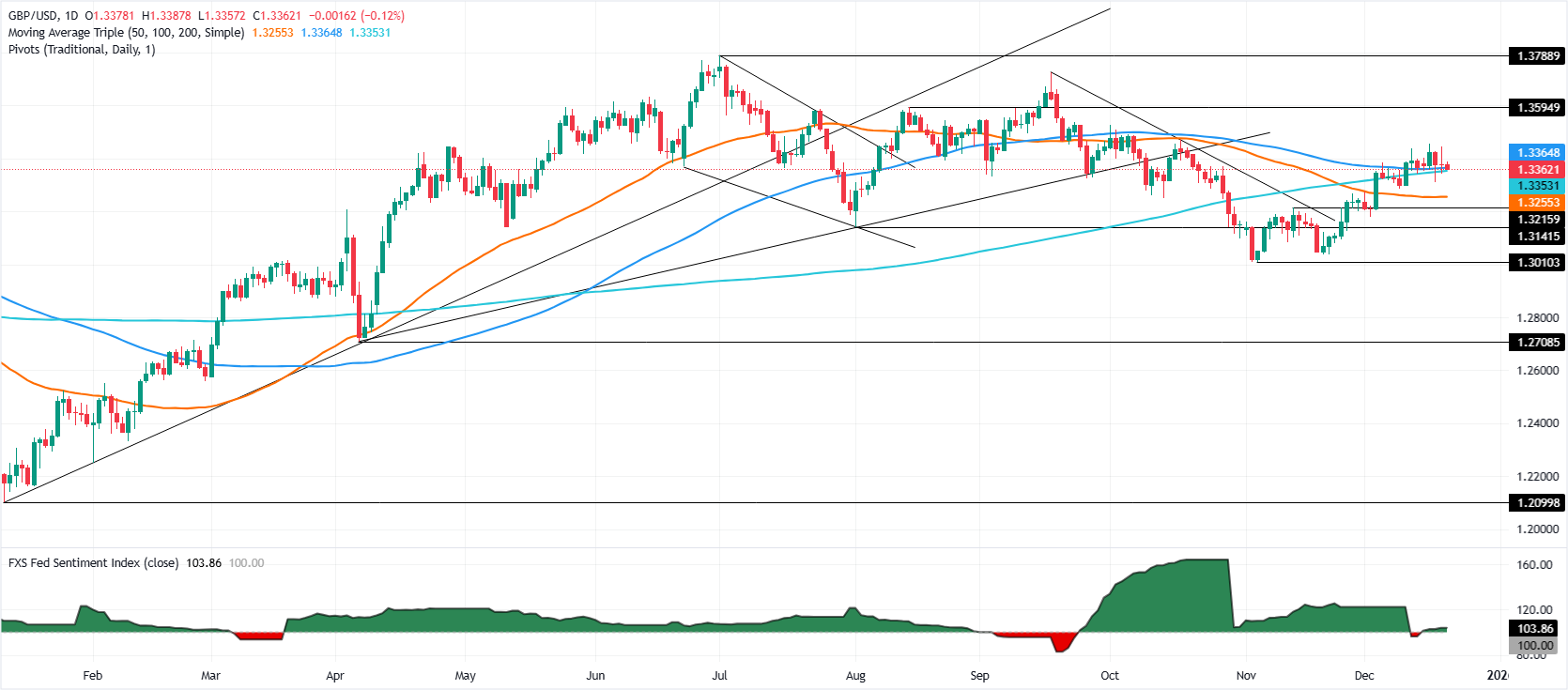
GBP/USD Price Forecast: Technical outlook
GBP/USD has lost bullish momentum, with the pair edging towards the 200-day SMA at 1.3350 after clearing strong support at 1.3400. A breach of the former will expose 1.3302, followed by the 50-day SMA at 1.3253.
The Relative Strength Index (RSI), although bullish, points downward, indicating that sellers are outweighing buyers.
For a bullish resumption, buyers must clear 1.3400 to remain hopeful of testing higher prices.
Pound Sterling Price This Month
The table below shows the percentage change of British Pound (GBP) against listed major currencies this month. British Pound was the strongest against the Japanese Yen.
| USD | EUR | GBP | JPY | CAD | AUD | NZD | CHF | |
|---|---|---|---|---|---|---|---|---|
| USD | -0.96% | -0.93% | 0.83% | -1.38% | -0.94% | -0.37% | -0.96% | |
| EUR | 0.96% | 0.04% | 1.84% | -0.42% | 0.02% | 0.60% | 0.00% | |
| GBP | 0.93% | -0.04% | 2.06% | -0.46% | -0.02% | 0.56% | -0.03% | |
| JPY | -0.83% | -1.84% | -2.06% | -2.20% | -1.79% | -1.21% | -1.79% | |
| CAD | 1.38% | 0.42% | 0.46% | 2.20% | 0.39% | 1.03% | 0.43% | |
| AUD | 0.94% | -0.02% | 0.02% | 1.79% | -0.39% | 0.58% | -0.01% | |
| NZD | 0.37% | -0.60% | -0.56% | 1.21% | -1.03% | -0.58% | -0.59% | |
| CHF | 0.96% | -0.00% | 0.03% | 1.79% | -0.43% | 0.01% | 0.59% |
The heat map shows percentage changes of major currencies against each other. The base currency is picked from the left column, while the quote currency is picked from the top row. For example, if you pick the British Pound from the left column and move along the horizontal line to the US Dollar, the percentage change displayed in the box will represent GBP (base)/USD (quote).
Author

Christian Borjon Valencia
FXStreet
Markets analyst, news editor, and trading instructor with over 14 years of experience across FX, commodities, US equity indices, and global macro markets.