GBP/USD bulls pipe up to test H4 resistance after ECB presser
- GBP/USD holds firm in a correction following ECB.
- Bears are lurking near a 61.8% Fibo on the 4-hour chart.

GBP/USD is taking on hourly resistance in the aftermath of the European Central Bank interest rate decision and press conference. The ECB went ahead with a half-point rate hike on Thursday. Prior to the decision, market participants wondered if the Governing Council might balk. Nevertheless, the Euro sank and the US Dollar stabilized which is a weight for GBP. At the time of writing, GBP/USD is trading 0.28% higher on the day and has traveled between a low of 1.2026 and 1.2112 so far.
In the face of recent banking sector turmoil, including and especially Credit Suisse's worst day yesterday after its shares on Wednesday plunged as much as 30%, the ECB went ahead and raised interest rates as follows;
- Main refi rate at 3.50% vs 3.00% prior.
- Raises interest rate on marginal lending facility to 3.75% vs 3.25% prior.
- Deposit facility to 3.00% vs 2.50% prior.
The bottom line here is that the Governing Council remains highly concerned about inflation, analysts at TD Securities explained, noting the first sentence of the release as being: "Inflation is projected to remain too high for too long".
No LTROs were announced, but the statement shows a willingness to provide liquidity if needed. Moreover, there was no indication in the statement of future policy hikes.
In the presser, the governor Christine Lagarde said the bank remains committed to the 2% inflation target and that they are not seeing a lot of improvement in underlying inflation.
ECB statement key notes
- Refrains from signalling future rate moves in statement.
- Inflation projected to remain too high for too long.
- Headline inflation expected to average 5.3% in 2023, 2.9% in 2024 and 2.1% in 2025.
- Forecasts done before market turmoil.
- Elevated level of uncertainty reinforces importance of a data-dependent approach to ECB policy decision, which will be determined by its assessment of inflation outlook in light of incoming data and dynamics.
- Banking sector sector is resilient, with strong capital and liquidity positions
- Policy toolkit is fully equipped to provide liquidity support to eurozone financial system if needed.
GBP/USD technical analysis
The break below the 50-day moving average is bearish:
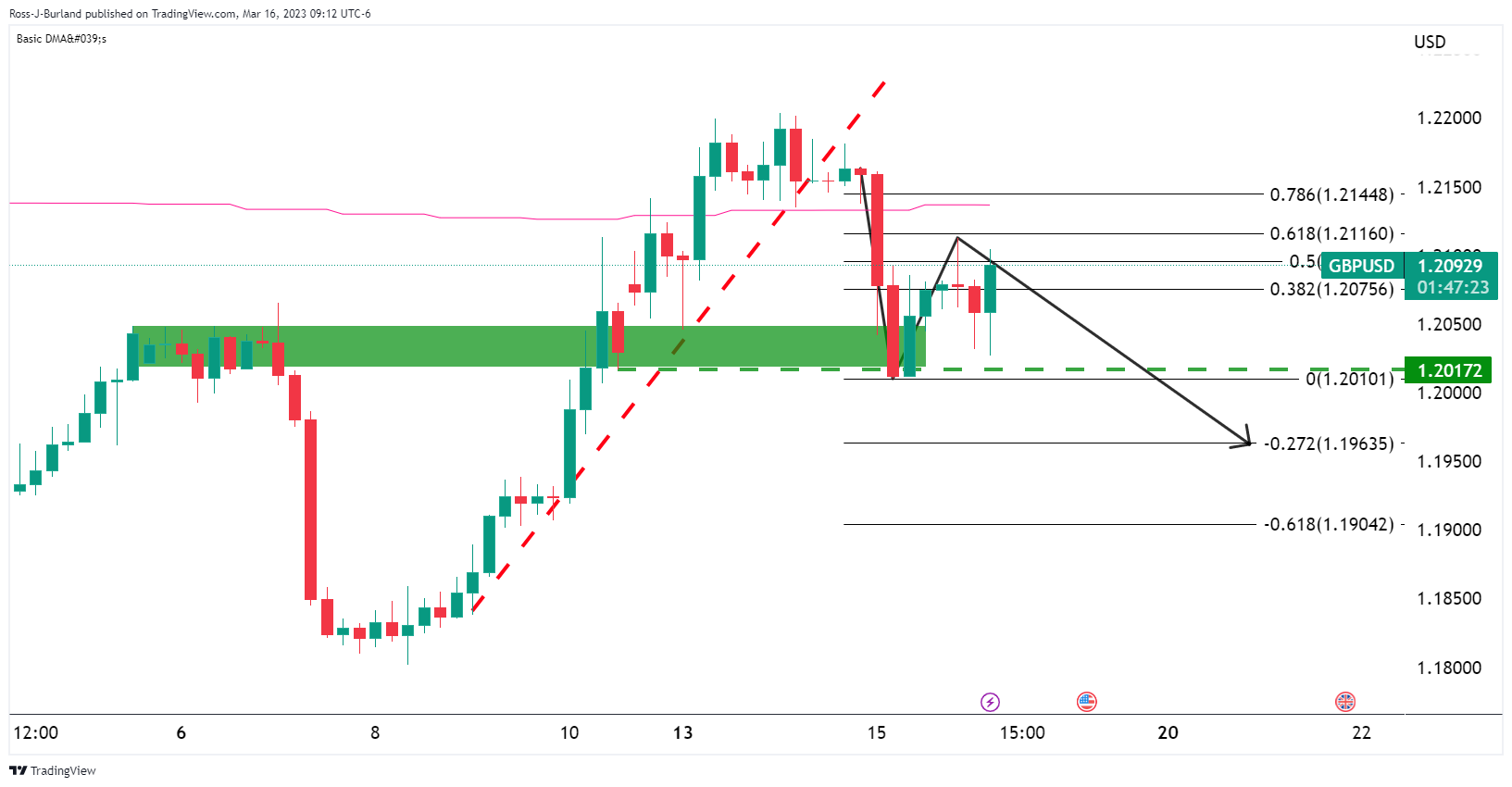
H4 chart
´´We see room for the USD to reverse this week’s losses and would look for a move back to GBP/USD1.19 on a 1-month view,´´ analysts at Rabobank said.
Author

Ross J Burland
FXStreet
Ross J Burland, born in England, UK, is a sportsman at heart. He played Rugby and Judo for his county, Kent and the South East of England Rugby team.
















