EUR/USD eases below 1.0800 despite hawkish ECB talks, EU/US inflation cues eyed
- EUR/USD fades late Friday’s corrective bounce amid sour sentiment.
- Headlines surrounding banking sector, nuclear fears from Russia weigh on risk appetite.
- Mostly upbeat EU data, hawkish ECB talks previously allowed Euro to pare some losses.
- Inflation numbers from EU/Germany, US Core PCE Price Index will be crucial to watch for fresh impulse.
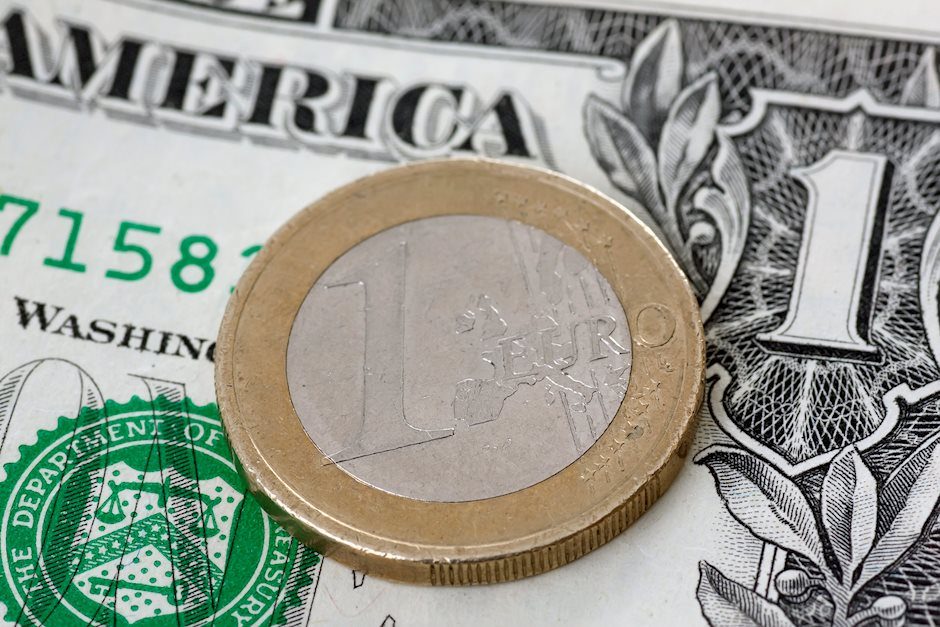

EUR/USD retreats towards 1.0750 as it consolidates the previous weekly gains amid a cautious mood in the market ahead of the key inflation data from Europe and the US. That said, the Euro pair eases from its intraday high to 1.0765 during early Monday in Asia while fading the late Friday’s corrective bounce.
Fears of more banking sector fallout and Russia’s likely usage of nuclear weapons in its war with Ukraine join the hawkish central bank talks to challenge the risk profile. It’s worth noting, however, that the US Dollar managed to pare some of its latest losses despite the downbeat Treasury bond yields. The recent rebound in the greenback could be linked to the slightly positive US data and hopes of faster rate hikes by the Federal Reserve (Fed). However, the hawkish tone of the European Central Bank officials and an absence of disappointing numbers from the bloc allowed the EUR/USD pair to post weekly gains in the last.
The North Atlantic Treaty Organization (NATO) NATO on Sunday criticised Vladimir Putin for what it called his "dangerous and irresponsible" nuclear rhetoric, a day after the Russian president said he planned to station tactical nuclear weapons in Belarus, per Reuters.
Elsewhere, the preliminary readings of Eurozone S&P Global PMIs for March showed that the Manufacturing gauge arrived at 47.1 versus 49.0 expected and 48.5 prior but the Services PMI rose to a fresh 10-month high of 55.6 while rising from 52.7 prior and 52.5 expected. As a result, the Composite PMI also rose to a 10-month top of 54.1 versus 51.9 market forecasts and 52.0 previous readings.
On the same line were the first readings of Germany’s S&P Global/BME PMIs for March as the Manufacturing gauge dropped to a two-month low of 44.4 versus 47.0 expected and 46.3 prior but the Services PMI rose to 53.9 during the stated month from 50.9 prior and 51.1 expected. Further, the Composite PMI refreshed a 10-month high with the 52.6 figure for March versus 51.0 expected and February’s 50.7.
On the other hand, US Durable Goods Orders for February dropped by 1.0% versus January's fall of 5% (revised from -4.5%) and the market expectation for an increase of 0.6%. Details suggested that the figure for Durable Goods Orders ex Defense and ex Transportation were also downbeat but Nondefense Capital Goods Orders ex Aircraft came in firmer-than-expected 0.0% to 0.2%, versus 0.3% prior.
Further, the preliminary readings of the US S&P Global PMIs for March came in firmer as the Manufacturing gauge rose to 49.3 from 47.3 in February, versus 47.0 expected, while Services PMI rose to 53.8 from 50.6 prior and 50.5 expected. With this, the S&P Global's Composite PMI increased to 53.3 from 50.1 in February, versus 50.1 market forecasts.
Talking about the central bankers’ comments, On Friday, Atlanta Fed President Raphael Bostic told NPR that it was not an easy decision to raise the policy rate while also adding that he is not expecting the economy to fall into recession. "Fed has to get inflation under control,” said Fed’s Bostic.
Further, St. Louis Federal Reserve President James Bullard, a policy hawk, said on Friday that the response to the bank stress was swift and appropriate, allowing the monetary policy to focus on inflation, per Reuters. The policymaker also added that the projections suggest one more rate hike that could be at the next FOMC meeting or soon after. It should be noted that the latest comments from Minneapolis Fed President Neel Kashkari seem to weigh on the US Dollar as he said during CBS show Face the Nation that recent stress in the banking sector and the possibility of a follow-on credit crunch brings the US closer to recession.
In the case of the ECB officials, ECB President Christine Lagarde told EU leaders on Friday that the Euro area banking sector is resilient with strong capital and liquidity positions, Reuters reported citing EU officials. “ECB is determined to bring back inflation to 2%, will decide on future rates based on incoming data,” added ECB’s Lagarde. On the same line was Eurogroup President Paschal Donohoe who said that European banks have enough capital and liquidity. Further, ECB policymaker Joachim Nagel said on Friday, “It will be necessary to raise policy rates to sufficiently restrictive levels in order to bring inflation back down to 2% in a timely manner.” During the weekend, ECB Board Member Isabel Schnabel said that while headline inflation has begun falling, the core is sticky.
Amid these plays, Wall Street closed with mild gains after late Friday’s losses while the yields bounce off weekly lows.
Looking ahead, IFO numbers for Germany will join the comments from the ECB and the Fed officials to direct the EUR/USD pair’s intraday moves. However, major attention will be given to the inflation data from Germany and Europe. On the other hand, the Fed’s preferred inflation gauge, namely the Core Personal Consumption Expenditure (PCE) Price Index, will be important to track for clear direction.
Technical analysis
Although a downside break of a short-term support line, now resistance around 1.0855, teases EUR/USD bears, the 50-DMA support around 1.0725 challenges the quote’s further downside.
Author
Anil Panchal
FXStreet
Anil Panchal has nearly 15 years of experience in tracking financial markets. With a keen interest in macroeconomics, Anil aptly tracks global news/updates and stays well-informed about the global financial moves and their implications.