EUR/USD breaks above recent congestion as US NFP miss drives down Greenback
- EUR/USD found a fresh high above 1.08 after NFP figures sparked rate cut hopes.
- US economic data came in broadly softer on Friday.
- Coming up next week: European Retail Sales, US consumer sentiment.

EUR/USD drove into a fresh weekly high on Friday, breaking above recent congestion after a broad miss in US Nonfarm Payrolls (NFP) labor and wages figures that reignited broad-market hopes for an accelerated path towards Federal Reserve (Fed) rate cuts.
US NFP comes in soft, hardens rate cut bets
US NFP net job additions in April printed at 175K, below the forecast 243K and falling away from the previous month’s 315K, which was revised upwards from 303K. Average Hourly Earnings grew by 0.2% MoM in April, below the forecast 0.3%.
ISM US Services Purchasing Managers Index (PMI) figures also declined, surprising markets that were expecting an uptick in forward-looking business operator sentiment. April’s ISM Services PMI printed at 49.4, a 16-month low, declining below the contractionary 50.0 level and missing the forecast print of 52.0 versus the previous 51.4.
A sticking point for rate cut hopes was ISM Services Prices Paid, which showed an increase to 59.2 MoM in April as business operating costs accelerate to the upside, climbing from 53.4.
Coming up next week, European Retail Sales figures are scheduled for Tuesday, and median market forecasts are expecting Euro area sales to grow 0.6% MoM in March after the previous month’s -0.5% decline. On the US side, next Friday’s print of the Michigan Consumer Sentiment Index will provide a key finger on the pulse of how deflated consumer expectations for the US economy are getting. May’s Michigan Consumer Sentiment Index is forecast to ease slightly to 77.0 from the previous month’s 77.2.
EUR/USD technical outlook
EUR/USD broke north of recent consolidation on Friday, ticking into a fresh weekly high of 1.0813, climbing out of a rough supply zone between 1.0740 and 1.0720. The week’s low is parked at 1.0650, etching in a near-term swing high as bidders try to knock the pair back into a bullish run.
Friday’s bullish push sent the EUR/USD into the 200-day Exponential Moving Average (EMA) at the 1.0800 handle, with a raft of late-week profit-taking pulling the pair back into 1.0760 as markets head off for the weekend.
EUR/USD hourly chart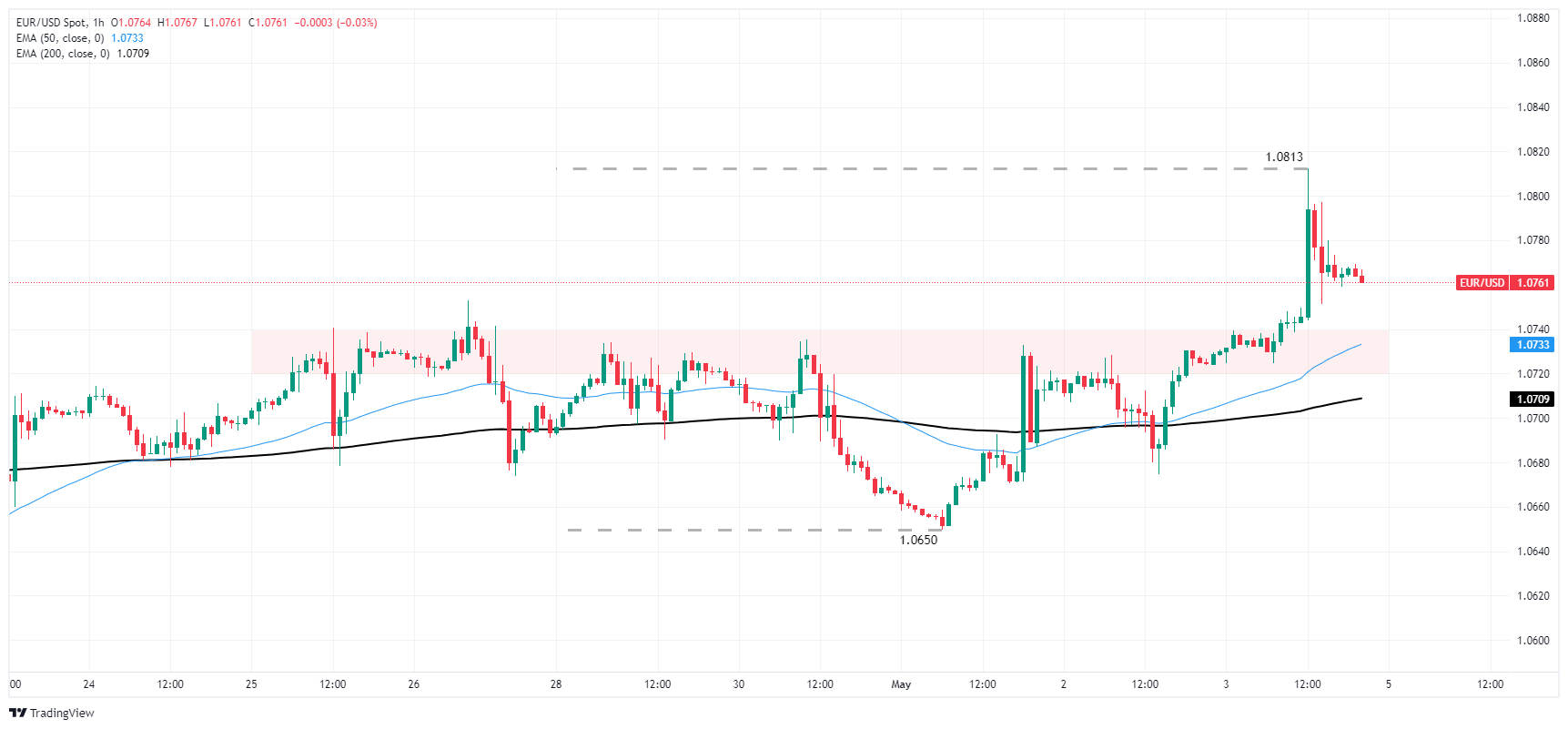
EUR/USD daily chart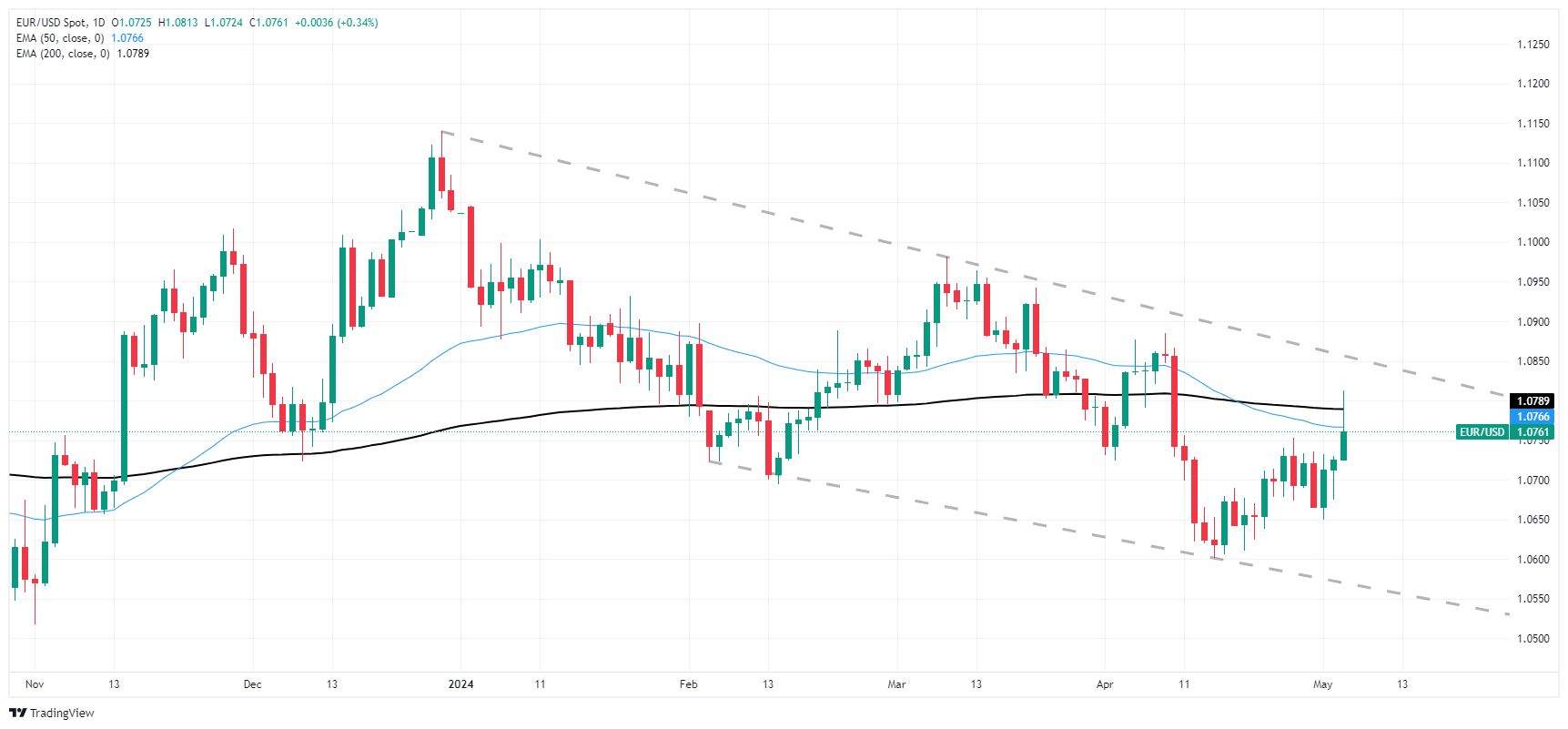
Author

Joshua Gibson
FXStreet
Joshua joins the FXStreet team as an Economics and Finance double major from Vancouver Island University with twelve years' experience as an independent trader focusing on technical analysis.