EUR/GBP expected to continue downtrend as outlook bleaker for Europe than the UK
- EUR/GBP is in a downtrend and at two-and-a-half year lows, however, fundamentals do not support a reversal.
- The Eurozone economy is expected to be worse hit by US trade tariffs amid already weak growth.
- German political instability and GBP’s resilience to geopolitical risk are further factors weighing on the pair.

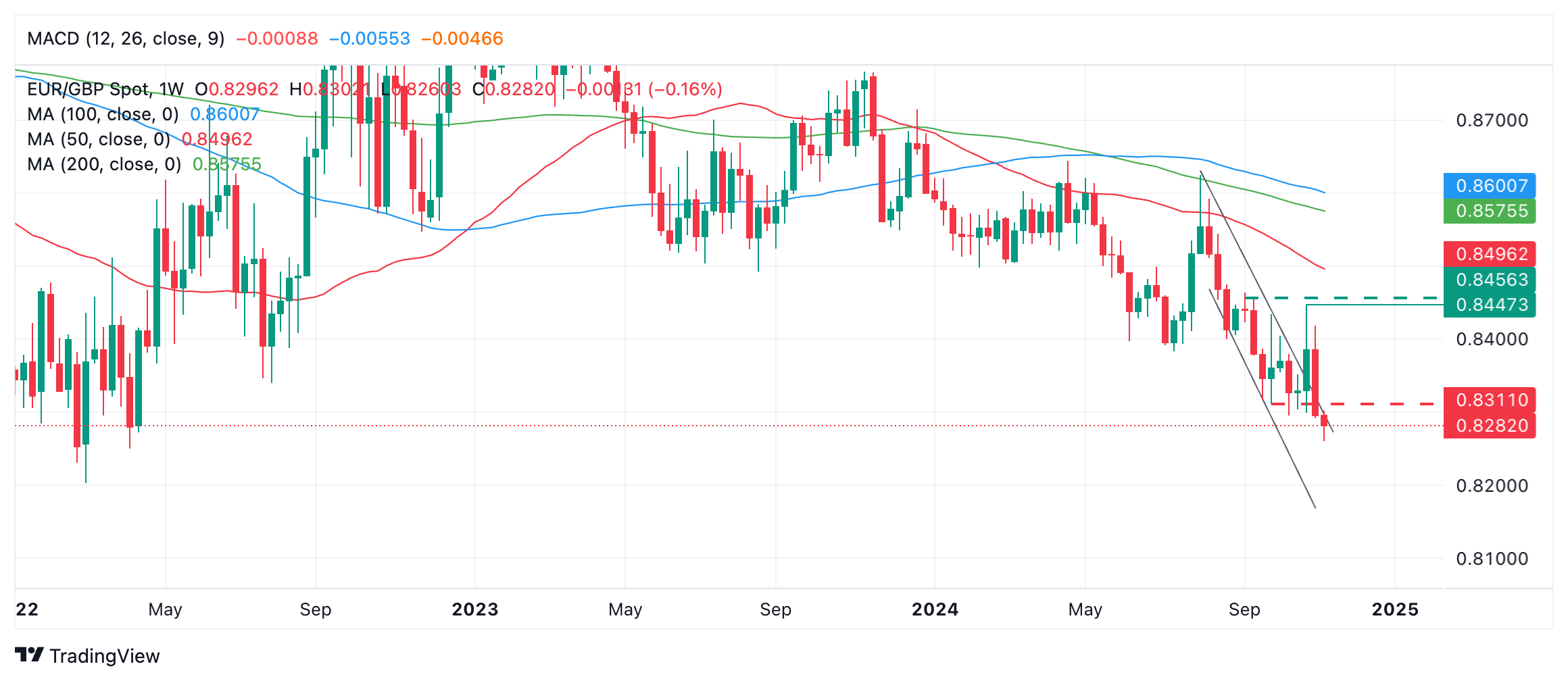
EUR/GBP trades flat on Tuesday as it finds its feet following a five-day losing streak. The pair is trading at over two-and-a-half-year lows in the 0.8280s, driven by a mixture of Euro (EUR) weakness and Pound Sterling (GBP) resilience. It is in a downtrend on all major timeframes.
EUR/GBP Weekly Chart
The Euro is depreciating on a combination of fears that the imposition of tariffs by the US will dent already weak growth, political uncertainty in Germany. This was reflected in the lower ZEW sentiment data for both the Euro Area and Germany released on Tuesday.
Economists at Nomura forecast Eurozone Gross Domestic Product (GDP) to fall “by a minimum 0.3pp cumulative over 2025-26” as a result of US trade tariffs brought in by the Trump administration.
Interest rates in the UK are expected to remain higher than in the Eurozone as the outlook for growth in the UK remains positive compared to the Eurozone. Relatively higher interest rates will bolster the Pound compared to the Euro, potentially driving EUR/GBP lower.
“The political crisis in Germany, dovish ECB pricing vs Fed and BoE, and the threat of tariffs on EU exports to the US (€500bn per annum, or 2.5% of GDP worth) are combining for a bleak backdrop (for the Euro) into year-end,” says Kenneth Broux, Senior Strategist at Societe Generale, “..we can’t see any lasting bounce materialising until after the German confidence vote and snap elections,” he adds.
The Pound is more resilient to the geopolitical shocks compared to the Euro, according to analysts at Goldman Sachs. GBP is also more positively aligned to risk-on and has a “positive beta to global risk” adds the bank. Should US equities continue to rally as a result of the outlook due to the new administration in Washington, this should further support Sterling.
The Bank of England (BoE) is unlikely to cut interest rates in December which makes it an outlier amongst major central banks, including the European Central Bank (ECB).
This is likely to support GBP since relatively high interest rates attract more foreign capital inflows.
The BoE’s bank rate is already quite high at 4.75% compared to the ECB’s main refinancing operations rate of 3.40%, suggesting an overall downside bias for EUR/GBP.
Author

Joaquin Monfort
FXStreet
Joaquin Monfort is a financial writer and analyst with over 10 years experience writing about financial markets and alt data. He holds a degree in Anthropology from London University and a Diploma in Technical analysis.