Dow Jones Industrial Average struggles to find momentum ahead of tense political week
- The Dow Jones struggled to maintain bullish momentum on Monday.
- The AI tech rally continues to face fresh headwinds, and a key US NFP jobs report is due this week.
- Labor data may wind up delayed if the US government fails to pass a funding resolution in time.


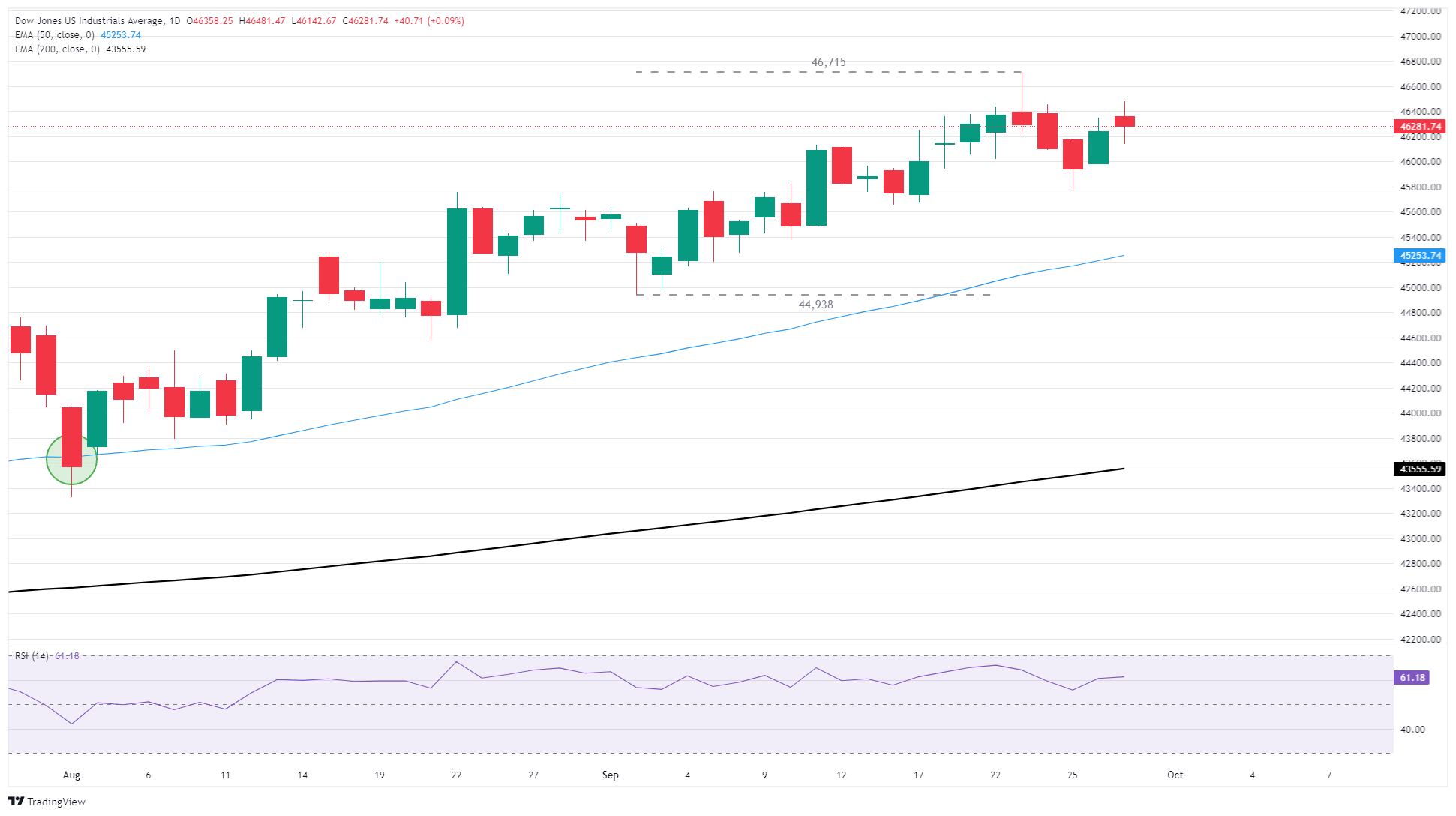
The Dow Jones Industrial Average (DJIA) hit a fresh patch of bearishness on Monday, easing back slightly from the week’s early highs near 46,500. Equities remain apprehensive as a looming government shutdown throws a wrench in the works for investors awaiting this week’s latest Nonfarm Payrolls (NFP) report.
The ongoing AI tech rally continues to wobble, but cracks are beginning to spread across the surface. Huge partnerships and investment announcements continue to pump record volumes of investment cash into the AI tech space as infrastructure spend skyrockets. However, questions about how revenues will overtake building and upkeep costs continue to mount with few answers in sight.
Investors brace for an NFP that may not come
Markets are closely watching the US government to see if Republican and Democrat lawmakers can meet in the middle on accelerating funding costs to keep the federal government operating. US President Donald Trump threatened sweeping federal worker firings if the US government can’t cut itself a cheque for the pace of outsized spending that has struck federal coffers since the Trump administration took office in January.
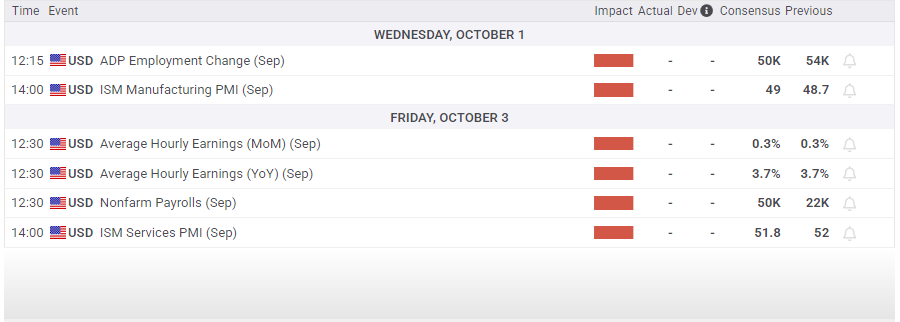
The US Labor Department is preparing to delay the latest NFP jobs report, currently slated for this Friday. If the federal government shuts down this week, investors will have to wait a while to see the latest employment figures. A raft of bitter labor data markdowns has left a sour taste in the mouths of many market watchers, including President Trump, who terminated the head of the Bureau of Labor Statistics (BLS) recently following a disastrous NFP print that showed the pace of US job creation has slowed to a crawl during his second term. A follow-up write down of job creation from March 2024 to March of 2025 showed the US economy has overall added far fewer jobs than many had priced in.
Dow Jones Daily chart
Economic Indicator
S&P Global Manufacturing PMI
The S&P Global Manufacturing Purchasing Managers Index (PMI), released on a monthly basis, is a leading indicator gauging business activity in the US manufacturing sector. The data is derived from surveys of senior executives at private-sector companies from the manufacturing sector. Survey responses reflect the change, if any, in the current month compared to the previous month and can anticipate changing trends in official data series such as Gross Domestic Product (GDP), industrial production, employment and inflation. A reading above 50 indicates that the manufacturing economy is generally expanding, a bullish sign for the US Dollar (USD). Meanwhile, a reading below 50 signals that activity in the manufacturing sector is generally declining, which is seen as bearish for USD.
Read more.Next release: Wed Oct 01, 2025 13:45
Frequency: Monthly
Consensus: 52
Previous: 52
Source: S&P Global
Author
Joshua Gibson
FXStreet
Joshua joins the FXStreet team as an Economics and Finance double major from Vancouver Island University with twelve years' experience as an independent trader focusing on technical analysis.

















