|

Donald Trump refreshes China tariff threats during Korea statements
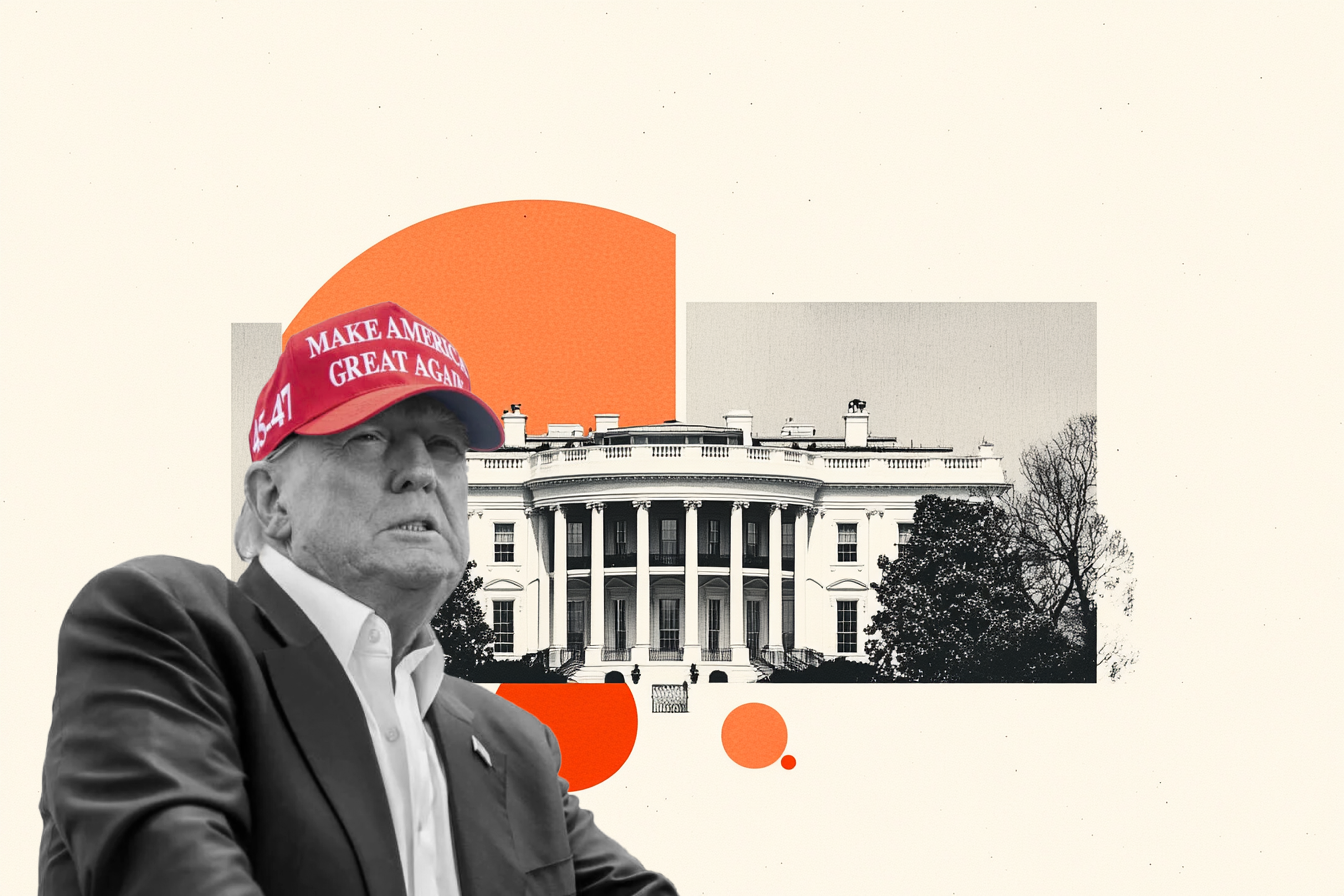
United States (US) President Donald Trump swung for the fences on Monday, touching on a broad range of subjects during a joint press conference with South Korean President Lee Jae Myung. In between delivering remarks on the Korean peninsula, Donald Trump fashioned himself as the ultimate peace broker for multiple countries, and mused about having South Korea voluntarily give up sovereign land to the US.

President Trump also touched on international trade, insisting that US Crude Oil products are critical to South Korea, which overwhelmingly has its energy demands met by trade with China and India. Trump also brought back new tariff threats against China, vowing to impose 200% tariffs on targeted goods if China doesn't "give us magnets".

Key highlights

China has to give us magnets, if they don't we'll charge them 200% tariff or something.
We're going to do numbers on costs of drugs in the US.
We will be reducing drug prices by 1,400-1,500%.
I want to try to get as much as I can of US government taking a stake in companies. Hope to have many more cases like Intel.There will be other cases.I want them to do well.
Have not discussed specific security guarantees in Russia-Ukraine conflict.
The US will be back up as far as security measures go.
We deal with NATO, we don't really deal with Ukraine.
We spend no money on Ukraine anymore.
I want war to end.
Have spoken to Putin.
Also talking about nuclear missiles.
We would like to denuclearize Russia.
Putin reluctant to meet Zelenskyy because he doesn't like him.
Going to have serious discussions.
Thinking about contracting some ships from South Korea.
Gonna be buying ships from South Korea.
South Korea big buyer of US military equipment.
Putin and Zelenskyy should meet.
Don't know that they'll meet.
May be there for Putin-Zelenskyy meeting, may not.
There could be consequences if they don't meet.
We'll see what happens over week or two, at that point I'll step in.

Author

Joshua Gibson

Joshua joins the FXStreet team as an Economics and Finance double major from Vancouver Island University with twelve years' experience as an independent trader focusing on technical analysis.


More from Joshua Gibson
Share:

Editor's Picks

AUD/USD turns south toward 0.6900 as USD firms up

AUD/USD sees fresh selling and drops toward 0.6900 in late Asian trading on Monday, as renewed US Dollar strength weighs on the pair amid lingering Middle East and Russia-Ukraine geopolitical tensions. Focus remains on Oil prices, Treasury bond yields, and RBA expectations for fresh trading impetus in the major.

USD/JPY retakes 158.00 amid hawkish BoJ bets, firmer USD

USD/JPY erases losses and retakes 158.00 in the Asian session on Monday, trading within a one-week-old range. Geopolitical uncertainty continues to underpin the US Dollar, despite fading Fed rate hike hopes, supporting the pair's rebound. However, further upside could be capped by hawkish BoJ expectations and looming intervention risks that could support the Japanese Yen.

Gold flat lines below $4,150 as rallying USD offsets receding Fed hike bets

Gold extends its consolidative price move, trading below $4,150 heading into the European session, and moves within a range held over the past week or so. As investors look past Friday's disappointing US jobs data, the US Dollar regains strong positive traction and rallies to a fresh high since April 2025. This is seen as a key factor capping the commodity, though receding bets for an October rate hike by the Federal Reserve help limit the downside.

BNB: Derivatives back bullish upside continuation

BNB, formerly known as Binance Coin, edges lower trading around $790 on Monday after posting three consecutive weekly gains. Rising Open Interest and positive funding rates suggest that bullish positioning is strengthening in the derivatives market.

Economics week ahead
In the U.S., the September ISM Services index is expected to ease modestly while continuing to signal expansion, with particular attention on whether price pressures remain elevated. In Canada, the labor market likely rebounded in September, although broader trends still point to a cooling pace of employment growth.
The Euro is near a one-year low: Inflation could trigger its rebound, not its fall

EUR/USD has fallen to its lowest level since May 2025. The pair hit 1.1312 on Wednesday and trades well below the January peak of 1.2082. The decline reflects a powerful combination of US Dollar strength, geopolitical uncertainty and renewed concerns about Europe's exposure to higher energy prices.