|

Crude Oil WTI Technical Analysis: Risky bull trap

  • Crude oil pushed as high as 70.70 so far this Tuesday, just one tick shy from the 70.71 resistance, the November 17, 2014 low. 
  • Crude oil has been grinding higher in a wedge shape (dotted line) above the bearish upper trendline in the last three days suggesting that bulls might actually be in a bull trap. 
  • However, a bull breakout above 74.71 should lead to bear capitulation and the market can spike to 75.27 the current 2018 high.

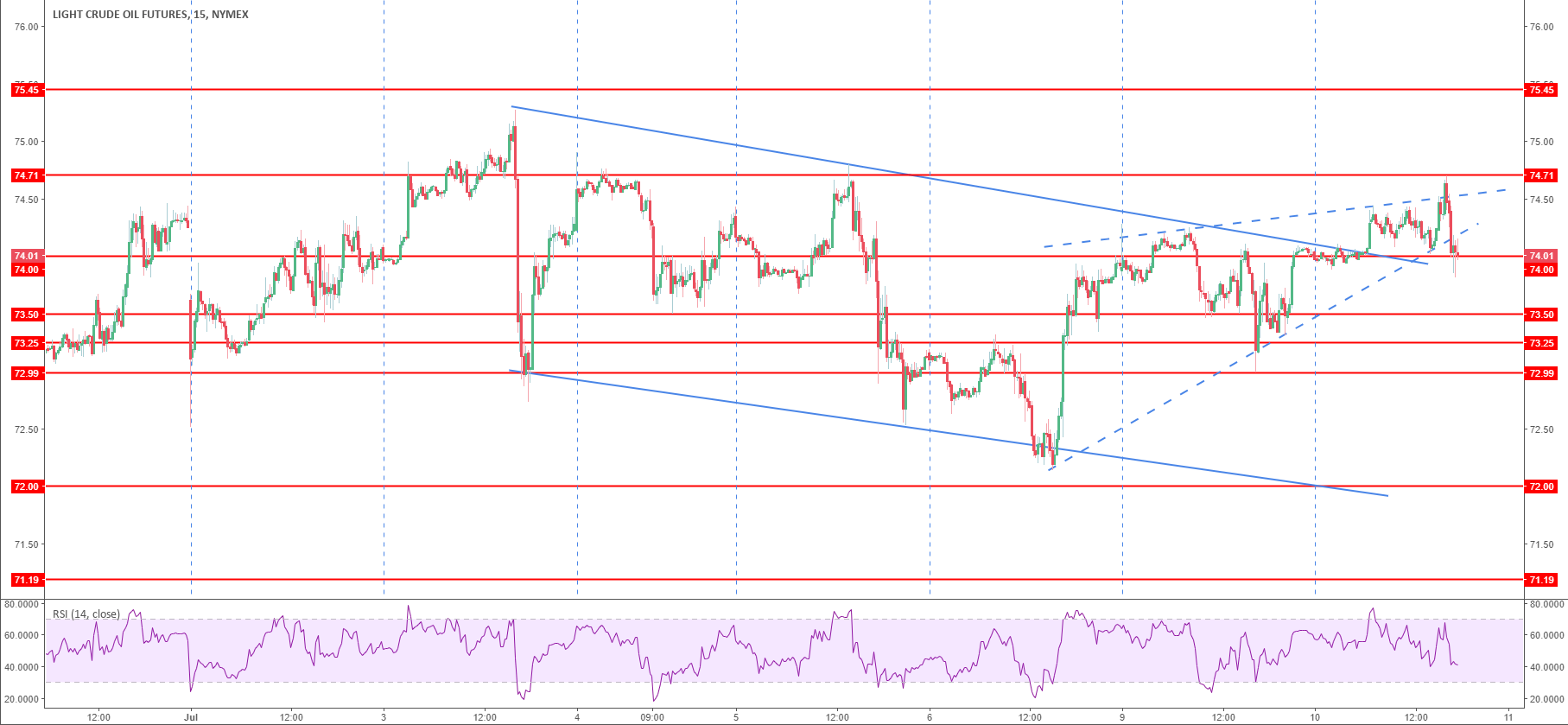
Crude oil WTI 15-minute chart

Spot rate:                      74.01
Relative change:           0.03%     
High:                             74.67
Low:                              73.78

Trend:                           Neutral to bearish

Resistance 1:               74.71 November 17, 2014 low
Resistance 2:               75.27 current 2018 high      
Resistance 3:               75.45 November 24, 2014 low
Resistance 4:               76.00 figure

Support 1:                    74.00 figure
Support 2:                    73.25 November 14, 2014 low          
Support 3:                    73.00 figure
Support 4:                    72.83 June 27 swing high
Support 5:                    72.00 figure        
Support 6:                    71.19 May 23 low       
Support 7:                    70.53 May 24 low   

Author

Flavio Tosti

Flavio Tosti

Independent Analyst

 

More from Flavio Tosti
Share:

Editor's Picks

AUD/USD consolidates above 0.7000; remains close to monthly top

AUD/USD holds steady above 0.7000 during the Asian session on Friday, trading just below the previous day's monthly low amid diverging forces. A hawkish RBA continues to support the Aussie, while the recent decline in US bond yields keeps the US Dollar depressed near a three-week low. However, oil-driven inflation fears reinforce Fed hike bets, which, along with geopolitical risks, could benefit the safe-haven buck and cap the currency pair.

USD/JPY bounces off one-month low; climbs to 157.00 amid reviving USD demand

USD/JPY rebounds from the 156.00 neighborhood, or a one-month low touched during Friday’s Asian session, with bulls looking to extend momentum beyond 157.00 amid the emergence of some US Dollar buying. Meanwhile, Japan's National CPI rose to a nine-month peak and reaffirmed BoJ rate-hike bets, which could support the Japanese Yen and cap gains for the currency pair.

Gold holds above $4,000/three-month low as Fed hike bets and firm USD cap upside

Gold struggles to capitalize on its modest recovery from levels below the $4,000 psychological mark, or a three-month low set earlier this Friday, and retains a bearish tone through the first half of the European session. Federal Reserve officials recently signaled there is no urgency to raise interest rates. Traders, however, are still pricing in around an 80% chance that the US central bank will raise borrowing costs again at its December policy meeting.

Crypto Today: Bitcoin holds the 50-day EMA as Ethereum and XRP face structural resistance

Bitcoin gradually ticks up on Friday, trading above $81,000. The Crypto King has recently defended structural support near $80,000, reinforcing the prevailing bullish outlook. Ethereum similarly edges higher above $2,400, while Ripple trades above $1.32 after testing support around $1.30.

US S&P Global PMI expected to show moderating business activity in October

The United States S&P Global preliminary Purchasing Managers Indices for October will be released on Friday, providing fresh insights into the health of the world's largest economy ahead of next week's Federal Reserve monetary policy meeting. The report includes the Manufacturing PMI, Services PMI and Composite PMI, which measure business activity across the private sector.

What November 3 means for the Fed's rate path and the US Dollar

The USD faces a decisive period ahead of the November 3 midterm elections. While markets anticipate another interest rate increase from the Fed in December, the battle for control of Congress could reshape fiscal policy expectations and, indirectly, the path of US monetary policy in 2027.