|

Chinese PMIs miss the mark, AUD steady

The Chinese Manufacturing PMI  and Manufacturing PMI for August has been released. 

The data arrived as follows:

  • Chinese Manufacturing PMI Aug: 50.1 (exp 50.2; prev 50.4).
  • Non-Manufacturing PMI Aug: 47.5 (exp 52.0; prev 53.3) - Composite PMI Aug: 48.9 (prev 52.4).
  • Composite PMI at 48.9.

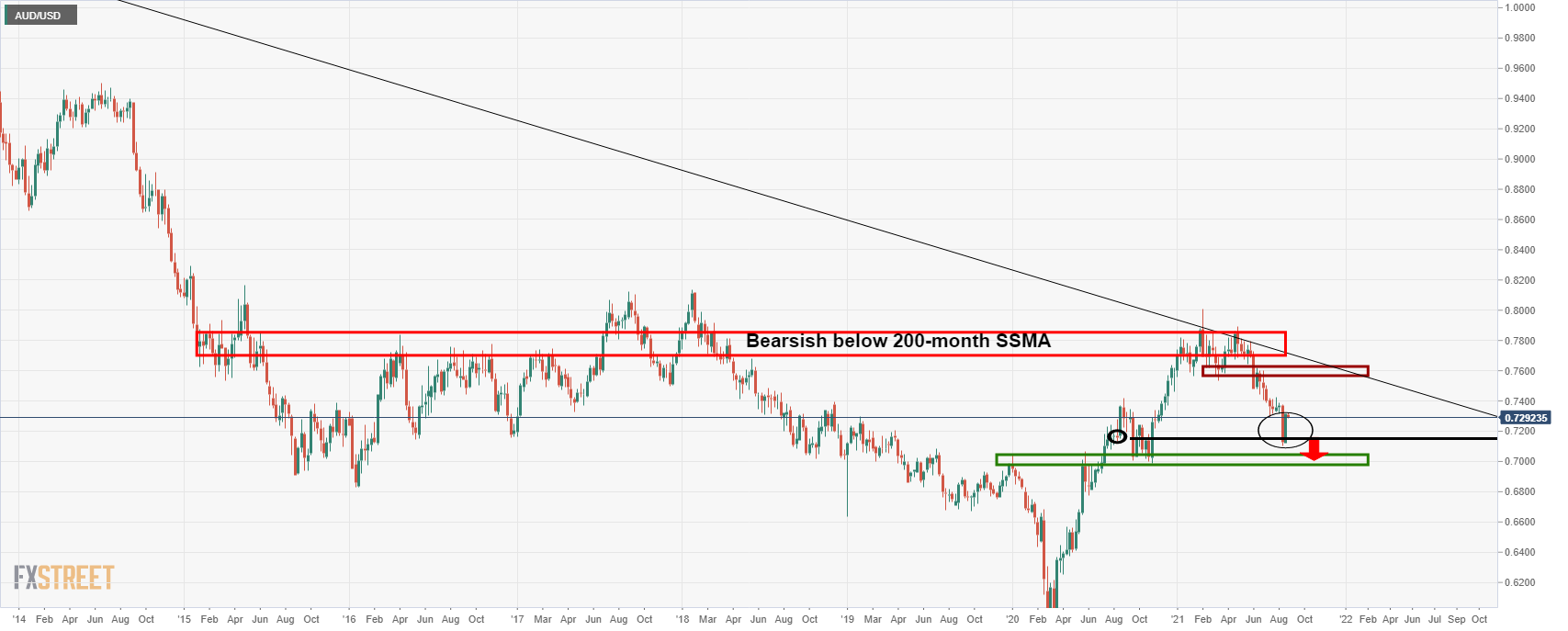
AUD/USD was unchanged in Asia on the data, sitting flat at 0.7290 between 0.7288/03 the range. 

Longer-term, AUD/USD is attempting to stablise on USD weakness as follows:
Why the data matters to traders

The monthly Non-manufacturing and manufacturing PMIs are released by the China Federation of Logistics and Purchasing (CFLP) on the last day of every month.

The official PMI is released before the Caixin Manufacturing PMI, which makes it even more of a leading indicator, highlighting the health of the manufacturing sector, considered as the backbone of the Chinese economy.

The data is of high relevance for the financial markets throughout several asset classes, given China’s influence on the global economy.

Author

Ross J Burland

Ross J Burland, born in England, UK, is a sportsman at heart. He played Rugby and Judo for his county, Kent and the South East of England Rugby team.


More from Ross J Burland
Share:

Editor's Picks

AUD/USD remains offered around 0. 6950

AUD/USD has added to Wednesday’s decline, slipping back to the low 0.6900s just to grab some air afterwards and attempt a tepid bounce toward 0.6950 ahead of the opening bell in Asia on Friday. The Aussie’s extra weakness has come despite the Greenback receding modestly amid fresh improvement in the risk complex.

USD/JPY slips below 158.00 as USD retreats

USD/JPY returns to the red below 158.00 in the Asian session on Thursday amid speculation that authorities will step in to prop up the Japanese Yen. Meanwhile, the US Dollar eases from near an 18-month high on profit taking, ignoring Wednesday's hawkish FOMC Minutes and the risk of a further escalation of tensions in the Middle East, adding to the pair's pullback.

Gold clings to daily gains; still below $4,150

Gold regains some composure and climbs back to the vicinity $4,150 mark per troy ounce amid decent gains on Thursday. The yellow metal’s recovery follows some loss of momentum in the US Dollar strength and a decent drop in US Treasury yields across the curve.

XRP downtrend persists as EMA support strains while Binance reserves swell
Ripple (XRP) sellers are gaining ground on Thursday, as the token slips below $1.40. Sell-side pressure remains intense in the broader crypto market, as seen with leading digital assets, including Bitcoin (BTC) currently below $83,000 and Ethereum (ETH), sliding below $2,600. Despite the correction, XRP retains a constructive technical outlook, with support provided by a key moving average cluster.
Three fundamental drivers are all pushing the Euro south. This chart shows them lining up on 1.1000
EUR/USD has already fallen sharply, but the forces pushing the pair lower are becoming increasingly interconnected. French fiscal concerns, renewed energy pressure and an uncomfortable policy dilemma for the European Central Bank (ECB) are colliding with a US economy that continues to give the Federal Reserve (Fed) little reason to turn dovish.
The UK 30-year gilt just hit a 1998 high. Is that good or bad for the British Pound?
The yield on the UK's 30-year government bond, or gilt, went through 6% on October 1 for the first time since early 1998, and on Monday the Pound was at its strongest against the Euro since June 2025. The gilt market's 28-year high is mostly someone else's. Since early May, the 30-year gilt yield has risen about 0.15 of a percentage point and the US 30-year about 0.7.