|

Breaking: RBNZ leaves official cash rate unchanged at 0.25% as expected

The Reserve Bank of New Zealand's Monetary Policy Statement is out. 

There are no forecasts published, so there’s no need for the RBNZ to be prescriptive about precisely when they expect to kick off hikes, but the key notes are as follows:

RBNZ leaves the official cash rate unchanged at 0.25% as expected ...

Additional notes

  • MPC agreed to reduce current stimulatory level of monetary settings.
  • Will halt additional asset purchases under the large scale asset purchase (LSAP) programme by 23 July 2021.

Press release

Monetary Stimulus Reduced

The Monetary Policy Committee agreed to reduce the current stimulatory level of monetary settings in order to meet its consumer price and employment objectives over the medium-term. 

The Reserve Bank will halt additional asset purchases under the Large Scale Asset Purchase (LSAP) programme by 23 July 2021. The Committee will keep the Official Cash Rate (OCR) at 0.25 percent and the Funding for Lending Programme unchanged.

NZD/USD reaction

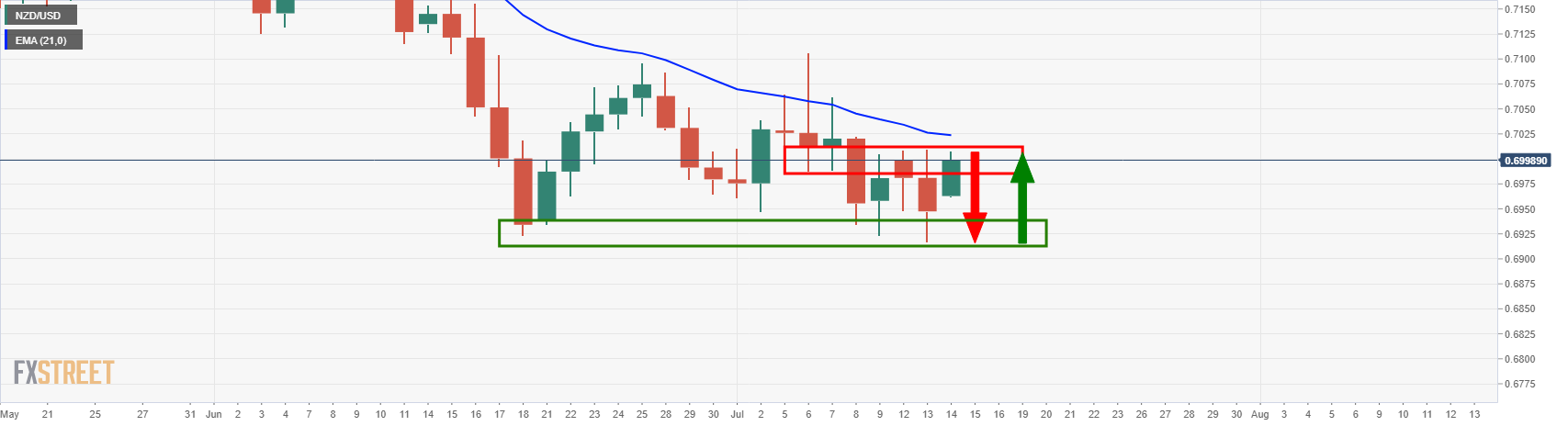
As per the prevent analysis, NZD/USD Price Analysis: Bears look for a downside daily extension below 0.6920, the focus was on the downside from a technical standpoint on the daily chart:

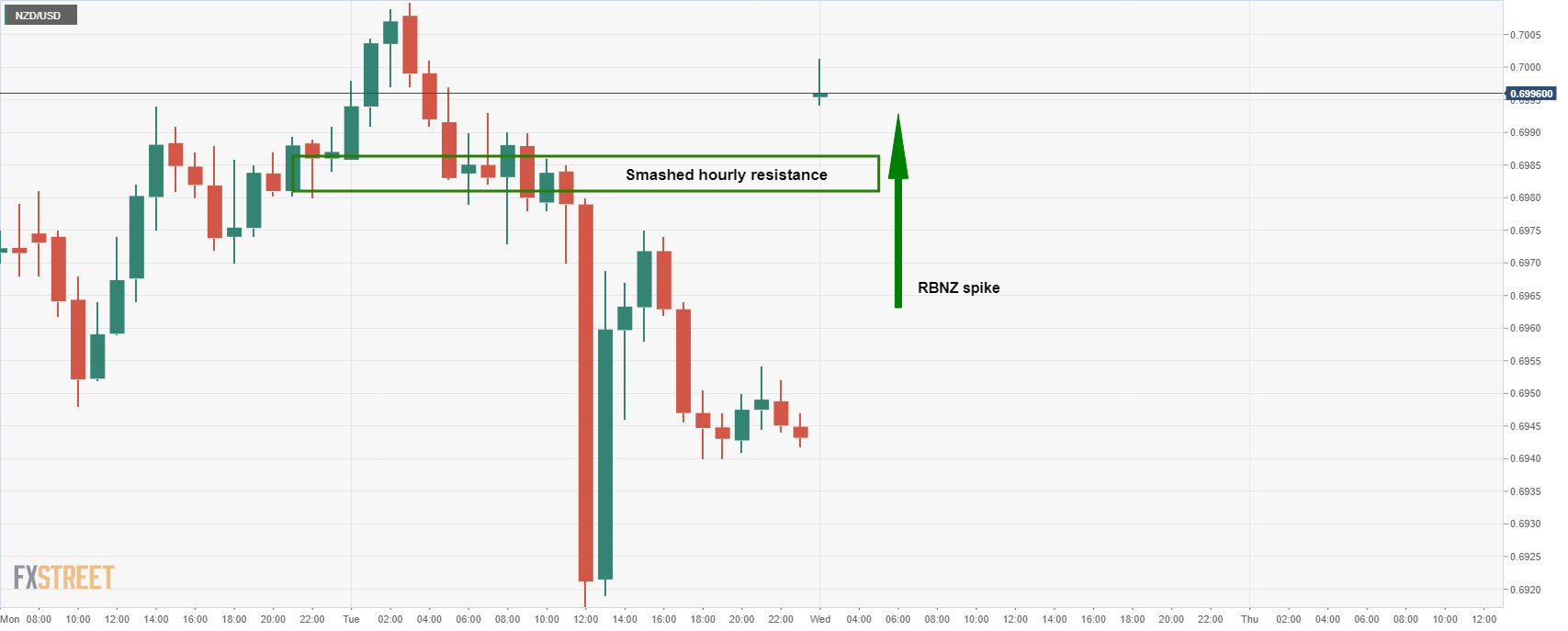
However, the immediate reaction is a bid ...

Hourly chart
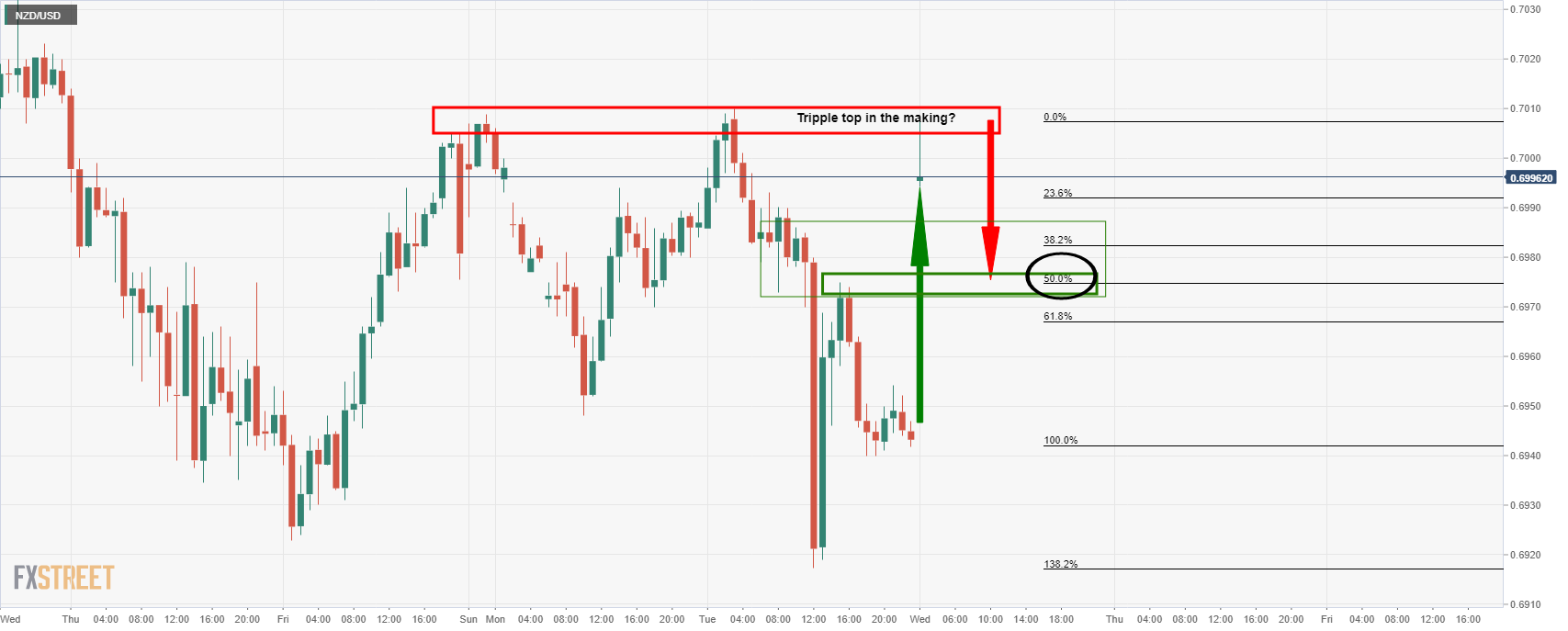
This leaves an over extended W-formation on the chart and prospects of a triple top:
This is making for the potential of a trapped market scenario on the daily chart as follows:
For the rest of the week, Consumer Price Index data will now be the next event which is out on Friday, and then the key Q2 labour market data due in three weeks.

Author

FXStreet Team

Composed of a group of economic journalists and FX experts, the FXStreet content team produces and oversees all content published on FXStreet. It provides a purely journalistic approach to the Forex market.


More from FXStreet Team
Share:

Editor's Picks

AUD/USD meets support near 0.7020 ahead of key jobs data

AUD/USD’s decline has gathered extra pace on Wednesday, with the pair slipping back to levels last seen in early August in the low 0.7000s. The continuation of the bearish tone in the pair has come on the back of the strong upward trend in the Greenback, underpinned by rising bets for extra tightening by the Fed. Moving forward, the jobs report will gather all the attention on the domestic calendar.

USD/JPY stands firm near mid-157.00s, close to two-week high

USD/JPY hovers around mid-157.00s in the Asian session on Wednesday, near two-week highs touched last Friday as the BoJ's dovish rate hike continues to undermine the Japanese Yen. Meanwhile, the US Dollar remains firm amid the Fed's hawkish stance, adding support to the pair, though JPY intervention fears cap further gains. Markets pay little heed to the completion of the round of US-Iran indirect talks ahead of Trump-Xi meeting.

Gold falls to weekly troughs below $4,300

Gold rapidly leaves behind two daily upticks in a row and comes under heightened downside pressure midweek. Indeed, the precious metal breaches below the $4,300 mark per troy ounce to reach weekly lows amid the marked recovery in the US Dollar and the generalised upbeat tone in the US money market.

Sky rallies as Galaxy Digital allocates $100 million to sUSDS
Galaxy Digital (GLXY) has allocated $100 million of Sky Protocol’s yield-bearing sUSDS to its corporate treasury, approving the token as collateral across its institutional trading business as the two firms deepen their onchain financing relationship.
Oil rebounds above $90: Why is the Canadian Dollar still falling?
USD/CAD extends its advance on Wednesday and trades around 1.4090 at the time of writing, up 0.21% on the day. The pair remains close to its recent highs, supported by a firm US Dollar (USD), while the Canadian Dollar (CAD) struggles to recover losses from the recent decline in Oil prices. Oil dynamics, however, are becoming less negative for the Loonie.
BoJ Recap: Not as hawkish as expected

The Bank of Japan (BoJ) raised its short-term interest-rate target to 1.25% from 1.00% in a 7-2 vote, marking another step in the normalisation of monetary policy and widely matching what everyone has been expecting for weeks.