|

Bank of Canada sends USD/CAD lower by rejecting negative rates, scaling back operations
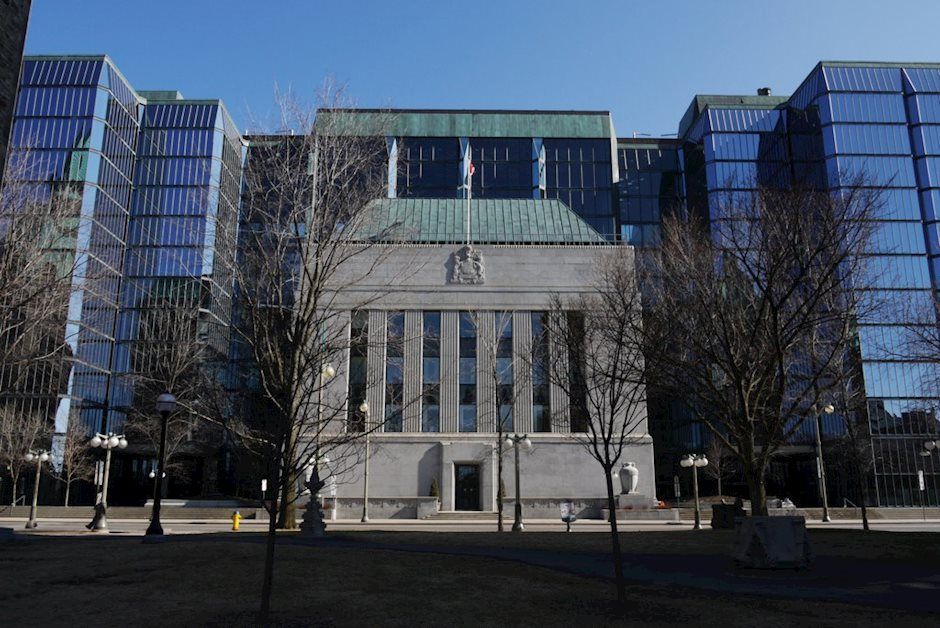
The Bank of Canada has left its interest rate unchanged at 0.25% as expected. The Ottawa-based institution also stressed that those current borrowing costs are the effective lower bound and that negative rates are not under active consideration.

Moreover, the BOC has stated it is scaling back some of its market operations after announcing bond-buying back in March, at the peak of the financial distress related to coronavirus.

The bank now says that the effect of the virus has likely peaked and that second-quarter contraction could be 10-20% rather than worse expectations beforehand. 

Here is the concluding paragraph from the BOC's statement:

As market function improves and containment restrictions ease, the Bank's focus will shift to supporting the resumption of growth in output and employment. The Bank maintains its commitment to continue large-scale asset purchases until the economic recovery is well underway. Any further policy actions would be calibrated to provide the necessary degree of monetary policy accommodation required to achieve the inflation target.
 

USD/CAD dropped in response and trades below 1.35. 

At the same time, US ISM Non-Manufacturing Purchasing Index marginally beat expectations by hiring 45.4 points, an encouraging figure ahead of Friday's Non-Farm Payrolls.

The Bank of Canada was expected to leave interest rates unchanged at 0.25%. Governor Tiff Macklem assumed office in recent days, taking over from Stephen Poloz. The outgoing head of the bank recently expressed optimism, saying that the situation is better than some think. 

Author

Yohay Elam

Yohay Elam

FXStreet

Yohay is in Forex since 2008 when he founded Forex Crunch, a blog crafted in his free time that turned into a fully-fledged currency website later sold to Finixio.


More from Yohay Elam
Share:

Editor's Picks

EUR/USD holds above 1.1750 after mixed EU PMI data

EUR/USD manages to hold above 1.1750 but struggles to gather recovery momentum on Friday, following the mixed February PMI figures from Germany and the Eurozone. In the second half of the day, Q4 GDP, December inflation and February PMI data from the US will be watched closely by market participants.

GBP/USD recovers further toward 1.3500 after UK PMI data

GBP/USD is recovering ground further toward 1.3500 in European trading on Friday, helped by a modest uptick in the Pound Sterling after stronger-than-expected UK January Retail Sales and February PMI data. However, the pair's further upside could be limited amid persistent US Dollar strength as the focus turns to key US data. 

Gold sticks to positive bias above $5,000 ahead of US data

Gold gains some positive traction for the third consecutive day on Friday. holding above $5,000. Traders now look forward to the key US macro releases – the Advance Q4 GDP report and the Personal Consumption Expenditures (PCE) Price Index – for fresh trading impetus. 

US GDP growth expected to slow down significantly in Q4 after stellar Q3 

The United States Bureau of Economic Analysis will publish the first preliminary estimate of the fourth-quarter Gross Domestic Product at 13:30 GMT. Analysts forecast the US economy to have expanded at a 3% annualized rate, slowing down from the 4.4% growth posted in the previous quarter.

Iran tensions and AI fears at the forefront ahead of key US data

Thursday’s scorecard shows major US Stock benchmarks closed modestly in the red amid mounting US-Iran tensions and AI disruption worries. The S&P 500 shed 19 points (0.3%) to 6,861, the Nasdaq 100 lost 101 points (0.4%) to 24,797, and the Dow Jones Industrial Average dropped 267 points (0.5%) to 49,395.

Official Trump price approaches breakout with mixed signals from traders

Official Trump (TRUMP) is trading at $3.50 at the time of writing, approaching its upper consolidation range. A breakout from this range could open the door for an upside move. On-chain data shows market indecision, with balanced flows between bulls and bears, signaling a lack of clear directional bias.