|

Australia’s Q1 CPI seen rising 0.5 percent - Capital Economics

Analysts at Capital Economics offer a brief preview on what to expect from Tuesday’s Australia’s CPI release for the first quarter due at 0130 GMT.

Key Quotes:

“We estimate that both headline and underlying CPI inflation stayed just below the RBA's 2-3% target range in the first quarter, which will probably be a reoccurring theme throughout the year.

May have been a little more upward pressure on non-seasonally prices than is usually the case in the first quarter of the year if retailers compensated for the heavy discounting provided on clothing and electronics around Black Friday in November.

Prices will also have been boosted by the hikes in utility prices in Victoria on 1st January and the nationwide 1.8% increase in university fees.

Petrol prices probably also rose by around 2.0% q/q.

Intense competition may have led to another fall in food prices

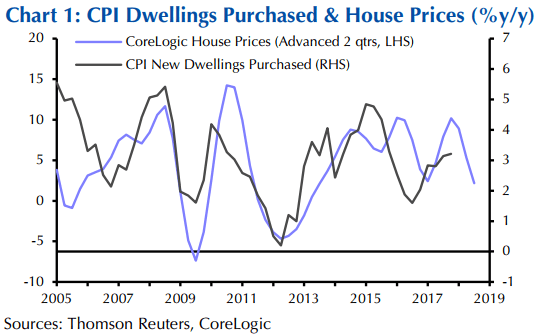
The recent decline in house price inflation points to an easing in the upward pressure from purchases of new dwellings. (See Chart 1.)

A 0.5% q/q rise in total prices would leave headline inflation at 1.9%, while a 0.5% q/q gain in underlying prices would nudge down underlying inflation from 1.9% to 1.8%.”
Author

Dhwani Mehta

Dhwani Mehta

FXStreet

Residing in Mumbai (India), Dhwani is a Senior Analyst and Manager of the Asian session at FXStreet. She has over 10 years of experience in analyzing and covering the global financial markets, with specialization in Forex and commodities markets.


More from Dhwani Mehta
Share:

Editor's Picks

AUD/USD eases from one-month high; holds above 0.7000 amid softer USD

AUD/USD pulls back slightly after hitting a fresh one-month high in the Asian session on Monday as bulls turn cautious ahead of the latest Australian consumer inflation figures and the crucial FOMC decision later this week. Meanwhile, expectations of another RBA rate hike in November support the Aussie. Moreover, a softer US Dollar helps the currency pair hold above the 0.7000 psychological mark.

USD/JPY extends recovery from one-month low beyond 157.00

USD/JPY kicks off the week on a positive note, building on Friday's modest bounce from the 156.00 neighborhood, or a one-month low amid some repositioning ahead of key central bank events and data risks. The Fed and the BoJ will announce their policy decisions on Wednesday and Friday, respectively. This, along with the release of Advance US Q3 GDP and the PCE Price Index on Thursday, should provide some meaningful impetus to the currency pair.

Gold struggles below $4,000 as oil-driven inflation fears reaffirm Fed hike bets

Gold attracts follow-through selling at the start of the new week, trading below $4,000 during the Asian session and near a three-month low. Higher energy prices continue to fuel inflation fears and reinforce US rate-hike expectations, undermining the non-yielding bullion. Bears, however, might refrain from placing aggressive bets ahead of the crucial FOMC meeting and other key central bank events this week.

Week ahead: Central bank and earnings bonanza could roil markets

After joining the rate-hike club in September, the Federal Reserve looks set to stand pat in October, waiting to assess more data before deciding to hike again. Whilst this isn’t an unusual move for a central bank, it somewhat contradicts Fed Chair Kevin Warsh’s new mantra of data dependency and zero forward guidance.

CFTC Report: WTI rally runs ahead of positioning
The week in one sentence: WTI prices surged while speculative longs were cut in the week to October 20, creating the clearest price/positioning divergence. Sterling and the Canadian Dollar led the constructive currency shift, while Yen longs also rebuilt. Speculators turned less constructive on the WTI, reducing their net exposure to around 89.3K contracts.
What November 3 means for the Fed's rate path and the US Dollar

The USD faces a decisive period ahead of the November 3 midterm elections. While markets anticipate another interest rate increase from the Fed in December, the battle for control of Congress could reshape fiscal policy expectations and, indirectly, the path of US monetary policy in 2027.