Australian Dollar steady as monetary policy divergences favor the Aussie
- AUD/USD showed a significant increase of 0.75%, rising to 0.6720.
- The continued hawkish stance of the RBA supports the Aussie against its peers.
- Intense dovish bets on the Fed weigh on the USD.
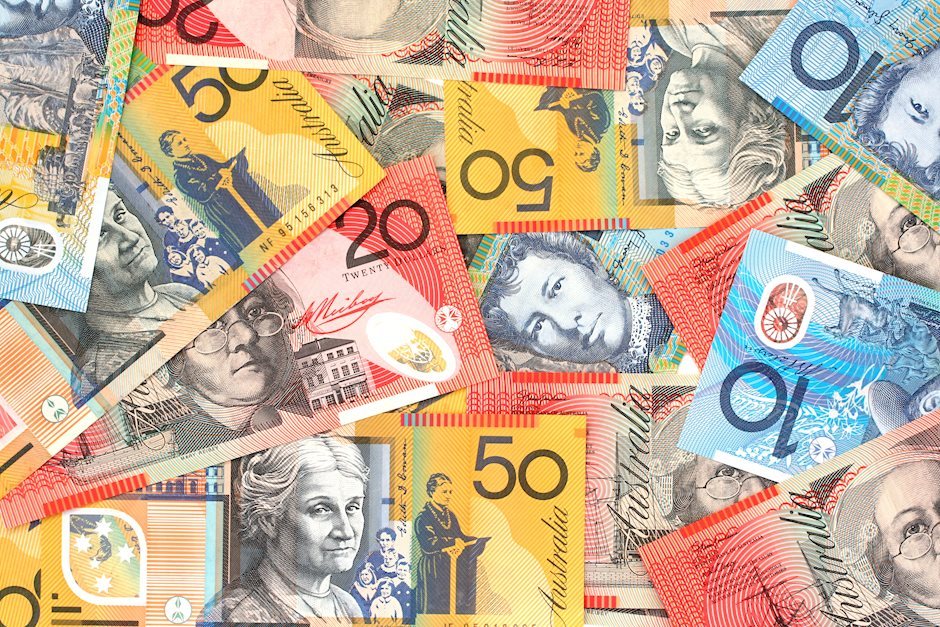

On Monday, the AUD/USD is gaining significant traction mainly due to a weaker USD on a quiet Monday. In addition, the monetary policy divergence between the Federal Reserve (Fed), set to start cutting in September, versus the reluctance of the Reserve Bank of Australia (RBA) to cut is also pushing the pair upward.
Despite the mixed Australian economic outlook and the high inflation, the RBA's persistent hawkish stance has led to markets pricing in just 25 basis points of easing for 2024, which seems to be making the Aussie gain more traction.
Daily digest market movers: Aussie extends gains through RBA's hawkish guidance
- Aussie showed signs of gaining strength or at least maintaining its current levels, largely due to the hawkish guidance by the RBA.
- Despite the falling trend in iron ore prices, the RBA's persistent hawkish stance is providing significant support to the Australian Dollar.
- The markets are now looking forward to Tuesday’s discourse on the last RBA meeting's minutes, which could influence the pair's future trajectory.
- With a weakened USD due to a quiet Monday session, the AUD/USD pair has the potential for further upside facilitated by the monetary policy difference.
AUD/USD technical outlook: AUD/USD buyers prevail, bullish outlook persists
From a technical perspective, the AUD/USD pair has shown an inclination toward an upward trajectory based on the daily indicators. The Relative Strength Index (RSI), an oscillator that denotes market momentum, has been fluctuating around the mid-levels but has recently risen to 62, implying increased bullish sentiment. The Moving Average Convergence Divergence (MACD) further validates this bullish bias, evident from its rising green bars.
As the pair inches upward, it might face resistance around the 0.6750 mark, a level that presents a tough ceiling. Support is seen at 0.6730, 0.6715 and 0.6700.
Interest rates FAQs
Interest rates are charged by financial institutions on loans to borrowers and are paid as interest to savers and depositors. They are influenced by base lending rates, which are set by central banks in response to changes in the economy. Central banks normally have a mandate to ensure price stability, which in most cases means targeting a core inflation rate of around 2%. If inflation falls below target the central bank may cut base lending rates, with a view to stimulating lending and boosting the economy. If inflation rises substantially above 2% it normally results in the central bank raising base lending rates in an attempt to lower inflation.
Higher interest rates generally help strengthen a country’s currency as they make it a more attractive place for global investors to park their money.
Higher interest rates overall weigh on the price of Gold because they increase the opportunity cost of holding Gold instead of investing in an interest-bearing asset or placing cash in the bank. If interest rates are high that usually pushes up the price of the US Dollar (USD), and since Gold is priced in Dollars, this has the effect of lowering the price of Gold.
The Fed funds rate is the overnight rate at which US banks lend to each other. It is the oft-quoted headline rate set by the Federal Reserve at its FOMC meetings. It is set as a range, for example 4.75%-5.00%, though the upper limit (in that case 5.00%) is the quoted figure. Market expectations for future Fed funds rate are tracked by the CME FedWatch tool, which shapes how many financial markets behave in anticipation of future Federal Reserve monetary policy decisions.
Author
Patricio Martín
FXStreet
Patricio is an economist from Argentina passionate about global finance and understanding the daily movements of the markets.