AMD Stock Forecast: Advanced Micro Devices rebounds ahead of its quarterly earnings call
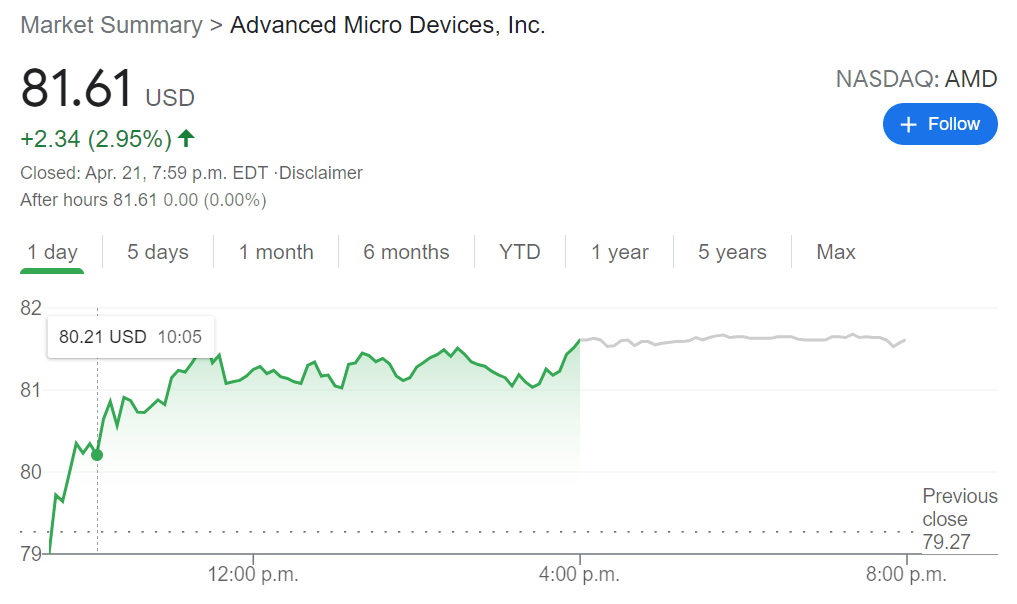
- NASDAQ:AMD gained 2.95% on Wednesday as tech and growth sectors bounced back.
- AMD is poised for a big year amidst a global chip shortage as a couple of rivals steal the headlines.
- AMD is set to announce its Q1 earnings call on April 27th.


NASDAQ:AMD has sometimes been the forgotten brand in the chip industry as some of its rivals seem to garner much of the attention on Wall Street. But AMD has quietly built itself into a $100 billion company and is partnered with most of the largest tech companies in the world. On Wednesday, AMD added 2.95% and closed the trading day at $81.61, as the tech sector rallied for the first time in weeks. The stock is still trading above its 50-day moving average, but lags its 200-day moving average price, signalling how rough the tech waters have been.
Stay up to speed with hot stocks' news!
Wall Street is already anticipating a big year for AMD in 2021, especially as the global chip shortage continues to affect manufacturing of electronics around the world. AMD is expected to attain a larger share of the CPU market, as well as the data center market where its recently launched EPYC 7003 processor is already performing at twice the speed of processors from rival Intel (NASDAQ:INTC). Meanwhile, another chip giant NVIDIA (NASDAQ:NVDA) is under fire after its recently proposed acquisition of ARM has started a probe by the Competition and Markets Authority, which is the U.K.’s antitrust agency.
AMD Price prediction
AMD is set to announce its Q1 earnings on Tuesday April 27th, and Wall Street is already expecting a massive year over year growth in revenues, sparked by increased sales of its chips and processors. With PC and game console sales surging due to a lack of supply, as well as continued stay at home orders due to COVID-19, AMD’s first quarter could be a sign of things to come in 2021.
Premium
You have reached your limit of 3 free articles for this month.
Start your subscription and get access to all our original articles.
Author
Stocks Reporter
FXStreet